
Potawatomi
They call themselves Bodéwadmi
Keepers of the fire in the Great Lakes and Plains, with many recognized bands today
The Potawatomi are an Indigenous people of the Great Lakes, upper Mississippi, and Great Plains, now living mainly in the United States and Canada. Numbering over 43,000, they are known for their role in the Council of Three Fires alliance and for surviving forced removals in the 19th century. Today, several federally recognized Potawatomi tribes and First Nations remain.
- Part of the Council of Three Fires alliance with Ojibwe and Odawa
- Survived forced removals in the 19th century
- Several federally recognized tribes and First Nations today
- Traditional language is Potawatomi, of the Algonquian family
- Known for the Seven Grandfather Teachings
Who are the Potawatomi?
The Potawatomi are an Indigenous people originally from the Great Lakes and upper Mississippi regions. They call themselves Bodéwadmi, meaning 'keepers of the fire,' and are part of the Council of Three Fires alliance with the Ojibwe and Odawa. Their identity is shaped by shared language, clan structures, and a history of migration, alliances, and adaptation. Today, they are organized into several federally recognized tribes and First Nations, maintaining cultural ties and community through ceremonies, teachings, and traditional practices.
Where do the Potawatomi live?
The Potawatomi homeland stretches across the Great Lakes, upper Mississippi River, and Great Plains. Historically, they lived in what is now Michigan, Wisconsin, Indiana, and Illinois. Over time, forced removals pushed many west to Kansas, Oklahoma, and Nebraska. Some bands remained in the Great Lakes region or moved to Ontario, Canada. Their lands include forests, prairies, rivers, and lakes, which have shaped their ways of living and cultural practices.
What language do the Potawatomi speak?
Potawatomi is an Algonquian language, traditionally spoken by the Potawatomi people. Today, English is also widely used. The language is still taught and spoken in some communities, though it is considered endangered. Efforts to revitalize Potawatomi include language classes, recordings, and cultural programs within recognized tribes and First Nations.
How do the Potawatomi live?
Traditionally, the Potawatomi made their living through farming, fishing, foraging, and crafts. They grew crops like corn, beans, and squash, and gathered wild plants such as berries and medicinal herbs. Fishing and hunting provided protein, while crafts included basketry and tool-making. Today, many Potawatomi also work in towns or tribal enterprises, but traditional foods and skills remain important in community life.
How is Potawatomi society organised?
Potawatomi society is organized around clans, known as doodems, which play a role in identity and social relations. Families are central, and descent is traced through both parents. Marriage often connects different clans, and decisions are made through councils of elders and leaders. The Potawatomi value the Seven Grandfather Teachings, which guide behavior and relationships within the community.

What do the Potawatomi believe?
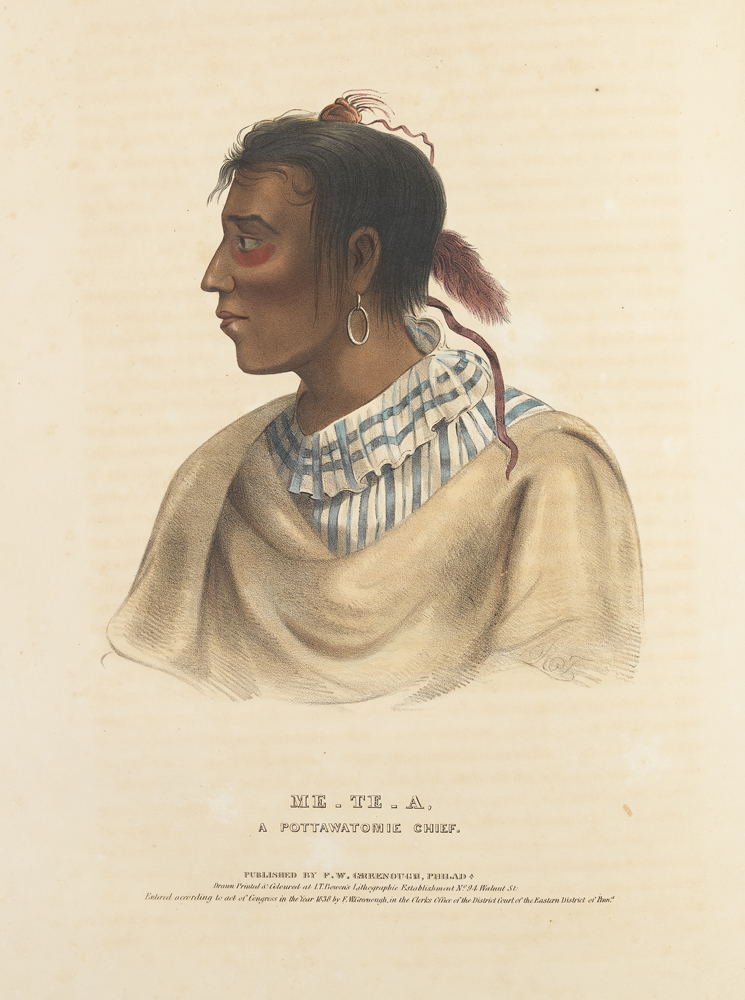
The Potawatomi hold a blend of traditional beliefs and Christianity, including Catholicism and Methodism. The Potawatomi religion and Midewiwin ceremonies remain important, focusing on respect for nature, ancestors, and the spirit world. Rituals, storytelling, and music are part of cultural life. The tribal flower, Epigaea repens, and other plants have spiritual and practical uses.
The history of the Potawatomi
The Potawatomi were first recorded in the 17th century in southwestern Michigan. They formed alliances with the Ojibwe and Odawa and played key roles in regional conflicts, including the Beaver Wars and the War of 1812. In the 19th century, most Potawatomi were forced from their lands east of the Mississippi by the US government, suffering hardship during removals such as the Potawatomi Trail of Death. Some bands remained in the Great Lakes or moved to Canada to avoid removal. Today, their descendants are organized into multiple recognized tribes and First Nations.
Potawatomi life today
Today, the Potawatomi number over 43,000, with communities in the United States and Canada. They are recognized as tribes and First Nations, with rights to land, self-government, and cultural preservation. Many work to revitalize their language and traditions, while facing pressures from development and loss of land. Potawatomi communities continue to adapt, maintain ceremonies, and teach younger generations.
Questions people ask about the Potawatomi
Where do the Potawatomi live today?
Potawatomi communities are found mainly in the United States (in states like Michigan, Wisconsin, Kansas, Oklahoma, and Indiana) and in Ontario, Canada. They are organized into several federally recognized tribes and First Nations.
How many Potawatomi are there?
There are about 43,000 Potawatomi people, according to recent sources. Some estimates place the number higher, over 48,000.
What language do the Potawatomi speak?
The Potawatomi traditionally speak the Potawatomi language, which is part of the Algonquian family. English is also widely spoken in their communities.
What is the Council of Three Fires?
The Council of Three Fires is an alliance of the Potawatomi, Ojibwe, and Odawa peoples. The Potawatomi are known as the 'keepers of the fire' in this council, which has shaped their history and identity.
What happened to the Potawatomi during the 19th century?
In the 19th century, most Potawatomi were forced by the US government to leave their homelands east of the Mississippi River. Many were relocated to Kansas and Oklahoma, while some remained in the Great Lakes region or moved to Canada.
Sources and further reading
- Potawatomi on WikipediaEncyclopedia
- Encyclopaedia BritannicaArticle
- More photos on Wikimedia CommonsPhotos
- Wikidata recordOpen data
This page was written with AI assistance from the sources above and checked automatically before publishing. It may contain mistakes, and it is no substitute for hearing from the Potawatomi themselves. If something is wrong, tell us. Last refreshed 2026-10-02.
Neighbours in the United States
All peoples of the United States ShawneeŠaawanooaki
🇺🇸 United StatesAlgonquian-speaking people now based in Oklahoma, once of the Ohio Valley
About 8,000, Algonquian
ShawneeŠaawanooaki
🇺🇸 United StatesAlgonquian-speaking people now based in Oklahoma, once of the Ohio Valley
About 8,000, Algonquian
 ArapahoHinono'eino
🇺🇸 United StatesPlains Algonquian people now in Wyoming and Oklahoma
About 11,000, Algonquian
ArapahoHinono'eino
🇺🇸 United StatesPlains Algonquian people now in Wyoming and Oklahoma
About 11,000, Algonquian
 Narragansett
🇺🇸 United StatesIndigenous people of Rhode Island, known for their ties to Narragansett Bay
About 3,000, Algonquian
Narragansett
🇺🇸 United StatesIndigenous people of Rhode Island, known for their ties to Narragansett Bay
About 3,000, Algonquian
 MenomineeMamaceqtaw
🇺🇸 United StatesA Native nation rooted in Wisconsin, known for wild rice and forest stewardship
About 9,000, Algonquian
MenomineeMamaceqtaw
🇺🇸 United StatesA Native nation rooted in Wisconsin, known for wild rice and forest stewardship
About 9,000, Algonquian
Other Algonquian speakers
See them all Pequot
🇺🇸 United StatesNative people of Connecticut, known for survival and revival after near-destruction
About 2,000, Algonquian
Pequot
🇺🇸 United StatesNative people of Connecticut, known for survival and revival after near-destruction
About 2,000, Algonquian
 PassamaquoddyPeskotomuhkati
🇺🇸 United States and 1 moreNative people of Maine and New Brunswick, known for fishing and the Wabanaki Confederacy
About 4,000, Algonquian
PassamaquoddyPeskotomuhkati
🇺🇸 United States and 1 moreNative people of Maine and New Brunswick, known for fishing and the Wabanaki Confederacy
About 4,000, Algonquian
 Piegan BlackfeetPiikáni
🇺🇸 United States and 1 moreLargest group of the Blackfeet Confederacy in Montana and Alberta
About 105,000, Algonquian
Piegan BlackfeetPiikáni
🇺🇸 United States and 1 moreLargest group of the Blackfeet Confederacy in Montana and Alberta
About 105,000, Algonquian
 PenobscotPαnawάhpskewi
🇺🇸 United StatesWabanaki people of Maine, living along the Penobscot River
About 2,000, Algonquian
PenobscotPαnawάhpskewi
🇺🇸 United StatesWabanaki people of Maine, living along the Penobscot River
About 2,000, Algonquian