
Shawnee
They call themselves Šaawanooaki
Algonquian-speaking people now based in Oklahoma, once of the Ohio Valley
The Shawnee are an Indigenous people originally from the Ohio Valley and surrounding regions. Today, most Shawnee live in Oklahoma, where they are enrolled in three federally recognized tribes, with a population of 7,584. They speak Shawnee, an Algonquian language, though it is now endangered. The Shawnee are known for their history of resistance and forced removals.
- Most Shawnee now live in Oklahoma, far from their ancestral Ohio Valley lands.
- There are three federally recognized Shawnee tribes in Oklahoma.
- Fewer than 100 fluent Shawnee speakers remain, mostly elders.
- The Shawnee fought several wars to resist displacement from their homelands.
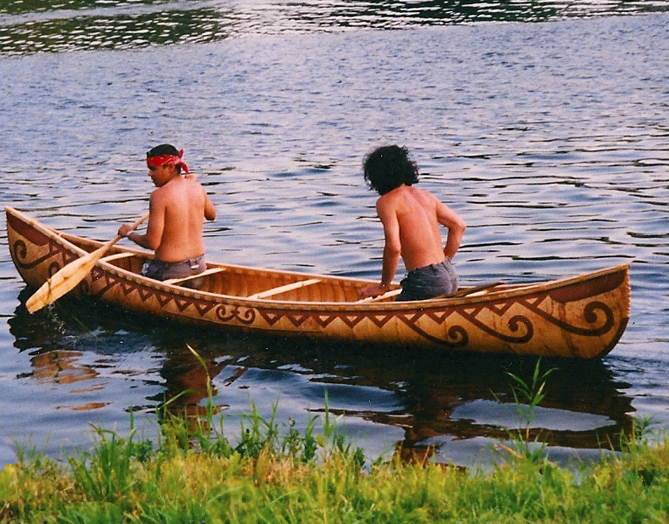
- Traditional Shawnee villages had bark-covered houses and council houses.
Who are the Shawnee?
The Shawnee are an Indigenous people of the Northeastern Woodlands, historically centered in the Ohio Valley. Their identity is rooted in their language, Shawnee, and shared traditions. Despite being dispersed across a wide area due to wars and forced removals, the Shawnee have maintained a strong sense of community. Today, they are organized into three federally recognized tribes in Oklahoma. Their history is marked by resilience and adaptation in the face of displacement.
Where do the Shawnee live?
The Shawnee's original homeland was likely in southern Ohio, with historic presence across Ohio, Pennsylvania, Indiana, Illinois, Kentucky, and West Virginia. They lived in villages of bark-covered houses, often near rivers and forests rich in resources. After a series of forced removals in the 19th century, most Shawnee now live in Oklahoma, far from their ancestral lands.
What language do the Shawnee speak?
Shawnee is an Algonquian language, once widely spoken but now endangered. By 2017, fewer than 100 fluent speakers remained, most over 50 years old. The language is written in the Latin script, and efforts to revitalize it continue, including the creation of a dictionary and translations of texts. Shawnee is central to cultural identity, though English is now widely used.
How do the Shawnee live?
Traditionally, the Shawnee made their living through a mix of farming, foraging, and fishing. They grew crops, gathered wild foods, and fished in rivers. Their villages featured bark-covered houses and council houses for meetings. Contact with Europeans brought changes, including new trade goods and challenges such as alcohol and displacement from their lands.
How is Shawnee society organised?
Shawnee society was organized around villages and extended families. Leadership included chiefs and councils, with decisions made collectively. Clans and kinship ties shaped social structure, and marriage often linked different groups. The Shawnee valued communal deliberation, with council houses serving as centers for discussion and ceremony.


What do the Shawnee believe?
The Shawnee practiced Indigenous religions, with beliefs centered on spirits, the land, and natural forces. Rituals, stories, and songs played a key role in passing down traditions. Art and music expressed their worldview, and dress varied by occasion and era. The spirit of the South Wind, or šaawaki, is one example from their stories.
The history of the Shawnee
The Shawnee are likely connected to the ancient Fort Ancient culture of the Ohio region. In the 17th and 18th centuries, they were dispersed by wars and colonial expansion, fighting to remain in their homelands. The Shawnee resisted British and American encroachment in several wars, but after the War of 1812 and the death of Tecumseh, they were forced to sign treaties ceding land. The U.S. government removed them west of the Mississippi under the Indian Removal Act, and later to Indian Territory (now Oklahoma).
Shawnee life today
Today, the Shawnee are enrolled in three federally recognized tribes in Oklahoma. Their population is 7,584. They continue to face challenges, including language loss and maintaining cultural traditions far from their original homeland. Efforts to revitalize language and culture are ongoing, and the Shawnee remain active in preserving their heritage and rights.
Questions people ask about the Shawnee
Where do the Shawnee live today?
Most Shawnee live in Oklahoma, where they are enrolled in three federally recognized tribes. Their ancestral lands were in the Ohio Valley and surrounding regions.
How many Shawnee people are there?
There are 7,584 enrolled Shawnee, according to recent figures.
What language do the Shawnee speak?
The Shawnee speak the Shawnee language, which is part of the Algonquian family. However, it is now endangered, with fewer than 100 fluent speakers remaining.
What happened to the Shawnee homeland?
The Shawnee were forced to leave their Ohio Valley homeland due to wars and U.S. government removal policies in the 19th century. They were relocated to what is now Oklahoma.
What are the Shawnee best known for?
The Shawnee are known for their history of resistance against colonial and U.S. expansion, their forced removals, and their efforts to maintain their language and traditions.
Sources and further reading
- Shawnee on WikipediaEncyclopedia
- Official websiteOfficial site
- Encyclopaedia BritannicaArticle
- More photos on Wikimedia CommonsPhotos
- Wikidata recordOpen data
This page was written with AI assistance from the sources above and checked automatically before publishing. It may contain mistakes, and it is no substitute for hearing from the Shawnee themselves. If something is wrong, tell us. Last refreshed 2026-10-02.
Neighbours in the United States
All peoples of the United States ArapahoHinono'eino
🇺🇸 United StatesPlains Algonquian people now in Wyoming and Oklahoma
About 11,000, Algonquian
ArapahoHinono'eino
🇺🇸 United StatesPlains Algonquian people now in Wyoming and Oklahoma
About 11,000, Algonquian
 PotawatomiBodéwadmi
🇺🇸 United States and 1 moreKeepers of the fire in the Great Lakes and Plains, with many recognized bands today
About 43,000, Algonquian
PotawatomiBodéwadmi
🇺🇸 United States and 1 moreKeepers of the fire in the Great Lakes and Plains, with many recognized bands today
About 43,000, Algonquian
 Narragansett
🇺🇸 United StatesIndigenous people of Rhode Island, known for their ties to Narragansett Bay
About 3,000, Algonquian
Narragansett
🇺🇸 United StatesIndigenous people of Rhode Island, known for their ties to Narragansett Bay
About 3,000, Algonquian
 MenomineeMamaceqtaw
🇺🇸 United StatesA Native nation rooted in Wisconsin, known for wild rice and forest stewardship
About 9,000, Algonquian
MenomineeMamaceqtaw
🇺🇸 United StatesA Native nation rooted in Wisconsin, known for wild rice and forest stewardship
About 9,000, Algonquian
Other Algonquian speakers
See them all Pequot
🇺🇸 United StatesNative people of Connecticut, known for survival and revival after near-destruction
About 2,000, Algonquian
Pequot
🇺🇸 United StatesNative people of Connecticut, known for survival and revival after near-destruction
About 2,000, Algonquian
 PassamaquoddyPeskotomuhkati
🇺🇸 United States and 1 moreNative people of Maine and New Brunswick, known for fishing and the Wabanaki Confederacy
About 4,000, Algonquian
PassamaquoddyPeskotomuhkati
🇺🇸 United States and 1 moreNative people of Maine and New Brunswick, known for fishing and the Wabanaki Confederacy
About 4,000, Algonquian
 Piegan BlackfeetPiikáni
🇺🇸 United States and 1 moreLargest group of the Blackfeet Confederacy in Montana and Alberta
About 105,000, Algonquian
Piegan BlackfeetPiikáni
🇺🇸 United States and 1 moreLargest group of the Blackfeet Confederacy in Montana and Alberta
About 105,000, Algonquian
 PenobscotPαnawάhpskewi
🇺🇸 United StatesWabanaki people of Maine, living along the Penobscot River
About 2,000, Algonquian
PenobscotPαnawάhpskewi
🇺🇸 United StatesWabanaki people of Maine, living along the Penobscot River
About 2,000, Algonquian