
Piegan Blackfeet
They call themselves Piikáni
Largest group of the Blackfeet Confederacy in Montana and Alberta
The Piegan Blackfeet, or Piikáni, are an Algonquian-speaking Indigenous people of the northern Great Plains. Most live in northwestern Montana, United States, with others in Alberta, Canada. They are the largest of the three Blackfeet Confederacy groups and are known for their history as bison hunters and their strong cultural traditions.
- Largest group of the Blackfeet Confederacy
- Homeland spans Montana and Alberta
- Traditionally organized into bands
- Known for bison hunting and Plains culture
- Federally recognized tribe in Montana
Who are the Piegan Blackfeet?
The Piegan Blackfeet, or Piikáni, are one of three groups that form the Blackfeet Confederacy, along with the Kainai and Siksika. They share a common language, history, and cultural traditions rooted in the northern Great Plains. Traditionally, the Piegan organized themselves into bands—groups of families who moved together for hunting and defense. Their identity is closely tied to their language, Blackfoot, and their shared stories, ceremonies, and ties to the land.
Where do the Piegan Blackfeet live?
The Piegan Blackfeet's homeland stretches across the northern Great Plains, especially in what is now northwestern Montana and southern Alberta. This region is marked by open prairies, foothills, and proximity to the Rocky Mountain Front. The area provided rich hunting grounds, especially for bison, and is central to their creation stories and oral histories. Today, most Piegan live on the Blackfeet Reservation in Montana, which borders Glacier National Park.
What language do the Piegan Blackfeet speak?
The Piegan speak Blackfoot, an Algonquian language, as well as English. Blackfoot is agglutinative, meaning words are formed by stringing together smaller units. While many Piegan now use English in daily life, efforts continue to teach and revitalize Blackfoot, especially among younger generations. The language remains a key part of cultural identity and ceremonies.
How do the Piegan Blackfeet live?
Historically, the Piegan Blackfeet were bison hunters and practiced some agriculture. They became skilled horse riders after horses arrived around 1730, which expanded their hunting range. The bison provided food, clothing, and materials for shelter. Today, many Piegan live on the Blackfeet Reservation, where livelihoods include ranching, farming, crafts, and wage work. Traditional foods and crafts remain important in cultural life.
How is Piegan Blackfeet society organised?
Piegan society was traditionally organized into bands, each made up of related families. Leadership roles were based on respect, skill, and consensus. Family and kinship ties remain strong, and oral histories, ceremonies, and clan relationships continue to play a key role. Some women, known as 'manly-hearted women,' took on social roles usually held by men, including singing and leadership.


What do the Piegan Blackfeet believe?
The Piegan Blackfeet hold traditional beliefs centered on a sacred force that flows through all things, symbolized by the sun. Ceremonies, songs, and oral traditions are important, and many also practice Christianity. Art, music, and dress reflect both traditional and contemporary influences. Rituals and stories often connect people to the land and to their ancestors.
The history of the Piegan Blackfeet
Piegan ancestors likely migrated southwest from present-day Saskatchewan around 1730, joining the Plains cultures after adopting horses and firearms. They dominated parts of the northern Plains in the 19th century. The Piegan suffered greatly from disease and loss of the bison, with epidemics and starvation causing sharp population declines. The drawing of the US-Canada border split their homelands, forcing them onto reservations and into treaties. Despite these pressures, the Piegan have maintained a strong sense of identity and community.
Piegan Blackfeet life today
Most Piegan Blackfeet live on the Blackfeet Reservation in Montana, with others in Alberta, Canada. The US 2010 census counted over 100,000 people identifying as Blackfeet. The community works to preserve language, culture, and land rights, while facing ongoing challenges from economic pressures and historical trauma. Cultural revival and education are important to many Piegan today.
Questions people ask about the Piegan Blackfeet
Where do the Piegan Blackfeet live?
Most Piegan Blackfeet live on the Blackfeet Reservation in northwestern Montana, United States. Others live in Alberta, Canada, as part of the Piikani Nation.
How many Piegan Blackfeet are there?
According to the 2010 United States census, 105,304 people identified as Blackfeet, either alone or in combination with other groups.
What language do the Piegan Blackfeet speak?
The Piegan Blackfeet speak Blackfoot, an Algonquian language, as well as English. Efforts are ongoing to revitalize the Blackfoot language.
What are the main beliefs of the Piegan Blackfeet?
The Piegan Blackfeet hold traditional beliefs centered on a sacred force symbolized by the sun, and many also practice Christianity.
What are the main ways the Piegan Blackfeet have made a living?
Historically, the Piegan Blackfeet were bison hunters and practiced some agriculture. Today, livelihoods include ranching, farming, crafts, and wage work.
Sources and further reading
- Piegan Blackfeet on WikipediaEncyclopedia
- More photos on Wikimedia CommonsPhotos
- Wikidata recordOpen data
This page was written with AI assistance from the sources above and checked automatically before publishing. It may contain mistakes, and it is no substitute for hearing from the Piegan Blackfeet themselves. If something is wrong, tell us. Last refreshed 2026-10-02.
Neighbours in the United States
All peoples of the United States ShawneeŠaawanooaki
🇺🇸 United StatesAlgonquian-speaking people now based in Oklahoma, once of the Ohio Valley
About 8,000, Algonquian
ShawneeŠaawanooaki
🇺🇸 United StatesAlgonquian-speaking people now based in Oklahoma, once of the Ohio Valley
About 8,000, Algonquian
 ArapahoHinono'eino
🇺🇸 United StatesPlains Algonquian people now in Wyoming and Oklahoma
About 11,000, Algonquian
ArapahoHinono'eino
🇺🇸 United StatesPlains Algonquian people now in Wyoming and Oklahoma
About 11,000, Algonquian
 PotawatomiBodéwadmi
🇺🇸 United States and 1 moreKeepers of the fire in the Great Lakes and Plains, with many recognized bands today
About 43,000, Algonquian
PotawatomiBodéwadmi
🇺🇸 United States and 1 moreKeepers of the fire in the Great Lakes and Plains, with many recognized bands today
About 43,000, Algonquian
 Narragansett
🇺🇸 United StatesIndigenous people of Rhode Island, known for their ties to Narragansett Bay
About 3,000, Algonquian
Narragansett
🇺🇸 United StatesIndigenous people of Rhode Island, known for their ties to Narragansett Bay
About 3,000, Algonquian
Other Algonquian speakers
See them all MenomineeMamaceqtaw
🇺🇸 United StatesA Native nation rooted in Wisconsin, known for wild rice and forest stewardship
About 9,000, Algonquian
MenomineeMamaceqtaw
🇺🇸 United StatesA Native nation rooted in Wisconsin, known for wild rice and forest stewardship
About 9,000, Algonquian
 Pequot
🇺🇸 United StatesNative people of Connecticut, known for survival and revival after near-destruction
About 2,000, Algonquian
Pequot
🇺🇸 United StatesNative people of Connecticut, known for survival and revival after near-destruction
About 2,000, Algonquian
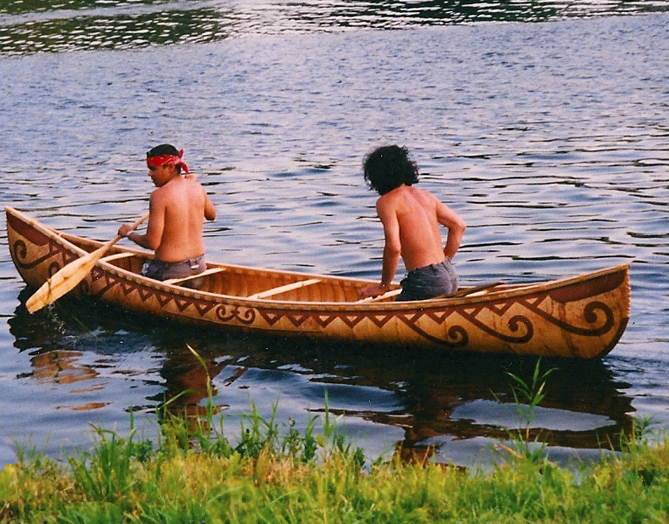 PassamaquoddyPeskotomuhkati
🇺🇸 United States and 1 moreNative people of Maine and New Brunswick, known for fishing and the Wabanaki Confederacy
About 4,000, Algonquian
PassamaquoddyPeskotomuhkati
🇺🇸 United States and 1 moreNative people of Maine and New Brunswick, known for fishing and the Wabanaki Confederacy
About 4,000, Algonquian
 PenobscotPαnawάhpskewi
🇺🇸 United StatesWabanaki people of Maine, living along the Penobscot River
About 2,000, Algonquian
PenobscotPαnawάhpskewi
🇺🇸 United StatesWabanaki people of Maine, living along the Penobscot River
About 2,000, Algonquian