
Menominee
They call themselves Mamaceqtaw
A Native nation rooted in Wisconsin, known for wild rice and forest stewardship
The Menominee are a federally recognized Native American tribe based in Wisconsin, United States, with about 8,700 members. Their homeland once covered 10 million acres across Wisconsin and Michigan, and they are known for their connection to wild rice, sustainable forestry, and a strong cultural identity.
Who are the Menominee?
The Menominee are an Indigenous people whose homeland spans present-day Wisconsin and the Upper Peninsula of Michigan. They call themselves Mamaceqtaw, meaning "the people" in their language. Their identity is shaped by a deep connection to the land, especially wild rice and the sturgeon, both vital to their culture and diet. The Menominee are organized into five principal clans: Bear, Eagle, Wolf, Crane, and Moose, each with traditional roles. Their society is held together by shared language, kinship, and a strong sense of belonging to their ancestral territory.
Where do the Menominee live?
The Menominee homeland centers on the forests, rivers, and lakes of Wisconsin and the Upper Peninsula of Michigan. Their reservation today lies in northeastern Wisconsin, but their historic territory once covered about 10 million acres, including key waterways like the Menominee River and areas around Green Bay. The land is rich in wild rice beds, forests, and fish, which have shaped their way of life for centuries. The Menominee continue to manage their forests and natural resources with a focus on sustainability.
What language do the Menominee speak?
The Menominee language belongs to the Algonquian family, closely related to the languages of neighboring tribes like the Meskwaki and Kickapoo. While English is widely spoken, Menominee remains a marker of identity and tradition. Efforts to revitalize and teach the language continue within the community, supporting cultural continuity.
How do the Menominee live?
Traditionally, the Menominee relied on wild rice, fishing (especially for sturgeon), hunting, and gathering local plants. They also practiced farming and made use of the forests for building materials and crafts. Sustainable forestry has long been a hallmark of Menominee land management. Today, many Menominee work in tribal enterprises, forestry, crafts, and other wage jobs, while traditional foods and practices remain important.
How is Menominee society organised?
Menominee society is organized around five main clans, with a patrilineal system where children inherit their father's clan. Clan membership shapes social roles and marriage rules: people must marry outside their own clan. The tribe is governed by an elected council under a written constitution. Elders play a key role in guiding youth, especially during rites of passage that mark the transition to adulthood.


What do the Menominee believe?
Menominee beliefs blend traditional spirituality with Catholicism, the Big Drum (Dream Dance), and the Native American Church. Rites of passage, such as fasting and dream interpretation, are important for youth. Wild rice and sturgeon are central to ceremonies and feasts. Medicinal plants and traditional knowledge remain valued, and annual gatherings celebrate both spiritual and communal life.
The history of the Menominee
The Menominee have lived in their homeland for thousands of years, with oral history describing them as the 'Ancient Ones.' They were first encountered by French explorers in the 17th century, who called them the 'Wild Rice People.' Over the 19th century, the Menominee ceded most of their land through treaties, retaining a reservation in Wisconsin. In the 1960s, their federal recognition was terminated, but they successfully fought to regain it in 1973, protecting their treaty rights in a landmark Supreme Court case. Their history is marked by resilience and adaptation amid pressures from settlers and government policies.
Menominee life today
Today, the Menominee number about 8,700 and live mainly on their reservation in Wisconsin. They operate their own government and enterprises, and continue to manage their forests sustainably. The tribe maintains its cultural traditions, language revitalization, and treaty rights. Challenges remain, but the Menominee continue to assert their identity and stewardship of their land.
Questions people ask about the Menominee
Where do the Menominee live?
The Menominee live in the United States, in the Wisconsin and the Upper Peninsula of Michigan.
How many Menominee people are there?
Our sources give the Menominee population as about 8,700. Counts of peoples vary with who is counted and when.
What language do the Menominee speak?
The Menominee speak Menominee, English, which belongs to the Algonquian family of languages.
How do the Menominee make a living?
The Menominee are known for settled farming, fishing and the sea, hunting and gathering, craft and trade and towns and wage work. Like most peoples, they combine several ways of making a living, and these have changed over time.
Sources and further reading
- Menominee on WikipediaEncyclopedia
- Official websiteOfficial site
- Encyclopaedia BritannicaArticle
- More photos on Wikimedia CommonsPhotos
- Wikidata recordOpen data
This page was written with AI assistance from the sources above and checked automatically before publishing. It may contain mistakes, and it is no substitute for hearing from the Menominee themselves. If something is wrong, tell us. Last refreshed 2026-10-02.
Neighbours in the United States
All peoples of the United States ShawneeŠaawanooaki
🇺🇸 United StatesAlgonquian-speaking people now based in Oklahoma, once of the Ohio Valley
About 8,000, Algonquian
ShawneeŠaawanooaki
🇺🇸 United StatesAlgonquian-speaking people now based in Oklahoma, once of the Ohio Valley
About 8,000, Algonquian
 ArapahoHinono'eino
🇺🇸 United StatesPlains Algonquian people now in Wyoming and Oklahoma
About 11,000, Algonquian
ArapahoHinono'eino
🇺🇸 United StatesPlains Algonquian people now in Wyoming and Oklahoma
About 11,000, Algonquian
 PotawatomiBodéwadmi
🇺🇸 United States and 1 moreKeepers of the fire in the Great Lakes and Plains, with many recognized bands today
About 43,000, Algonquian
PotawatomiBodéwadmi
🇺🇸 United States and 1 moreKeepers of the fire in the Great Lakes and Plains, with many recognized bands today
About 43,000, Algonquian
 Narragansett
🇺🇸 United StatesIndigenous people of Rhode Island, known for their ties to Narragansett Bay
About 3,000, Algonquian
Narragansett
🇺🇸 United StatesIndigenous people of Rhode Island, known for their ties to Narragansett Bay
About 3,000, Algonquian
Other Algonquian speakers
See them all Pequot
🇺🇸 United StatesNative people of Connecticut, known for survival and revival after near-destruction
About 2,000, Algonquian
Pequot
🇺🇸 United StatesNative people of Connecticut, known for survival and revival after near-destruction
About 2,000, Algonquian
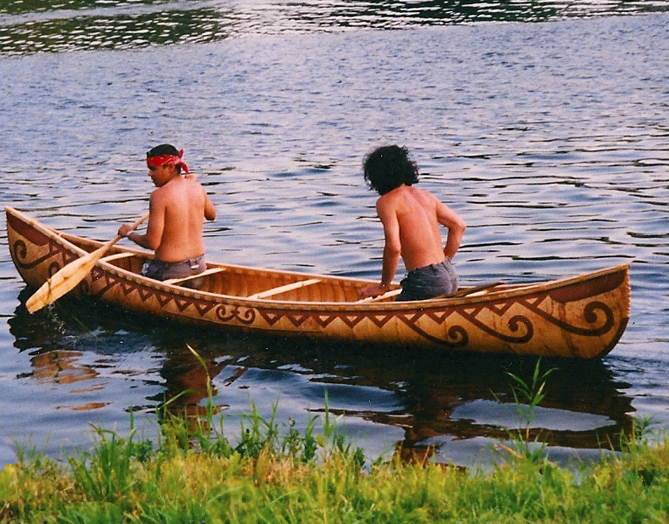 PassamaquoddyPeskotomuhkati
🇺🇸 United States and 1 moreNative people of Maine and New Brunswick, known for fishing and the Wabanaki Confederacy
About 4,000, Algonquian
PassamaquoddyPeskotomuhkati
🇺🇸 United States and 1 moreNative people of Maine and New Brunswick, known for fishing and the Wabanaki Confederacy
About 4,000, Algonquian
 Piegan BlackfeetPiikáni
🇺🇸 United States and 1 moreLargest group of the Blackfeet Confederacy in Montana and Alberta
About 105,000, Algonquian
Piegan BlackfeetPiikáni
🇺🇸 United States and 1 moreLargest group of the Blackfeet Confederacy in Montana and Alberta
About 105,000, Algonquian
 PenobscotPαnawάhpskewi
🇺🇸 United StatesWabanaki people of Maine, living along the Penobscot River
About 2,000, Algonquian
PenobscotPαnawάhpskewi
🇺🇸 United StatesWabanaki people of Maine, living along the Penobscot River
About 2,000, Algonquian