Passamaquoddy
They call themselves Peskotomuhkati
Native people of Maine and New Brunswick, known for fishing and the Wabanaki Confederacy
The Passamaquoddy, or Peskotomuhkati, are an Indigenous people whose homeland spans eastern Maine in the United States and New Brunswick in Canada. About 3,575 are enrolled members, with most living in Maine. They are known for their fishing traditions and as part of the Wabanaki Confederacy. Their language, Maliseet-Passamaquoddy, is still spoken by some elders.
- Homeland spans Maine (US) and New Brunswick (Canada)
- About 3,575 enrolled members, most in Maine
- Maliseet-Passamaquoddy language has around 500 speakers
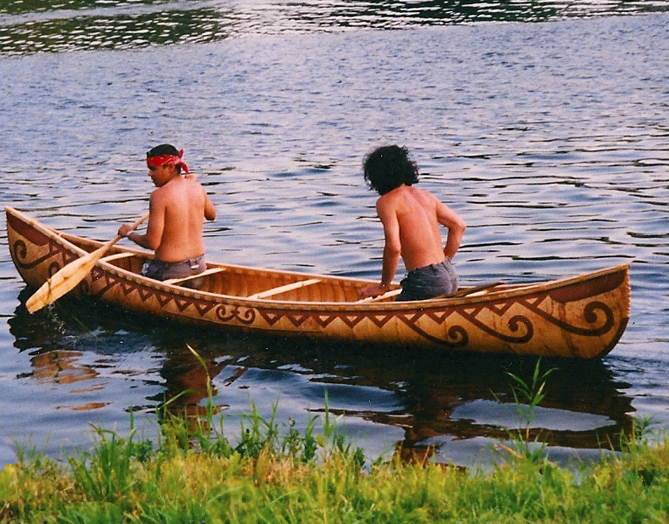
- Known for basketmaking and birchbark canoes
- Part of the Wabanaki Confederacy
Who are the Passamaquoddy?
The Passamaquoddy, or Peskotomuhkati, are an Indigenous people of northeastern North America. Their community is held together by shared language, kinship, and a deep connection to their homeland, which straddles the U.S. state of Maine and the Canadian province of New Brunswick. They are one of the nations of the Wabanaki Confederacy, a traditional alliance of Algonquian-speaking peoples. The Passamaquoddy value their fishing heritage, oral traditions, and close-knit social ties.
Where do the Passamaquoddy live?
The Passamaquoddy homeland, called Peskotomuhkatikuk, covers coastal and riverine areas along the Bay of Fundy, Passamaquoddy Bay, the Gulf of Maine, and the St. Croix River. This region, known as Dawnland, is rich in marine and forest resources. Today, most Passamaquoddy live on two reservations in eastern Maine—Indian Township (Motahkomikuk) and Pleasant Point (Sipayik)—while a smaller community lives in New Brunswick, Canada.
What language do the Passamaquoddy speak?
The Passamaquoddy speak Maliseet-Passamaquoddy, an Algonquian language closely related to that of the Wolastoqiyik. Around 500 speakers remain, mostly elders. English is the main language for most, and some in Canada also speak French. Efforts to revitalize the language include a published dictionary and an online language portal with videos of native speakers.
How do the Passamaquoddy live?
Traditionally, the Passamaquoddy followed seasonal cycles: inland hunting in winter and coastal fishing in summer. Spear-fishing for pollock and harvesting seafood were central. They also gathered wild foods, farmed, and crafted items like birchbark canoes and baskets. Today, many combine traditional crafts with wage work and other modern livelihoods.
How is Passamaquoddy society organised?
Passamaquoddy society is organized around extended families and kinship networks. Leadership includes chiefs and councils. Decision-making often involves community discussion. Marriage and descent are shaped by longstanding customs. The community values respect for elders and the sharing of stories, which help maintain cultural identity.


What do the Passamaquoddy believe?
The Passamaquoddy hold beliefs rooted in Wabanaki mythology, with a spiritual connection to the land and water. Catholicism is also practiced. Art and music are important, with birchbark etching, basketmaking, and canoe building as notable traditions. Storytelling and ritual play key roles in passing on beliefs and values.
The history of the Passamaquoddy
Before European contact, the Passamaquoddy lived by hunting, fishing, and gathering, moving seasonally within their homeland. European settlers forced them from much of their land in the 1800s. After U.S. independence, their territory was reduced to reservations in Maine. The tribe gained federal recognition in 1976, but the 1980 Maine Indian Claims Settlement Act limited some rights. In Canada, the Peskotomuhkati Nation is not officially recognized, though it has an organized leadership.
Passamaquoddy life today
Today, about 3,575 Passamaquoddy are enrolled members, mostly in Maine. The tribe has federal recognition in the U.S., with special political status in Maine, including a nonvoting seat in the state legislature. In Canada, the community continues to seek formal recognition. Language revitalization, land rights, and cultural preservation remain important issues.
Questions people ask about the Passamaquoddy
Where do the Passamaquoddy live?
The Passamaquoddy live mainly in eastern Maine, United States, on the Indian Township and Pleasant Point reservations, and a smaller group lives in New Brunswick, Canada.
How many Passamaquoddy are there?
There are about 3,575 enrolled Passamaquoddy tribal members, with most living in Maine and a smaller community in New Brunswick.
What language do the Passamaquoddy speak?
They speak Maliseet-Passamaquoddy, an Algonquian language, though most now use English. Some in Canada also speak French. Around 500 people, mostly elders, still speak the traditional language.
What are the Passamaquoddy known for?
They are known for their fishing traditions, especially spear-fishing for pollock, basketmaking, birchbark canoes, and as members of the Wabanaki Confederacy.
Are the Passamaquoddy officially recognized?
The Passamaquoddy Tribe is federally recognized in Maine, United States. In Canada, the Peskotomuhkati Nation is not officially recognized as a First Nation.
Sources and further reading
- Passamaquoddy on WikipediaEncyclopedia
- Encyclopaedia BritannicaArticle
- More photos on Wikimedia CommonsPhotos
- Wikidata recordOpen data
This page was written with AI assistance from the sources above and checked automatically before publishing. It may contain mistakes, and it is no substitute for hearing from the Passamaquoddy themselves. If something is wrong, tell us. Last refreshed 2026-10-02.
Neighbours in the United States
All peoples of the United States ShawneeŠaawanooaki
🇺🇸 United StatesAlgonquian-speaking people now based in Oklahoma, once of the Ohio Valley
About 8,000, Algonquian
ShawneeŠaawanooaki
🇺🇸 United StatesAlgonquian-speaking people now based in Oklahoma, once of the Ohio Valley
About 8,000, Algonquian
 ArapahoHinono'eino
🇺🇸 United StatesPlains Algonquian people now in Wyoming and Oklahoma
About 11,000, Algonquian
ArapahoHinono'eino
🇺🇸 United StatesPlains Algonquian people now in Wyoming and Oklahoma
About 11,000, Algonquian
 PotawatomiBodéwadmi
🇺🇸 United States and 1 moreKeepers of the fire in the Great Lakes and Plains, with many recognized bands today
About 43,000, Algonquian
PotawatomiBodéwadmi
🇺🇸 United States and 1 moreKeepers of the fire in the Great Lakes and Plains, with many recognized bands today
About 43,000, Algonquian
 Narragansett
🇺🇸 United StatesIndigenous people of Rhode Island, known for their ties to Narragansett Bay
About 3,000, Algonquian
Narragansett
🇺🇸 United StatesIndigenous people of Rhode Island, known for their ties to Narragansett Bay
About 3,000, Algonquian
Other Algonquian speakers
See them all MenomineeMamaceqtaw
🇺🇸 United StatesA Native nation rooted in Wisconsin, known for wild rice and forest stewardship
About 9,000, Algonquian
MenomineeMamaceqtaw
🇺🇸 United StatesA Native nation rooted in Wisconsin, known for wild rice and forest stewardship
About 9,000, Algonquian
 Pequot
🇺🇸 United StatesNative people of Connecticut, known for survival and revival after near-destruction
About 2,000, Algonquian
Pequot
🇺🇸 United StatesNative people of Connecticut, known for survival and revival after near-destruction
About 2,000, Algonquian
 Piegan BlackfeetPiikáni
🇺🇸 United States and 1 moreLargest group of the Blackfeet Confederacy in Montana and Alberta
About 105,000, Algonquian
Piegan BlackfeetPiikáni
🇺🇸 United States and 1 moreLargest group of the Blackfeet Confederacy in Montana and Alberta
About 105,000, Algonquian
 PenobscotPαnawάhpskewi
🇺🇸 United StatesWabanaki people of Maine, living along the Penobscot River
About 2,000, Algonquian
PenobscotPαnawάhpskewi
🇺🇸 United StatesWabanaki people of Maine, living along the Penobscot River
About 2,000, Algonquian