
Penobscot
They call themselves Pαnawάhpskewi
Wabanaki people of Maine, living along the Penobscot River
The Penobscot are an Indigenous people of the Northeastern Woodlands, mainly living on Indian Island in Maine, United States. Numbering about 2,278 enrolled members, they are part of the Wabanaki Confederacy and are known for their deep connection to the Penobscot River, basketry, and ongoing efforts to reclaim land and language.
- Main settlement is Indian Island on the Penobscot River in Maine
- Part of the Wabanaki Confederacy with four other nations
- Known for basketry using sweet grass and brown ash
- Won a major land claim settlement in 1980
- Reviving their Eastern Abenaki dialect through community programs
Who are the Penobscot?
The Penobscot are an Indigenous people of the Northeastern Woodlands, centered today on Indian Island in Maine. They are one of the Wabanaki Confederacy nations, sharing close ties with the Abenaki, Passamaquoddy, Wolastoqiyik, and Mi'kmaq. Their identity is rooted in their connection to the Penobscot River, which shapes their culture, food, and traditions. The community is held together by shared history, governance, and ongoing efforts to sustain their language and customs.
Where do the Penobscot live?
The Penobscot homeland lies along the Penobscot River in central Maine, a landscape of forests, wetlands, and waterways. Indian Island, near Old Town, Maine, is the heart of their community. Traditionally, their territory extended along the river between present-day Old Town and Verona Island. The land and river provide fish, game, and plants, and remain central to Penobscot life and identity.
What language do the Penobscot speak?
The Penobscot historically spoke a dialect of Eastern Abenaki, part of the Algonquian language family. The last fluent speaker died in the 1990s, but efforts to revive the language continue, with lessons in schools and community programs. A written form exists, using a modified Roman alphabet to capture unique sounds. English is also widely spoken.
How do the Penobscot live?
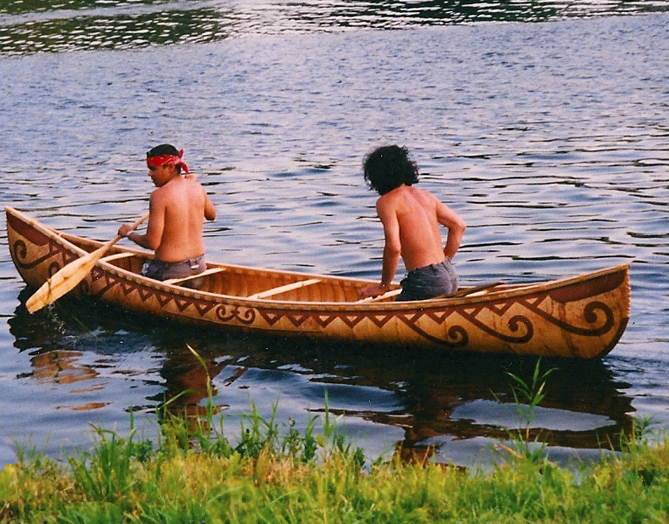
Traditionally, the Penobscot lived by hunting, fishing, gathering, and making crafts. Men hunted animals like moose, beaver, and birds, while women gathered berries, nuts, and roots. Fishing in the Penobscot River was vital. They made baskets from sweet grass, brown ash, and birch bark—skills still practiced today. Modern livelihoods include wage work, but traditional crafts and fishing remain important.
How is Penobscot society organised?
Penobscot society is organized around family and community. Leadership includes a tribal chief and vice-chief, with a representative to the Maine House of Representatives. Historically, they moved seasonally in bands, following food sources. Today, community decisions are made through tribal governance, and there is a strong emphasis on cultural preservation and education.


What do the Penobscot believe?
The Penobscot follow Wabanaki spiritual traditions, honoring the land, river, and natural world. Christianity is also present, reflecting centuries of contact. Basketry is a key art form, using local plants. Rituals, stories, and language are important in passing down beliefs. Healing practices include the use of plant medicines, such as balsam fir sap for wounds.
The history of the Penobscot
Penobscot people have lived in Maine for at least 11,000 years. Contact with Europeans began in the 16th century through the fur trade, bringing new goods but also disease and land loss. Their population declined sharply due to epidemics, violence, and environmental changes. The Penobscot sided with the French in colonial wars, then with the Patriots in the American Revolution, but continued to lose land. By the 19th century, most lived on Indian Island. In the 1970s, the Penobscot sued for land claims, leading to a major settlement in 1980 that restored some land and funds.
Penobscot life today
Today, the Penobscot Nation numbers over 2,200 enrolled members, mainly on Indian Island. They are a federally recognized tribe with their own government. The community works to revive their language and traditions, and to protect their land and river rights. Pressures include environmental threats and legal disputes over fishing and hunting, but cultural renewal and sovereignty efforts remain strong.
Questions people ask about the Penobscot
Where do the Penobscot live?
The Penobscot mainly live on Indian Island in the Penobscot River, near Old Town, Maine, in the United States.
How many Penobscot are there?
There are about 2,278 enrolled members of the Penobscot Nation.
What language do the Penobscot speak?
The Penobscot historically spoke a dialect of Eastern Abenaki, an Algonquian language. Today, English is widely spoken and efforts are underway to revive their traditional language.
What are the Penobscot known for?
They are known for their connection to the Penobscot River, basketry made from local plants, and their role in the Wabanaki Confederacy.
Are the Penobscot a recognized tribe?
Yes, the Penobscot Nation is a federally recognized tribe in Maine, United States.
Sources and further reading
- Penobscot on WikipediaEncyclopedia
- Encyclopaedia BritannicaArticle
- More photos on Wikimedia CommonsPhotos
- Wikidata recordOpen data
This page was written with AI assistance from the sources above and checked automatically before publishing. It may contain mistakes, and it is no substitute for hearing from the Penobscot themselves. If something is wrong, tell us. Last refreshed 2026-10-02.
Neighbours in the United States
All peoples of the United States ShawneeŠaawanooaki
🇺🇸 United StatesAlgonquian-speaking people now based in Oklahoma, once of the Ohio Valley
About 8,000, Algonquian
ShawneeŠaawanooaki
🇺🇸 United StatesAlgonquian-speaking people now based in Oklahoma, once of the Ohio Valley
About 8,000, Algonquian
 ArapahoHinono'eino
🇺🇸 United StatesPlains Algonquian people now in Wyoming and Oklahoma
About 11,000, Algonquian
ArapahoHinono'eino
🇺🇸 United StatesPlains Algonquian people now in Wyoming and Oklahoma
About 11,000, Algonquian
 PotawatomiBodéwadmi
🇺🇸 United States and 1 moreKeepers of the fire in the Great Lakes and Plains, with many recognized bands today
About 43,000, Algonquian
PotawatomiBodéwadmi
🇺🇸 United States and 1 moreKeepers of the fire in the Great Lakes and Plains, with many recognized bands today
About 43,000, Algonquian
 Narragansett
🇺🇸 United StatesIndigenous people of Rhode Island, known for their ties to Narragansett Bay
About 3,000, Algonquian
Narragansett
🇺🇸 United StatesIndigenous people of Rhode Island, known for their ties to Narragansett Bay
About 3,000, Algonquian
Other Algonquian speakers
See them all Pequot
🇺🇸 United StatesNative people of Connecticut, known for survival and revival after near-destruction
About 2,000, Algonquian
Pequot
🇺🇸 United StatesNative people of Connecticut, known for survival and revival after near-destruction
About 2,000, Algonquian
 MenomineeMamaceqtaw
🇺🇸 United StatesA Native nation rooted in Wisconsin, known for wild rice and forest stewardship
About 9,000, Algonquian
MenomineeMamaceqtaw
🇺🇸 United StatesA Native nation rooted in Wisconsin, known for wild rice and forest stewardship
About 9,000, Algonquian
 PassamaquoddyPeskotomuhkati
🇺🇸 United States and 1 moreNative people of Maine and New Brunswick, known for fishing and the Wabanaki Confederacy
About 4,000, Algonquian
PassamaquoddyPeskotomuhkati
🇺🇸 United States and 1 moreNative people of Maine and New Brunswick, known for fishing and the Wabanaki Confederacy
About 4,000, Algonquian
 Piegan BlackfeetPiikáni
🇺🇸 United States and 1 moreLargest group of the Blackfeet Confederacy in Montana and Alberta
About 105,000, Algonquian
Piegan BlackfeetPiikáni
🇺🇸 United States and 1 moreLargest group of the Blackfeet Confederacy in Montana and Alberta
About 105,000, Algonquian