
Toltec
They call themselves Tōltēkah
Builders of Tula, influential in central Mexico's Postclassic era
The Toltec were a Mesoamerican people who ruled from their capital at Tula in central Mexico, reaching prominence between 950 and 1150 AD. They are known for their urban planning, monumental architecture, and influence on later cultures such as the Aztec, who saw them as cultural forerunners.
- Ruled from Tula, Hidalgo, between 950 and 1150 AD
- Famous for monumental architecture and obsidian workshops
- Influenced later cultures, especially the Aztec
- Nahuatl word 'Tōltēkah' means 'artisan' or 'person from Tula'
- Tula had pyramids, ball courts, and colonnaded civic buildings
Who were the Toltec?
The Toltec were a people of central Mexico who built their main city at Tula, Hidalgo. They rose to power in the Postclassic period and became known for their skills in building, crafts, and urban planning. The word 'Tōltēkah' in Nahuatl means both 'inhabitant of Tula' and 'artisan', reflecting their reputation for craftsmanship. Later cultures, especially the Aztec, looked to the Toltec as models of civilization and wisdom, blending history and myth in their stories about them.
Where did the Toltec live?
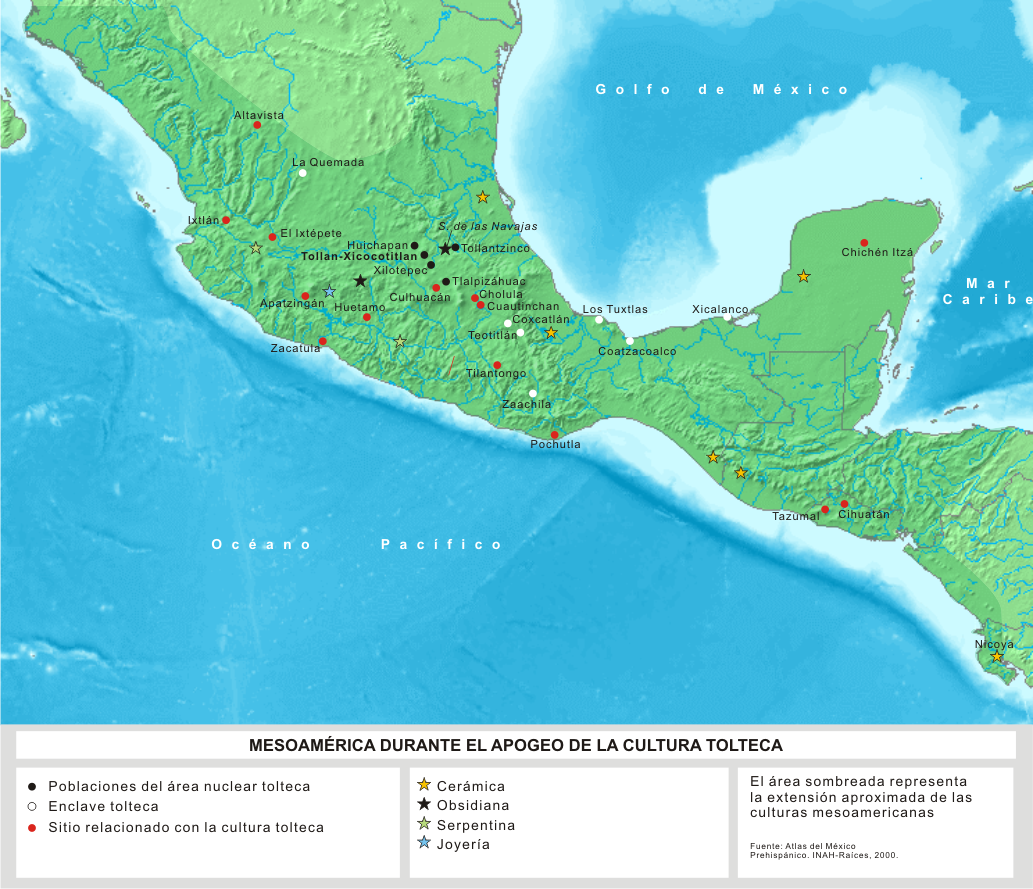
The Toltec homeland was the central Mexican highlands, with their capital at Tula (Tollan), in what is now Hidalgo state. The region includes hills, plains, valleys, and marshes, supporting both farming and trade. Tula was a planned city with pyramids, ball courts, and civic buildings, and its influence reached into other Mesoamerican regions, though the extent of this influence is debated.
What language did the Toltec speak?
The Toltec spoke Nahuatl, a language of the Uto-Aztecan family, and Otomi, from the Oto-Manguean family. Nahuatl later became the language of the Aztec and remains spoken in Mexico today. The word 'Toltec' itself comes from Nahuatl, and the language played a key role in the region's culture and administration.
How did the Toltec live?
The Toltec made their living through farming, crafts, and trade. Their capital, Tula, had specialized workshops, especially for obsidian, a volcanic glass used for tools and weapons. They built large civic and religious structures, including pyramids and colonnaded halls. Trade networks brought goods from distant regions, and the city's layout and buildings show a high level of organization and skill.
How was Toltec society organised?
Toltec society was urban and complex, with a central authority based in Tula. The city featured civic buildings and plazas for gatherings and ceremonies. The people were organized into groups of artisans and farmers. Leadership and decision-making structures are not fully known, but later traditions describe lists of rulers and a focus on skilled crafts and knowledge.



What did the Toltec believe?
The Toltec practiced a religion that included mythic traditions later adopted by the Aztec. Their beliefs featured gods such as Quetzalcoatl, and their rituals were held in temples and plazas. Art and architecture were important, with monumental sculptures and buildings reflecting both religious and civic life. The Aztecs credited the Toltec with many cultural achievements.
The history of the Toltec
The Toltec emerged after the decline of Teotihuacan, developing from a mix of local groups and migrants. Their capital, Tula, grew from a smaller settlement to a major city by the 10th century. At its height, Tula covered 16 square kilometers and may have had up to 60,000 people. The Toltec were known for their architecture, crafts, and trade, especially in obsidian. Their influence spread through trade and possibly conquest, but their power waned after the arrival of Chichimec peoples, who conquered Tula. The Aztec later viewed the Toltec as cultural ancestors, blending their history with legend.
What became of the Toltec?
The Toltec no longer exist as a distinct people, but their legacy remains in the ruins of Tula and in the stories told by later cultures. Their language, Nahuatl, is still spoken in Mexico. Archaeologists continue to study their cities and artifacts, and debates about their true history and influence continue among scholars.
Questions people ask about the Toltec
Where did the Toltec live?
The Toltec lived in central Mexico, with their main city at Tula in present-day Hidalgo state.
How many Toltec were there?
At its height, the city of Tula may have had up to 60,000 people, but no exact population figures are known.
What language did the Toltec speak?
The Toltec spoke Nahuatl and Otomi. Nahuatl later became the language of the Aztec.
What are the Toltec best known for?
They are best known for building the city of Tula, their monumental architecture, and their influence on later Mesoamerican cultures.
Do the Toltec still exist today?
The Toltec do not exist as a distinct people today, but their legacy survives in archaeology and cultural memory.
Sources and further reading
- Toltec on WikipediaEncyclopedia
- Encyclopaedia BritannicaArticle
- More photos on Wikimedia CommonsPhotos
- Wikidata recordOpen data
This page was written with AI assistance from the sources above and checked automatically before publishing. It may contain mistakes, and it is no substitute for hearing from the Toltec themselves. If something is wrong, tell us. Last refreshed 2026-10-02.
Neighbours in Mexico
All peoples of Mexico ApacheIndé
🇺🇸 United States and 2 moreSouthern Athabaskan-speaking peoples of the US Southwest and northern Mexico
About 195,000, Athabaskan
ApacheIndé
🇺🇸 United States and 2 moreSouthern Athabaskan-speaking peoples of the US Southwest and northern Mexico
About 195,000, Athabaskan
 Maya
🇬🇹 Guatemala and 5 moreIndigenous peoples of Mesoamerica with deep roots in Guatemala and Mexico
About 11 million, Mayan
Maya
🇬🇹 Guatemala and 5 moreIndigenous peoples of Mesoamerica with deep roots in Guatemala and Mexico
About 11 million, Mayan
 Nahua
🇲🇽 Mexico and 5 moreLargest Indigenous group in Mexico, speakers of Nahuatl across Mesoamerica
About 2.6 million, Uto-Aztecan
Nahua
🇲🇽 Mexico and 5 moreLargest Indigenous group in Mexico, speakers of Nahuatl across Mesoamerica
About 2.6 million, Uto-Aztecan
 ChiricahuaNde
🇺🇸 United States and 1 moreApache people of the US Southwest and northern Mexico
About 4,000, Southern Athabaskan
ChiricahuaNde
🇺🇸 United States and 1 moreApache people of the US Southwest and northern Mexico
About 4,000, Southern Athabaskan