
Maya
Indigenous peoples of Mesoamerica with deep roots in Guatemala and Mexico
The Maya are Indigenous peoples of Mesoamerica, mainly living in Guatemala, southern Mexico, Belize, western Honduras, and El Salvador. Numbering over 11 million, they are known for their ancient civilization, diverse languages, and vibrant traditions, with many communities maintaining distinct cultural identities today.
- Over 11 million Maya live in Central America and Mexico
- Maya speak more than 20 distinct Mayan languages
- Traditional dress is widely worn, especially by women in Guatemala
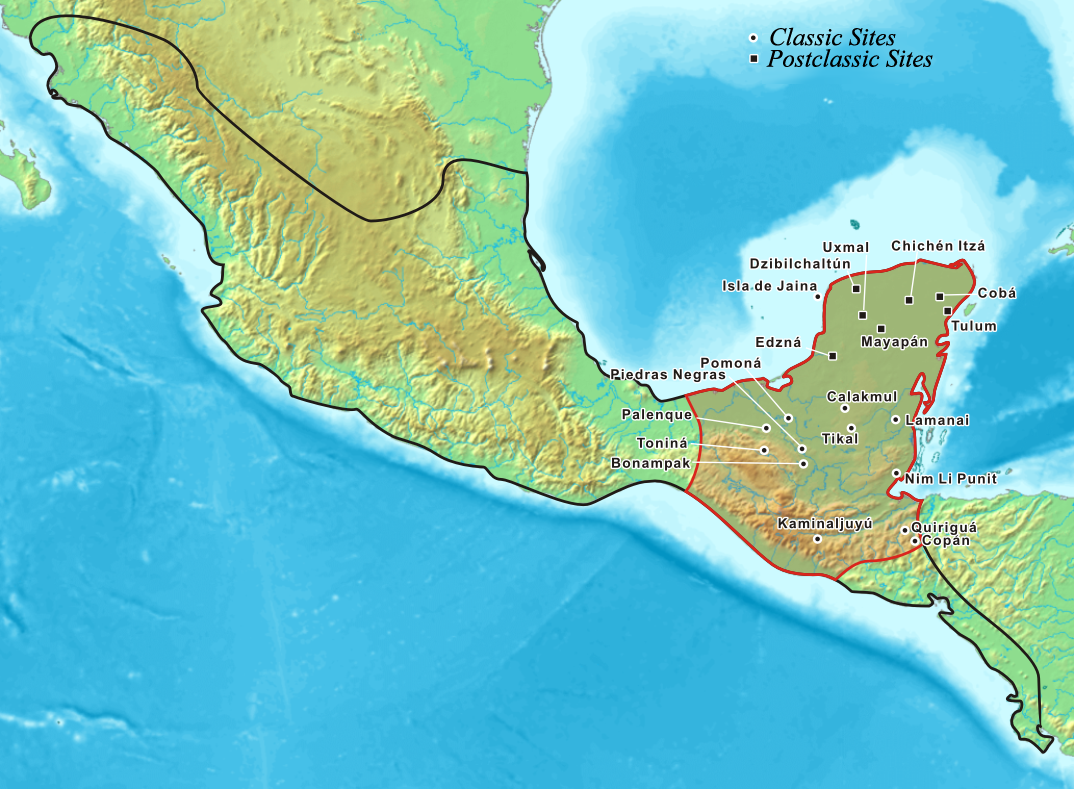
- The Maya homeland includes the Yucatán Peninsula and Guatemalan highlands
- Maya crafts and weaving are important cultural traditions
Who are the Maya?
The Maya are a group of Indigenous peoples who share ancestry with the builders of the ancient Maya civilization. They are not a single unified group but a collection of distinct communities, each with its own language, customs, and traditions. What holds them together is a shared heritage rooted in the lands of Mesoamerica, especially Guatemala and southern Mexico. Many Maya communities maintain their own forms of social organization, traditional clothing, and local identities, while others are more integrated into national societies. Despite centuries of change, Maya peoples continue to value their languages and cultural practices.
Where do the Maya live?
The Maya homeland covers a broad region of Central America, including the highlands and lowlands of Guatemala, the Yucatán Peninsula in Mexico, Chiapas, Tabasco, Belize, western Honduras, and El Salvador. This area includes mountains, rainforests, and fertile plains. The western highlands of Guatemala and the Yucatán Peninsula are especially important centers of Maya population and culture. Some groups, like the Lacandon Maya, lived in relative isolation in the jungles of Chiapas until the late 20th century.
What language do the Maya speak?
Maya peoples speak a variety of Mayan languages, which form a distinct language family. Some of the largest languages are Kʼicheʼ, Qʼeqchiʼ, and Yucatec Maya. Spanish is widely spoken as a first or second language, and English and Belizean Kriol are also used in Belize. While many Maya still speak their ancestral languages, others have shifted to Spanish or other dominant languages, especially in urban areas. Efforts to teach and preserve Mayan languages continue in schools and community programs.
How do the Maya live?
Traditionally, the Maya have been farmers, growing crops such as maize, beans, and squash. Many also engage in crafts, weaving, and local trade. In some regions, Maya people work in wage labor or migrate to cities for employment. Houses in rural areas are often built from local materials, and traditional clothing is still worn, especially by women in Guatemala. Maya communities have adapted to changing economic conditions, but many still rely on farming and crafts for their livelihoods.
How is Maya society organised?
Maya society is organized around families, extended kin groups, and, in some areas, clans. Social organization varies by region, with some communities maintaining traditional forms of leadership and decision-making. Marriage customs and inheritance patterns differ among groups. In Guatemala, local identity is often expressed through distinctive clothing and community festivals. Decision-making may involve elders or elected leaders, and some communities have their own councils.



What do the Maya believe?
Maya beliefs blend ancient traditions with Christianity. Many Maya practice a form of Catholicism or Protestantism, often alongside rituals and ceremonies rooted in the Maya religion. Traditional beliefs include respect for nature, ancestors, and sacred places. Art, music, and weaving are important expressions of identity. In Guatemala, traditional dress is a marker of local and ethnic identity, especially for women.
The history of the Maya
The ancestors of the Maya built one of the most remarkable civilizations of ancient America, known for its cities, writing, and calendar. After the collapse of the Classic Maya civilization around 900 AD, Maya peoples continued to live in the region, forming new communities and states. Spanish conquest in the 16th century brought disease, warfare, and colonization, leading to loss of land and autonomy. In the 19th century, Maya in Yucatán led the Caste War, one of the most successful Indigenous revolts in Mexico. In Guatemala, Maya communities faced discrimination and displacement well into the 20th century.
Maya life today
Today, over 11 million Maya live in Guatemala, Mexico, Belize, Honduras, El Salvador, and the United States. Many face challenges such as discrimination, land loss, and migration. However, Maya languages, crafts, and traditions remain strong in many areas. There are ongoing efforts to revive and teach Mayan languages, and Maya people continue to play important roles in local and national life. Some communities are highly integrated, while others maintain distinct cultural identities.
Questions people ask about the Maya
Where do the Maya live today?
Most Maya live in Guatemala, southern Mexico (especially the Yucatán Peninsula and Chiapas), Belize, western Honduras, and El Salvador. Some have also migrated to the United States.
How many Maya people are there?
There are more than 11 million Maya people, according to 2022 estimates, with the largest populations in Guatemala and Mexico.
What language do the Maya speak?
Maya people speak a variety of Mayan languages, such as Kʼicheʼ, Qʼeqchiʼ, and Yucatec Maya. Many also speak Spanish, and some speak English or Belizean Kriol.
What are the main beliefs of the Maya?
Many Maya practice Christianity (Catholicism or Protestantism), often alongside traditional Maya religious beliefs and rituals.
What are the main ways Maya people make a living?
Farming is traditional, with maize, beans, and squash as staples. Crafts, weaving, and wage labor are also important sources of income.
Sources and further reading
This page was written with AI assistance from the sources above and checked automatically before publishing. It may contain mistakes, and it is no substitute for hearing from the Maya themselves. If something is wrong, tell us. Last refreshed 2026-10-02.
Neighbours in Guatemala
All peoples of Guatemala ToltecTōltēkah
🇲🇽 Mexico and 1 moreBuilders of Tula, influential in central Mexico's Postclassic era
Historical, Uto-Aztecan, Oto-Manguean
ToltecTōltēkah
🇲🇽 Mexico and 1 moreBuilders of Tula, influential in central Mexico's Postclassic era
Historical, Uto-Aztecan, Oto-Manguean
 Nahua
🇲🇽 Mexico and 5 moreLargest Indigenous group in Mexico, speakers of Nahuatl across Mesoamerica
About 2.6 million, Uto-Aztecan
Nahua
🇲🇽 Mexico and 5 moreLargest Indigenous group in Mexico, speakers of Nahuatl across Mesoamerica
About 2.6 million, Uto-Aztecan
 GarifunaGarínagu
🇭🇳 Honduras and 5 moreAfro-Indigenous people of Caribbean origin living in Central America and the US
About 400,000, Arawakan
GarifunaGarínagu
🇭🇳 Honduras and 5 moreAfro-Indigenous people of Caribbean origin living in Central America and the US
About 400,000, Arawakan