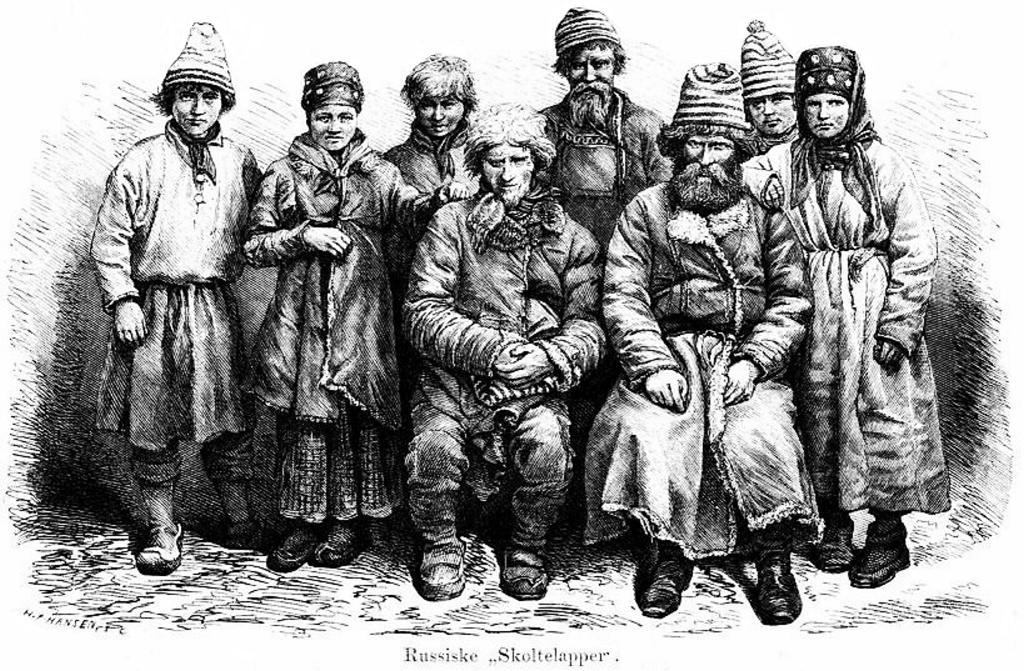
Skolts
They call themselves Säʹmmla / Nuõrttsääʹm
Indigenous Sámi of the borderlands of Finland, Russia, and Norway
The Skolts are an indigenous Sámi people living mainly in Finland, Russia (Murmansk Oblast), and Norway. Numbering about 1,250, they are known for their Eastern Orthodox faith and their Skolt Sámi language, though only a minority now speak it. Their homeland spans the Kola Peninsula and nearby Fenno-Scandinavian regions.
- Most Skolts live in Finland, especially in Inari municipality.
- They are traditionally Eastern Orthodox, unlike most other Sámi.
- Their language, Skolt Sámi, is endangered with about 400 speakers.
- Their homeland was split by the Treaty of Tartu in 1920.
- Some Skolts live in Russia's Murmansk Oblast and Norway's Neiden.
Who are the Skolts?
The Skolts are one of the Sámi peoples, indigenous to the border regions of Finland, Russia, and Norway. They are closely linked by their shared language, Skolt Sámi, and their distinct traditions. Unlike most other Sámi groups, the Skolts are traditionally Eastern Orthodox Christians. Their identity is shaped by their history in the Kola Peninsula and surrounding areas, and by the challenges of maintaining their culture across national borders.
Where do the Skolts live?
The Skolts' homeland covers the Kola Peninsula and the adjacent Fenno-Scandinavian mainland. Today, most Skolts live in the Finnish villages of Sevettijärvi, Keväjärvi, and Nellim (in Inari), as well as in parts of Murmansk Oblast, Russia, and in Neiden, Norway. The land is marked by forests, rivers, and lakes, supporting traditional activities such as fishing and reindeer herding.
What language do the Skolts speak?
The Skolts speak Skolt Sámi, a Uralic language distinct within the Sámi family. Only about 400 Skolts are fluent speakers today, and most also speak Finnish, Russian, or Norwegian. The language is considered endangered, with efforts underway to support its use and transmission to younger generations.
How do the Skolts live?
Traditionally, the Skolts lived by reindeer herding, fishing, and hunting, making use of the forests and waterways of their homeland. These activities shaped their seasonal movements and social life. Today, while some Skolts continue these practices, many have adapted to new livelihoods, especially after resettlements and border changes in the 20th century.
How is Skolts society organised?
Skolt society has long been organized around extended families and local communities. Decisions are often made collectively, with elders playing a respected role. Marriage and kinship ties help maintain connections between families across borders. The community values the preservation of their language, customs, and Orthodox Christian faith.


What do the Skolts believe?
Most Skolts are members of the Eastern Orthodox Church, a tradition dating to their conversion in the 16th century by Saint Tryphon of Pechenga. Religious festivals and rituals remain important in community life. The Skolts also maintain cultural practices in music, crafts, and dress, reflecting both Sámi and Orthodox influences.
The history of the Skolts
The Skolt homeland was divided by the Treaty of Tartu in 1920, splitting their territory between Finland and the Soviet Union. This border disrupted traditional ways of life. After World War II, further territorial losses forced many Skolts to resettle in Finland. These upheavals led to a decline in traditional livelihoods and a dispersal of the population, but the Skolts have worked to maintain their identity and community ties.
Skolts life today
Today, the Skolt population is about 1,250, with most living in Finland. Only a minority still speak Skolt Sámi fluently. The community faces challenges in preserving their language and culture, but there are active efforts to support cultural revival and education. The Skolts continue to assert their identity as an indigenous people of the borderlands.
Questions people ask about the Skolts
Where do the Skolts live?
The Skolts live mainly in Finland (especially in Sevettijärvi, Keväjärvi, and Nellim), as well as in Murmansk Oblast, Russia, and in Neiden, Norway.
How many Skolts are there?
There are about 1,250 Skolts, with most living in Finland, and smaller numbers in Russia and Norway.
What language do the Skolts speak?
The Skolts traditionally speak Skolt Sámi, but only about 400 are fluent today. Many also speak Finnish, Russian, or Norwegian.
What religion do the Skolts follow?
Most Skolts are Eastern Orthodox Christians, a tradition dating back to the 16th century.
What is the history of the Skolt homeland?
The Skolt homeland was divided by the Treaty of Tartu in 1920 and further affected by World War II, leading to resettlement and changes in traditional life.
Sources and further reading
- Skolts on WikipediaEncyclopedia
- Encyclopaedia BritannicaArticle
- More photos on Wikimedia CommonsPhotos
- Wikidata recordOpen data
This page was written with AI assistance from the sources above and checked automatically before publishing. It may contain mistakes, and it is no substitute for hearing from the Skolts themselves. If something is wrong, tell us. Last refreshed 2026-10-02.
Neighbours in Finland
All peoples of Finland Sámisámit
🇳🇴 Norway and 3 moreIndigenous reindeer herders and fishers of northern Fennoscandia and Russia
About 80,000, Uralic
Sámisámit
🇳🇴 Norway and 3 moreIndigenous reindeer herders and fishers of northern Fennoscandia and Russia
About 80,000, Uralic
 Karelianskarjalaižet
🇷🇺 Russia and 7 moreIndigenous Finnic people of Karelia, now in Russia and Finland
About 43,000, Uralic
Karelianskarjalaižet
🇷🇺 Russia and 7 moreIndigenous Finnic people of Karelia, now in Russia and Finland
About 43,000, Uralic
 Amhara
🇪🇹 Ethiopia and 5 moreSemitic-speaking people of Ethiopia's north and central highlands
About 20 million, Ethiopian Semitic
Amhara
🇪🇹 Ethiopia and 5 moreSemitic-speaking people of Ethiopia's north and central highlands
About 20 million, Ethiopian Semitic
 Votiansvađđalaizõd
🇷🇺 Russia and 4 moreFinnic people native to Ingria in northwestern Russia
About 109, Finnic
Votiansvađđalaizõd
🇷🇺 Russia and 4 moreFinnic people native to Ingria in northwestern Russia
About 109, Finnic

