
Alas
They call themselves Ukhang Alas
Rice-farming Batak people of the Alas valley in Aceh, Sumatra
The Alas are an indigenous Batak sub-ethnic group living mainly in Southeast Aceh Regency, Aceh, Sumatra, Indonesia. Numbering about 98,000, they speak the Alas language and are known for their rice farming, patrilineal clans, and traditional crafts. Most follow Islam and maintain distinct cultural traditions.
- Live mainly in the Alas valley of Southeast Aceh, Sumatra
- Speak the Alas language, related to Batak languages
- Society is organized by patrilineal clans
- Converted to Islam between the 15th and 17th centuries
- Suffered heavy losses during the Dutch colonial campaign in 1904
Who are the Alas?
The Alas are an indigenous people of the Batak group, living in the Alas valley and surrounding areas of Southeast Aceh, Sumatra. They are held together by a shared language, patrilineal clan system, and Islamic faith. Each person belongs to a named clan, which shapes social life and marriage. Their identity is distinct from other Batak and Acehnese groups, with unique customs, crafts, and dances. The Alas maintain a strong sense of community rooted in their homeland and traditions.
Where do the Alas live?
The Alas live in the lush Alas valley, which includes the Gunung Leuser and Ketambe regions in Southeast Aceh, northern Sumatra. The area is marked by tropical rainforests, rivers, and fertile fields. The Alas River is central to their way of life, providing water for rice farming and fishing. The region is remote and mountainous, with villages often surrounded by forests and fields, supporting both agriculture and traditional crafts.
What language do the Alas speak?
The Alas speak the Alas language, which belongs to the northern Batak branch of the Austronesian family. It is closely related to the Kluet language, and sometimes the two are grouped as Alas–Kluet. While most Alas also speak Indonesian, their language is distinct from Acehnese and remains in daily use. As of 2000, about 80,000 people spoke Alas.
How do the Alas live?
The Alas are primarily rice farmers, cultivating irrigated fields in their valley. Some also grow cash crops in gardens. Fishing in the Alas River and local brooks was once a vital source of protein, though fish farming in ponds is now becoming more common. Traditional crafts include weaving rumbia leaves, making pandan mats, and forging ritual swords. Their houses and mosques reflect local building styles, and food traditions remain important in daily life.
How is Alas society organised?
Alas society is organized around patrilineal clans, known as mekhge, each with its own surname. There were 27 clans in 1988, though some have since disappeared. Villages (kute) may be home to one or several clans. Marriage is exogamous, meaning people marry outside their own clan. Leadership was historically held by local lords, and decisions are made within the framework of clan and village structures.


What do the Alas believe?
Most Alas people follow Islam, a faith adopted between the 15th and 17th centuries. Religious life centers on the mosque and Islamic festivals, but traditional rituals and arts also play a role. The Alas are known for their dances, music, and crafts such as ritual umbrellas and customary attire. Weaving and mat-making are important, and traditional swords and umbrellas are used in ceremonies.
The history of the Alas
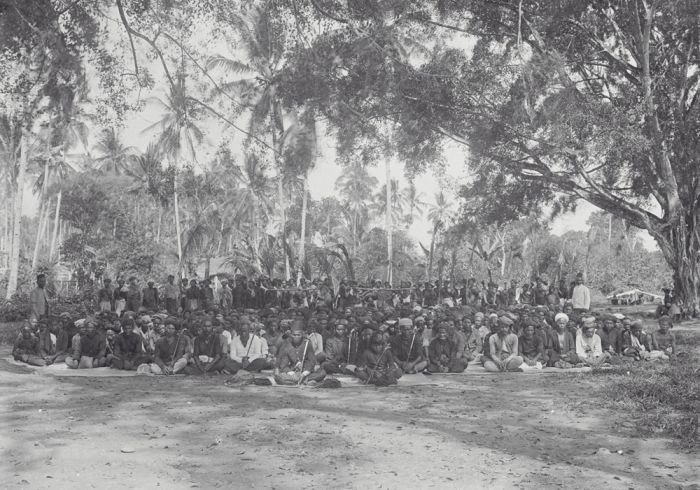
The Alas have composite origins, reflected in their clan names. In 1904, during the Aceh War, Dutch colonial forces led by Van Daalen invaded the Alas valley, destroying forts and killing many inhabitants. The campaign resulted in the subjugation of the region and heavy loss of life, including the Kuta Reh and Likat massacres. Afterward, the Dutch declared the area part of the Dutch East Indies. Despite this, the Alas people have maintained their identity and traditions.
Alas life today
Today, the Alas number around 98,000 and continue to live mainly in Southeast Aceh. They maintain their language and clan system, though some traditions have changed with modern life. Rice farming and crafts remain important, and most people are Muslim. The community faces pressures from outside influences and changes in land use, but efforts to preserve language and culture continue.
Questions people ask about the Alas
Where do the Alas people live?
The Alas live mainly in the Alas valley, Gunung Leuser, and Ketambe areas of Southeast Aceh Regency, Sumatra, Indonesia.
How many Alas people are there?
There are about 98,000 Alas people, according to recent figures.
What language do the Alas speak?
They speak the Alas language, which is part of the northern Batak branch of the Austronesian family.
What is the main religion of the Alas?
Most Alas people follow Islam, which they adopted between the 15th and 17th centuries.
How is Alas society organized?
Alas society is organized by patrilineal clans, with each person belonging to a named clan that shapes social life and marriage.
Sources and further reading
This page was written with AI assistance from the sources above and checked automatically before publishing. It may contain mistakes, and it is no substitute for hearing from the Alas themselves. If something is wrong, tell us. Last refreshed 2026-10-02.
Neighbours in Indonesia
All peoples of Indonesia MalaysOrang Melayu
🇲🇾 Malaysia and 4 moreAustronesian people of the Malay Peninsula, Sumatra, Borneo and nearby islands
About 30 million, Austronesian
MalaysOrang Melayu
🇲🇾 Malaysia and 4 moreAustronesian people of the Malay Peninsula, Sumatra, Borneo and nearby islands
About 30 million, Austronesian
 Minangkabaubangso Minangkabau
🇮🇩 Indonesia and 3 moreMatrilineal Muslim society from the highlands of West Sumatra
About 6.6 million, Austronesian
Minangkabaubangso Minangkabau
🇮🇩 Indonesia and 3 moreMatrilineal Muslim society from the highlands of West Sumatra
About 6.6 million, Austronesian
 Sundaneseᮅᮛᮀ ᮞᮥᮔ᮪ᮓ (Urang Sunda)
🇮🇩 Indonesia and 3 moreThe native people of western Java, Indonesia, known for their language and traditions
About 42 million, Austronesian
Sundaneseᮅᮛᮀ ᮞᮥᮔ᮪ᮓ (Urang Sunda)
🇮🇩 Indonesia and 3 moreThe native people of western Java, Indonesia, known for their language and traditions
About 42 million, Austronesian
 Balineseanak Bali
🇮🇩 IndonesiaHindu-majority people of Bali, known for art, dance, and water-temple farming
About 3.9 million, Austronesian
Balineseanak Bali
🇮🇩 IndonesiaHindu-majority people of Bali, known for art, dance, and water-temple farming
About 3.9 million, Austronesian
Other Austronesian speakers
See them all TorajaTo Raya
🇮🇩 IndonesiaHighland people of South Sulawesi known for elaborate funerals and tongkonan houses
About 1.1 million, Austronesian
TorajaTo Raya
🇮🇩 IndonesiaHighland people of South Sulawesi known for elaborate funerals and tongkonan houses
About 1.1 million, Austronesian
 Sama-BajauSama
🇵🇭 Philippines and 3 moreSeafaring Austronesian people of the southern Philippines, Borneo, and eastern Indonesia
About 1.3 million, Austronesian
Sama-BajauSama
🇵🇭 Philippines and 3 moreSeafaring Austronesian people of the southern Philippines, Borneo, and eastern Indonesia
About 1.3 million, Austronesian
 MadureseOrèng Mâdhurâ
🇮🇩 Indonesia and 2 moreCattle herders and satay makers from Madura Island and eastern Java
About 7.2 million, Austronesian
MadureseOrèng Mâdhurâ
🇮🇩 Indonesia and 2 moreCattle herders and satay makers from Madura Island and eastern Java
About 7.2 million, Austronesian
 IbanDayak Iban
🇲🇾 Malaysia and 2 moreDayak people of northwestern Borneo, known for longhouses and weaving
About 740,000, Austronesian
IbanDayak Iban
🇲🇾 Malaysia and 2 moreDayak people of northwestern Borneo, known for longhouses and weaving
About 740,000, Austronesian