
Sama-Bajau
They call themselves Sama
Seafaring Austronesian people of the southern Philippines, Borneo, and eastern Indonesia
The Sama-Bajau are a group of closely related Austronesian peoples known for their maritime traditions, living mainly in the southern Philippines, Sabah and eastern Malaysia, eastern Indonesia, and Brunei. Numbering over a million, they are recognized for their history of boat-dwelling, fishing, and coastal settlements, with many now living in stilt houses along the shore.
Who are the Sama-Bajau?
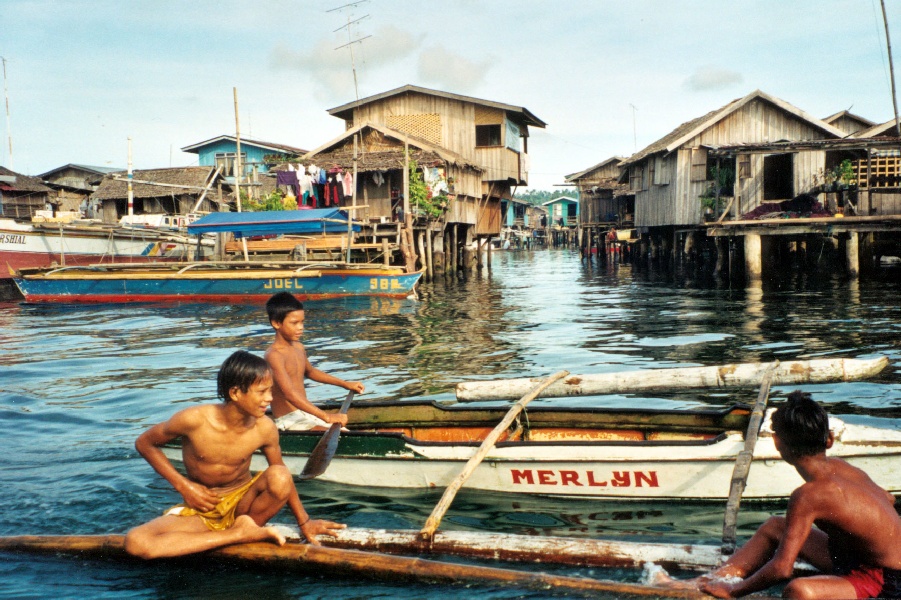
The Sama-Bajau are a collective of related Austronesian peoples who see themselves as a single ethnic group, though they use different names depending on region and subgroup. Traditionally, they are known for their close relationship with the sea, with many groups historically living on boats and relying on maritime skills for survival. Today, most live in stilt houses in coastal areas, but their identity remains tied to their seafaring past. They are found mainly in the southern Philippines, Sabah and other parts of Malaysia, eastern Indonesia, and Brunei.
Where do the Sama-Bajau live?
The Sama-Bajau homeland stretches across the islands and coastal regions of the Sulu Archipelago, the shores of Mindanao, Sabah and other parts of Borneo, Sulawesi, and the eastern Indonesian islands. These areas are characterized by shallow seas, coral reefs, and mangrove forests, which have supported their fishing and trading way of life. Many communities are still found in these maritime environments, though some have moved inland or to urban areas.
What language do the Sama-Bajau speak?
The Sama-Bajau speak a range of closely related languages known as the Sama–Bajaw languages, which belong to the Austronesian family. Many also speak Malay, Indonesian, Tagalog, and other regional languages. Language use varies by country and community, with some groups maintaining their traditional languages while others shift to dominant national languages.
How do the Sama-Bajau live?
Fishing and gathering from the sea have long been central to Sama-Bajau life, with many families using small wooden boats for fishing, transport, and sometimes as homes. Some groups also practice farming and trading. Traditional houses are often built on stilts over shallow coastal waters. Tools and vessels such as the perahu, lepa, and vinta are distinctive to their culture. In Sabah, some groups are also known for horse breeding and riding.
How is Sama-Bajau society organised?
Sama-Bajau society is organized around kinship and clan ties, often linked to place of origin or traditional occupation. Family and extended kin are important, and some groups trace descent through both parents. Marriage is usually within the group, and elders or respected leaders often mediate community decisions. Oral traditions, genealogies, and shared customs help maintain group identity.


What do the Sama-Bajau believe?
Most Sama-Bajau today are Sunni Muslims, a result of centuries of contact with Malay sultanates and Islamic traders. Religious practices are often blended with local traditions, and rituals related to the sea and fishing remain important. Music, dance, and colorful traditional dress are part of celebrations and ceremonies. Oral storytelling preserves myths, histories, and genealogies.
The history of the Sama-Bajau
The Sama-Bajau have a long history as seafaring people, with oral traditions describing migrations, royal connections, and legendary ancestors. Historically, they lived as boat-dwellers, trading and fishing across the seas of Southeast Asia. Over time, many settled in coastal villages, especially after the spread of Islam and the rise of regional sultanates. Colonial and modern pressures, including conflict and economic change, have led to migration and adaptation.
Sama-Bajau life today
Today, the Sama-Bajau number over a million and live across several countries. Many have shifted from boat-dwelling to living in coastal villages or towns. In Malaysia, they are recognized as Bumiputera and have special legal status. However, some communities face challenges such as displacement, poverty, and loss of traditional livelihoods. Migration continues, especially from the Philippines to Malaysia, often due to conflict or economic need.
Questions people ask about the Sama-Bajau
Where do the Sama-Bajau live?
The Sama-Bajau live in the Philippines, Malaysia, Brunei and Indonesia, in the Sulu Archipelago, coastal Borneo, Sulawesi, and eastern Indonesian islands.
How many Sama-Bajau people are there?
Our sources give the Sama-Bajau population as about 1.3 million worldwide. Counts of peoples vary with who is counted and when.
What language do the Sama-Bajau speak?
The Sama-Bajau speak Sama–Bajaw languages, Malay, Indonesian, Tagalog, which belongs to the Austronesian family of languages.
How do the Sama-Bajau make a living?
The Sama-Bajau are known for fishing and the sea, hunting and gathering and settled farming. Like most peoples, they combine several ways of making a living, and these have changed over time.
Sources and further reading
This page was written with AI assistance from the sources above and checked automatically before publishing. It may contain mistakes, and it is no substitute for hearing from the Sama-Bajau themselves. If something is wrong, tell us. Last refreshed 2026-10-02.
Neighbours in the Philippines
All peoples of the Philippines Bajo
🇵🇭 Philippines and 3 moreSeafaring Austronesian people of Maritime Southeast Asia
About 1.3 million, Austronesian
Bajo
🇵🇭 Philippines and 3 moreSeafaring Austronesian people of Maritime Southeast Asia
About 1.3 million, Austronesian
 Sangirsuku Sangir
🇮🇩 Indonesia and 1 moreFishing and farming people of the Sangihe Islands and southern Mindanao
About 600,000, Austronesian
Sangirsuku Sangir
🇮🇩 Indonesia and 1 moreFishing and farming people of the Sangihe Islands and southern Mindanao
About 600,000, Austronesian
 Minahasansuku Minahasa
🇮🇩 Indonesia and 7 moreAustronesian people of North Sulawesi, Indonesia, known for their Christian heritage
About 1.4 million, Austronesian (Malayo-Polynesian branch)
Minahasansuku Minahasa
🇮🇩 Indonesia and 7 moreAustronesian people of North Sulawesi, Indonesia, known for their Christian heritage
About 1.4 million, Austronesian (Malayo-Polynesian branch)
Other Austronesian speakers
See them all MalaysOrang Melayu
🇲🇾 Malaysia and 4 moreAustronesian people of the Malay Peninsula, Sumatra, Borneo and nearby islands
About 30 million, Austronesian
MalaysOrang Melayu
🇲🇾 Malaysia and 4 moreAustronesian people of the Malay Peninsula, Sumatra, Borneo and nearby islands
About 30 million, Austronesian
 Minangkabaubangso Minangkabau
🇮🇩 Indonesia and 3 moreMatrilineal Muslim society from the highlands of West Sumatra
About 6.6 million, Austronesian
Minangkabaubangso Minangkabau
🇮🇩 Indonesia and 3 moreMatrilineal Muslim society from the highlands of West Sumatra
About 6.6 million, Austronesian
 Sundaneseᮅᮛᮀ ᮞᮥᮔ᮪ᮓ (Urang Sunda)
🇮🇩 Indonesia and 3 moreThe native people of western Java, Indonesia, known for their language and traditions
About 42 million, Austronesian
Sundaneseᮅᮛᮀ ᮞᮥᮔ᮪ᮓ (Urang Sunda)
🇮🇩 Indonesia and 3 moreThe native people of western Java, Indonesia, known for their language and traditions
About 42 million, Austronesian
 Balineseanak Bali
🇮🇩 IndonesiaHindu-majority people of Bali, known for art, dance, and water-temple farming
About 3.9 million, Austronesian
Balineseanak Bali
🇮🇩 IndonesiaHindu-majority people of Bali, known for art, dance, and water-temple farming
About 3.9 million, Austronesian