
Madurese
They call themselves Orèng Mâdhurâ
Cattle herders and satay makers from Madura Island and eastern Java
The Madurese are an Austronesian people native to Madura Island and the northeastern coast of Java, Indonesia. Numbering over 7 million, they are known for cattle herding, the Karapan sapi bull race, and their distinctive satay. Many Madurese have migrated across Indonesia, forming large communities in Java, Kalimantan, and beyond.
- Karapan sapi bull racing is a famous Madurese tradition.
- Madurese are known for their satay, a popular Indonesian dish.
- They are Indonesia's fifth-largest ethnic group.
- Many Madurese migrated to Java and Kalimantan through transmigration.
- Pesantren Islamic schools are central to Madurese life.
Who are the Madurese?
The Madurese are a large Austronesian ethnic group whose homeland is Madura Island, just off the northeastern coast of Java, Indonesia. They share a common language, Madurese, and cultural traditions such as cattle herding and the famous Karapan sapi bull races. Islam is central to their identity, with religious schools and leaders playing a key role in daily life. Madurese communities are also found throughout Indonesia, especially in Java and Kalimantan, due to migration and government resettlement programs. Their shared customs, language, and religious practices hold the group together across different regions.
Where do the Madurese live?
Madura Island, located northeast of Java, is the traditional homeland of the Madurese. The island is known for its dry climate and poor soil, which has shaped local livelihoods. Madurese also live on nearby smaller islands such as Kambing, Sapudi, and Kangean. Many have migrated to the eastern end of Java, forming significant communities in places like Jember and Banyuwangi. In Kalimantan and other parts of Indonesia, Madurese settlements often reflect their origins, with cattle paddocks and Islamic centers at the heart of village life.
What language do the Madurese speak?
Madurese is an Austronesian language with several dialects, including Sumenep, Bangkalan, Sampang, and Pamekasan. The Sumenep dialect is considered the standard literary form, while Bangkalan is widely used as a lingua franca. In some areas of East Java, Madurese blends with Javanese, creating mixed dialects. Most Madurese are also fluent in Indonesian, and Arabic is used for religious purposes. The language remains vital, especially on Madura Island and in diaspora communities.
How do the Madurese live?
Traditionally, the Madurese are known for cattle herding, earning them the nickname 'cowboys' of Indonesia. Cattle, goats, and poultry are important, and bull racing is a celebrated sport. Farming is less central on Madura due to poor soil, but Madurese in Java often grow corn, rice, cassava, and tobacco. Fishing, salt extraction, and crafts such as batik, pottery, and blacksmithing are also common. In cities, Madurese are active in trade, especially as owners of grocery shops, and many work in wage labor or small enterprises.
How is Madurese society organised?
Family and village life are central to Madurese society, often organized around an Islamic religious center. Marriage proposals are typically arranged by the groom's family, with cattle as a traditional bride price. Polygamy is permitted under Islamic law. Newlyweds often live with the bride's family. Social and spiritual life is guided by Muslim leaders and teachers, especially those from Pesantren schools. Madurese society values kinship, religious observance, and community cooperation.



What do the Madurese believe?
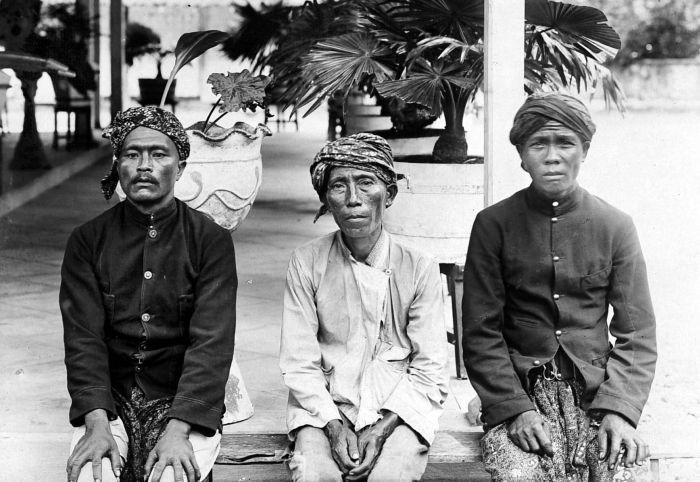
The Madurese are predominantly Sunni Muslim, known for their strong religious commitment. Islamic scholars and traditional Pesantren schools play a major role in education and community leadership. Rituals, festivals, and daily life are closely tied to Islamic practice. Madurese culture features distinctive clothing, such as red and white striped shirts for men, and traditional batik. Folk arts include music, dance, and the shadow puppet theater shared with neighboring Javanese, but with unique local styles.
The history of the Madurese
The Madurese have lived on Madura Island and nearby areas for centuries. Poor soil led many to migrate, especially during Dutch and Indonesian transmigration programs, which resettled large numbers in Java and Kalimantan. In Kalimantan, Madurese migrants sometimes faced violent conflict with local Dayak and Malay communities, leading to massacres and forced displacement in the late 1990s and early 2000s. Despite these challenges, Madurese identity remains strong, and many have returned or resettled in new areas, maintaining their language and traditions.
Madurese life today
Today, the Madurese number over 7 million and are Indonesia's fifth-largest ethnic group. They are found throughout Indonesia, with large communities in Java, Kalimantan, and urban centers like Jakarta. While many still herd cattle or farm, others run businesses or work in cities. The Madurese continue to maintain their language, religious schools, and cultural practices, even as they adapt to new environments and pressures from migration and modernization.
Questions people ask about the Madurese
Where do the Madurese live?
The Madurese traditionally live on Madura Island and nearby smaller islands, but large communities are also found in eastern Java, Kalimantan, and urban centers across Indonesia due to migration.
How many Madurese are there?
According to the 2010 Indonesia census, there are about 7.2 million Madurese, making them one of the largest ethnic groups in the country.
What language do the Madurese speak?
The Madurese speak the Madurese language, which has several dialects. Most are also fluent in Indonesian, and some use Arabic for religious purposes.
What are the main traditions of the Madurese?
The Madurese are known for cattle herding, the Karapan sapi bull race, and their satay cuisine. Religious schools and Islamic practices are also central to their culture.
What religion do the Madurese follow?
The Madurese are predominantly Sunni Muslim, with a strong tradition of Islamic education and religious observance.
Sources and further reading
- Madurese people on WikipediaEncyclopedia
- Encyclopaedia BritannicaArticle
- More photos on Wikimedia CommonsPhotos
- Wikidata recordOpen data
This page was written with AI assistance from the sources above and checked automatically before publishing. It may contain mistakes, and it is no substitute for hearing from the Madurese themselves. If something is wrong, tell us. Last refreshed 2026-10-02.
Neighbours in Indonesia
All peoples of Indonesia MalaysOrang Melayu
🇲🇾 Malaysia and 4 moreAustronesian people of the Malay Peninsula, Sumatra, Borneo and nearby islands
About 30 million, Austronesian
MalaysOrang Melayu
🇲🇾 Malaysia and 4 moreAustronesian people of the Malay Peninsula, Sumatra, Borneo and nearby islands
About 30 million, Austronesian
 Minangkabaubangso Minangkabau
🇮🇩 Indonesia and 3 moreMatrilineal Muslim society from the highlands of West Sumatra
About 6.6 million, Austronesian
Minangkabaubangso Minangkabau
🇮🇩 Indonesia and 3 moreMatrilineal Muslim society from the highlands of West Sumatra
About 6.6 million, Austronesian
 Sundaneseᮅᮛᮀ ᮞᮥᮔ᮪ᮓ (Urang Sunda)
🇮🇩 Indonesia and 3 moreThe native people of western Java, Indonesia, known for their language and traditions
About 42 million, Austronesian
Sundaneseᮅᮛᮀ ᮞᮥᮔ᮪ᮓ (Urang Sunda)
🇮🇩 Indonesia and 3 moreThe native people of western Java, Indonesia, known for their language and traditions
About 42 million, Austronesian
 Balineseanak Bali
🇮🇩 IndonesiaHindu-majority people of Bali, known for art, dance, and water-temple farming
About 3.9 million, Austronesian
Balineseanak Bali
🇮🇩 IndonesiaHindu-majority people of Bali, known for art, dance, and water-temple farming
About 3.9 million, Austronesian
Other Austronesian speakers
See them all Sama-BajauSama
🇵🇭 Philippines and 3 moreSeafaring Austronesian people of the southern Philippines, Borneo, and eastern Indonesia
About 1.3 million, Austronesian
Sama-BajauSama
🇵🇭 Philippines and 3 moreSeafaring Austronesian people of the southern Philippines, Borneo, and eastern Indonesia
About 1.3 million, Austronesian
 TorajaTo Raya
🇮🇩 IndonesiaHighland people of South Sulawesi known for elaborate funerals and tongkonan houses
About 1.1 million, Austronesian
TorajaTo Raya
🇮🇩 IndonesiaHighland people of South Sulawesi known for elaborate funerals and tongkonan houses
About 1.1 million, Austronesian
 IbanDayak Iban
🇲🇾 Malaysia and 2 moreDayak people of northwestern Borneo, known for longhouses and weaving
About 740,000, Austronesian
IbanDayak Iban
🇲🇾 Malaysia and 2 moreDayak people of northwestern Borneo, known for longhouses and weaving
About 740,000, Austronesian
 ChamorroChamoru
🇺🇸 United States and 2 moreIndigenous people of the Mariana Islands, mainly Guam and Northern Marianas
About 168,000, Austronesian
ChamorroChamoru
🇺🇸 United States and 2 moreIndigenous people of the Mariana Islands, mainly Guam and Northern Marianas
About 168,000, Austronesian