
Toba Batak
They call themselves Batak Toba
Largest Batak group centered on Lake Toba in North Sumatra, Indonesia
The Toba Batak are the largest subgroup of the Batak people, living mainly around Lake Toba and Samosir Island in North Sumatra, Indonesia. Numbering about 4 million (2026), they are known for their strong clan system, traditional architecture, and predominantly Christian faith.
- Centered on Lake Toba and Samosir Island in North Sumatra
- Society organized by patrilineal clans (marga)
- Predominantly Protestant Christian since the 19th century
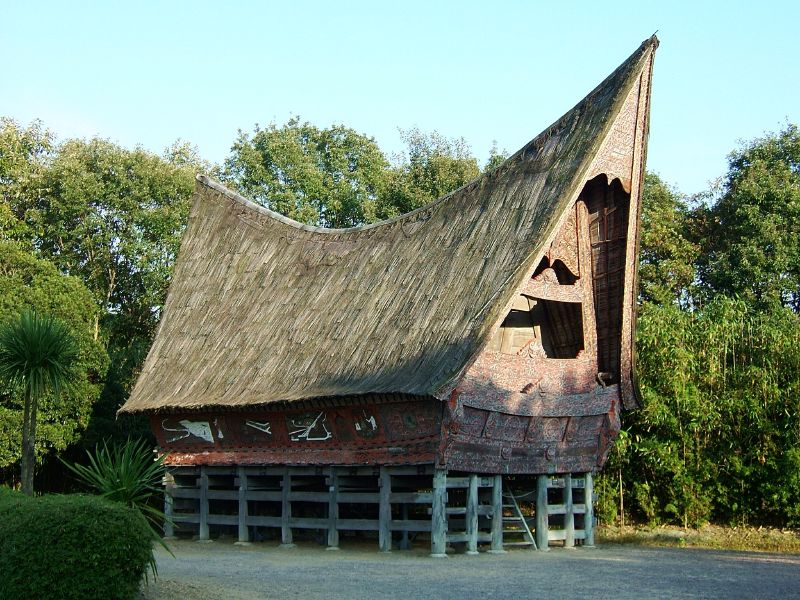
- Distinctive traditional houses called rumah bolon
- Known for music, dance, and migration for opportunity
Who are the Toba Batak?
The Toba Batak are one of several Batak subgroups in North Sumatra, Indonesia. They are the largest Batak group and often simply call themselves Batak. Their society is held together by a strong clan (marga) system, shared customs called adat, and a sense of origin from the Lake Toba region. Christianity, especially Protestantism, is a central part of their identity, shaping ceremonies and daily life. Their culture values discussion, music, and connection to ancestral villages.
Where do the Toba Batak live?
The Toba Batak homeland is centered on Lake Toba, the largest volcanic lake in the world, and Samosir Island within the lake. The region is mountainous, with fertile volcanic soils supporting farming. Traditional villages are scattered along the lakeshore and on Samosir Island. The area is known for its distinctive wooden houses and scenic landscapes, and is a focus for both cultural life and tourism.
What language do the Toba Batak speak?
Toba Batak people speak the Toba Batak language, part of the Austronesian family. It is used in daily life, ceremonies, and church services. Indonesian is also widely spoken, especially among those who have migrated to cities or other islands. The Toba Batak language remains an important marker of identity, though its use is declining among younger generations outside the homeland.
How do the Toba Batak live?
Traditionally, the Toba Batak make their living through farming, especially rice and other crops suited to the volcanic soils around Lake Toba. Fishing in the lake is also important. Many are skilled in crafts, including weaving and wood carving, and some build the distinctive rumah bolon (large traditional houses) and solu (dugout canoes). Today, many Toba Batak work in towns and cities across Indonesia in education, law, business, and government.
How is Toba Batak society organised?
Toba Batak society is organized around patrilineal clans (marga), with each person carrying a surname from their father's line. There are hundreds of clans, and clan identity shapes marriage, alliances, and social obligations. The adat system, called Dalihan Na Tolu, guides social relations and ceremonies. While men often hold central roles, women and their families have important status, especially through the concept of hula-hula (wife-givers). Decision-making is communal and often involves discussion among elders.


What do the Toba Batak believe?
Most Toba Batak are Christian, mainly Protestant, with church life deeply woven into adat customs. Traditional beliefs and rituals, such as those of Parmalim and ancestral ceremonies, survive in small numbers. Music and dance, like the tortor, are central to celebrations. Traditional dress is worn at ceremonies, and art forms include weaving, wood carving, and boat building. Churches often blend Christian and Batak traditions.
The history of the Toba Batak
The Toba Batak trace their origins to ancient migrations from Taiwan and have lived around Lake Toba for thousands of years. They formed several kingdoms, with the Sisingamangaraja dynasty as priest-kings until Dutch conquest ended their independence in the early 20th century. Colonial rule brought administrative changes and Christian missions, leading to widespread conversion. After Indonesian independence, their homeland became part of North Sumatra province. Migration for education and work has spread Toba Batak communities across Indonesia.
Toba Batak life today
Today, about 4 million Toba Batak live in Indonesia, with many in North Sumatra and others in cities nationwide. They are known for their strong presence in education, law, and government. Their language and customs face pressures from urbanization and migration, but clan ties and adat remain strong. Christianity continues to shape their identity, and cultural revival efforts are visible in festivals and tourism around Lake Toba.
Questions people ask about the Toba Batak
Where do the Toba Batak live?
The Toba Batak mainly live around Lake Toba and Samosir Island in North Sumatra, Indonesia, with many also found in cities across the country.
How many Toba Batak are there?
There are about 4 million Toba Batak people as of 2026, making them the largest Batak subgroup.
What language do the Toba Batak speak?
They speak the Toba Batak language, part of the Austronesian family, and also use Indonesian, especially outside their homeland.
What is the main religion of the Toba Batak?
Most Toba Batak are Christian, mainly Protestant, with small minorities following Islam or traditional beliefs.
What are Toba Batak traditional houses called?
Their traditional houses are called rumah bolon, large wooden structures that can house several families.
Sources and further reading
- Toba Batak people on WikipediaEncyclopedia
- More photos on Wikimedia CommonsPhotos
- Wikidata recordOpen data
This page was written with AI assistance from the sources above and checked automatically before publishing. It may contain mistakes, and it is no substitute for hearing from the Toba Batak themselves. If something is wrong, tell us. Last refreshed 2026-10-02.
Neighbours in Indonesia
All peoples of Indonesia MalaysOrang Melayu
🇲🇾 Malaysia and 4 moreAustronesian people of the Malay Peninsula, Sumatra, Borneo and nearby islands
About 30 million, Austronesian
MalaysOrang Melayu
🇲🇾 Malaysia and 4 moreAustronesian people of the Malay Peninsula, Sumatra, Borneo and nearby islands
About 30 million, Austronesian
 Minangkabaubangso Minangkabau
🇮🇩 Indonesia and 3 moreMatrilineal Muslim society from the highlands of West Sumatra
About 6.6 million, Austronesian
Minangkabaubangso Minangkabau
🇮🇩 Indonesia and 3 moreMatrilineal Muslim society from the highlands of West Sumatra
About 6.6 million, Austronesian
 Sundaneseᮅᮛᮀ ᮞᮥᮔ᮪ᮓ (Urang Sunda)
🇮🇩 Indonesia and 3 moreThe native people of western Java, Indonesia, known for their language and traditions
About 42 million, Austronesian
Sundaneseᮅᮛᮀ ᮞᮥᮔ᮪ᮓ (Urang Sunda)
🇮🇩 Indonesia and 3 moreThe native people of western Java, Indonesia, known for their language and traditions
About 42 million, Austronesian
 Balineseanak Bali
🇮🇩 IndonesiaHindu-majority people of Bali, known for art, dance, and water-temple farming
About 3.9 million, Austronesian
Balineseanak Bali
🇮🇩 IndonesiaHindu-majority people of Bali, known for art, dance, and water-temple farming
About 3.9 million, Austronesian
Other Austronesian speakers
See them all TorajaTo Raya
🇮🇩 IndonesiaHighland people of South Sulawesi known for elaborate funerals and tongkonan houses
About 1.1 million, Austronesian
TorajaTo Raya
🇮🇩 IndonesiaHighland people of South Sulawesi known for elaborate funerals and tongkonan houses
About 1.1 million, Austronesian
 Sama-BajauSama
🇵🇭 Philippines and 3 moreSeafaring Austronesian people of the southern Philippines, Borneo, and eastern Indonesia
About 1.3 million, Austronesian
Sama-BajauSama
🇵🇭 Philippines and 3 moreSeafaring Austronesian people of the southern Philippines, Borneo, and eastern Indonesia
About 1.3 million, Austronesian
 MadureseOrèng Mâdhurâ
🇮🇩 Indonesia and 2 moreCattle herders and satay makers from Madura Island and eastern Java
About 7.2 million, Austronesian
MadureseOrèng Mâdhurâ
🇮🇩 Indonesia and 2 moreCattle herders and satay makers from Madura Island and eastern Java
About 7.2 million, Austronesian
 IbanDayak Iban
🇲🇾 Malaysia and 2 moreDayak people of northwestern Borneo, known for longhouses and weaving
About 740,000, Austronesian
IbanDayak Iban
🇲🇾 Malaysia and 2 moreDayak people of northwestern Borneo, known for longhouses and weaving
About 740,000, Austronesian