
Te Aupōuri
Māori iwi of the far north of New Zealand, centred at Te Kao
Te Aupōuri are a Māori iwi (tribal group) based in the far north of New Zealand, north of Kaitaia in the Northland Region. Their main settlement is at Te Kao, near Pārengarenga Harbour, and they are one of the six Muriwhenua iwi. The iwi numbers 8,697 people and is known for its deep ancestral ties and customary rights across the northern tip of the North Island.
Who are the Te Aupōuri?
Te Aupōuri are a Māori iwi, or tribal group, whose territory covers the northernmost part of New Zealand’s North Island. They are one of the six iwi that make up the Muriwhenua confederation, known collectively as Te Hiku o te Ika. The people of Te Aupōuri share descent from a number of well-known ancestors and maintain strong connections through shared history, kinship, and their relationship to the land. Their identity is closely tied to their ancestral lands and their main settlement at Te Kao.
Where do the Te Aupōuri live?
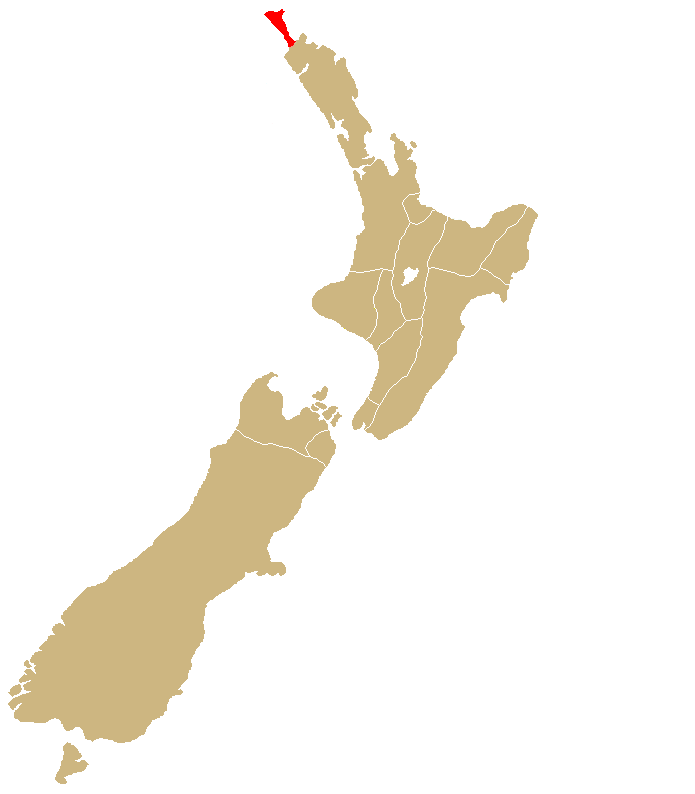
Te Aupōuri’s homeland stretches across the far north of the North Island, from Te Kao at the southern end of Pārengarenga Harbour, west to Te Oneroa-a-Tōhē (Ninety Mile Beach), and east to Tokerau (Great Exhibition Bay). Their customary area includes Cape Reinga, the Three Kings Islands, and extends south to Cape Maria van Diemen. This region is known for its coastal landscapes, harbours, and significant cultural sites. The iwi also maintains historical associations with Raoul Island in the Kermadec Islands.
What language do the Te Aupōuri speak?
Te Aupōuri speak Māori, the indigenous language of Aotearoa New Zealand. Māori is part of the Austronesian language family. The language is a key part of iwi identity and is used in daily life, ceremonies, and on local radio. Efforts to maintain and revive the language are ongoing within the iwi and the wider Māori community.
How is Te Aupōuri society organised?
Te Aupōuri society is organised around descent from key ancestors, with family lines traced through both male and female ancestors. The iwi’s history and identity are preserved through oral traditions, genealogies, and stories. Marriage and kinship ties connect Te Aupōuri to other Muriwhenua iwi. Decision-making traditionally involves elders and leaders who guide the community, drawing on ancestral knowledge and collective values.
What do the Te Aupōuri believe?
Te Aupōuri’s beliefs and traditions are rooted in Māori cosmology and ancestral stories. Rituals, chants, and oral histories play a central role in maintaining the iwi’s identity. Carvings and art, such as those depicting the story of Ruanui and the Polynesian rat, are important cultural expressions. The Rātana Church at Te Kao is a notable religious and community site for the iwi.
The history of the Te Aupōuri
The name Te Aupōuri means 'The Dark Smoke', referring to a legendary escape where ancestors burned their possessions to create a smoke screen. Te Aupōuri trace their descent from several ancestral canoes and prominent figures, including Ruanui of the Māmari canoe. Their history is closely linked to other Muriwhenua iwi, with shared ancestors and alliances. The iwi’s territory and identity have been shaped by these ancestral connections and their long-standing presence in the far north.
Te Aupōuri life today
Today, Te Aupōuri number 8,697 people. Their main settlement remains at Te Kao, and they continue to assert customary rights over their traditional lands. The iwi is active in cultural revival, language maintenance, and community development. Te Aupōuri are served by iwi radio and maintain a strong presence in the far north, with ongoing efforts to protect their heritage and land.
Questions people ask about the Te Aupōuri
Where do the Te Aupōuri live?
The Te Aupōuri live in New Zealand, in the Far north of the North Island, centred on Te Kao and Pārengarenga Harbour.
How many Te Aupōuri people are there?
Our sources give the Te Aupōuri population as 8,697. Counts of peoples vary with who is counted and when.
What language do the Te Aupōuri speak?
The Te Aupōuri speak Māori, which belongs to the Austronesian family of languages.
Sources and further reading
This page was written with AI assistance from the sources above and checked automatically before publishing. It may contain mistakes, and it is no substitute for hearing from the Te Aupōuri themselves. If something is wrong, tell us. Last refreshed 2026-10-02.
Neighbours in New Zealand
All peoples of New Zealand Ngāi Tahu
🇳🇿 New ZealandThe principal Māori iwi of New Zealand's South Island
About 85,000, Austronesian
Ngāi Tahu
🇳🇿 New ZealandThe principal Māori iwi of New Zealand's South Island
About 85,000, Austronesian
 Ngāpuhi
🇳🇿 New ZealandLargest Māori iwi of New Zealand's Northland region
About 184,000, Austronesian
Ngāpuhi
🇳🇿 New ZealandLargest Māori iwi of New Zealand's Northland region
About 184,000, Austronesian
 Ngāti Kahungunu
🇳🇿 New ZealandA major Māori iwi of New Zealand’s eastern North Island
About 82,000, Austronesian
Ngāti Kahungunu
🇳🇿 New ZealandA major Māori iwi of New Zealand’s eastern North Island
About 82,000, Austronesian
 Ngāti Porou
🇳🇿 New ZealandA large Māori iwi from the East Cape and Gisborne regions of New Zealand
About 102,000, Austronesian
Ngāti Porou
🇳🇿 New ZealandA large Māori iwi from the East Cape and Gisborne regions of New Zealand
About 102,000, Austronesian
Other Austronesian speakers
See them all MalaysOrang Melayu
🇲🇾 Malaysia and 4 moreAustronesian people of the Malay Peninsula, Sumatra, Borneo and nearby islands
About 30 million, Austronesian
MalaysOrang Melayu
🇲🇾 Malaysia and 4 moreAustronesian people of the Malay Peninsula, Sumatra, Borneo and nearby islands
About 30 million, Austronesian
 Minangkabaubangso Minangkabau
🇮🇩 Indonesia and 3 moreMatrilineal Muslim society from the highlands of West Sumatra
About 6.6 million, Austronesian
Minangkabaubangso Minangkabau
🇮🇩 Indonesia and 3 moreMatrilineal Muslim society from the highlands of West Sumatra
About 6.6 million, Austronesian
 Sundaneseᮅᮛᮀ ᮞᮥᮔ᮪ᮓ (Urang Sunda)
🇮🇩 Indonesia and 3 moreThe native people of western Java, Indonesia, known for their language and traditions
About 42 million, Austronesian
Sundaneseᮅᮛᮀ ᮞᮥᮔ᮪ᮓ (Urang Sunda)
🇮🇩 Indonesia and 3 moreThe native people of western Java, Indonesia, known for their language and traditions
About 42 million, Austronesian
 Balineseanak Bali
🇮🇩 IndonesiaHindu-majority people of Bali, known for art, dance, and water-temple farming
About 3.9 million, Austronesian
Balineseanak Bali
🇮🇩 IndonesiaHindu-majority people of Bali, known for art, dance, and water-temple farming
About 3.9 million, Austronesian