
Swedes
They call themselves svear
North Germanic tribe of Svealand, central Sweden
The Swedes, or svear, were a North Germanic tribe living in Svealand, central Sweden. They are known as one of the main ancestral groups of modern Swedes and played a key role in the Viking Age, especially in eastern ventures as the Rus' people.
- Lived in Svealand, central Sweden
- Key founders of the Swedish kingdom
- Kings claimed descent from the god Freyr
- Major role in the Viking Age eastward journeys
- Religious center at Gamla Uppsala
Who were the Swedes?
The Swedes, called svear in their own language, were a North Germanic tribe from central Sweden. They lived mainly in Svealand and the Mälaren Valley, a fertile region with many islands. The Swedes are one of the main groups that formed the basis of modern Swedish identity. Their society was held together by kinship, a shared language, and a belief in common ancestry. They were known for their powerful kings, who claimed descent from the god Freyr, and for their role in the Viking Age as traders, warriors, and settlers.
Where did the Swedes live?
The Swedes lived in Svealand, a region in central Sweden that includes the Mälaren Valley and provinces like Västmanland, Södermanland, and Närke. This area is marked by fertile land, lakes, and many islands, making it one of Scandinavia’s most densely populated regions. The religious and political center was Gamla Uppsala, where the king also served as a priest. Their homeland was well-suited to farming and supported a strong, organized society.
What language did the Swedes speak?
The Swedes spoke Old Norse, the common language of the North Germanic peoples during the early Middle Ages. Old Norse was the ancestor of modern Scandinavian languages. Over time, the language evolved, and the distinct dialects of Sweden developed into Swedish. The tribe’s name survives in the modern word for Sweden, Sverige, meaning 'realm of the Swedes.'
How did the Swedes live?
The Swedes made their living mainly through farming, taking advantage of the fertile soils of the Mälaren Valley. Fishing in the region’s lakes and rivers was also important. They practiced crafts and trade, especially during the Viking Age, when they traveled widely. Their ships, known for having prows at both ends, were well-suited for river and sea travel. The Swedes built wooden houses and used local materials for tools and daily life.
How was Swedes society organised?
Swedish society was organized around powerful royal dynasties, such as the Scylfings mentioned in early poems. Kingship was central, with rulers often linked to divine ancestry. Decision-making and leadership were tied to both religious and political roles, especially at Gamla Uppsala. Kinship and clan ties were important, and society was stratified, with a king, warriors, and commoners. Marriage and descent followed traditional Germanic patterns.

What did the Swedes believe?
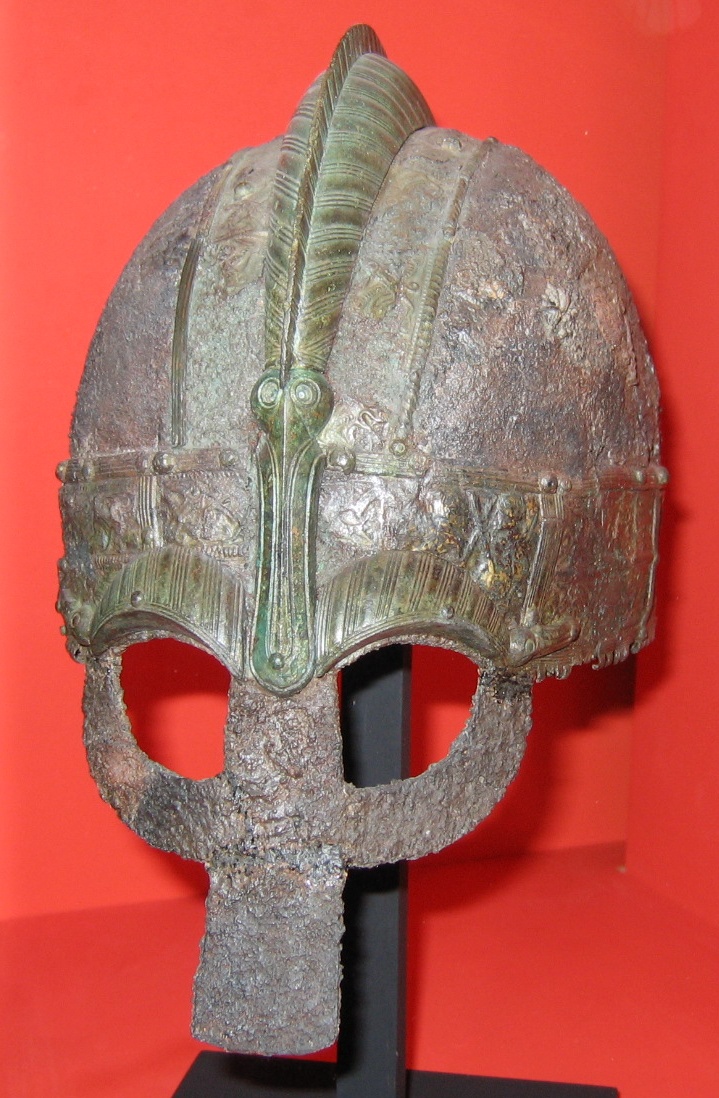
The Swedes practiced Norse paganism, worshipping gods like Freyr, whom their kings claimed as an ancestor. Gamla Uppsala was the main cult center, where sacrifices (blóts) were held and the king acted as a priest. Rituals and myths were central to their identity. Art and music are not detailed in the sources, but runestones and oral poetry played a role in preserving their stories and history.
The history of the Swedes
The Swedes are first mentioned by Roman and later by Germanic and Anglo-Saxon sources. Tacitus described them as a powerful tribe with strong fleets and absolute kings. By the 6th century, they were known for fine horses and trading black fox skins. During the Viking Age, Swedes were central to the Varangian Guard and the founding of the Rus' people in Eastern Europe. Their political unification with the Geats led to the formation of the Swedish kingdom. Over time, their tribal identity merged into the broader Swedish nation.
What became of the Swedes?
The Swedes as a distinct tribe no longer exist, but their descendants form the core of modern Sweden. Their name and legacy live on in the country’s name and in historical memory. The old tribal lands remain central to Swedish identity, and sites like Gamla Uppsala are important cultural landmarks. The history of the Swedes is studied through archaeology, runestones, and early written sources.
Questions people ask about the Swedes
Where did the Swedes live?
The Swedes lived in Svealand, a region in central Sweden that includes the Mälaren Valley and nearby provinces.
How many Swedes were there?
The sources do not give a specific population number for the Swedes as a tribe.
What language did the Swedes speak?
They spoke Old Norse, the ancestor of modern Scandinavian languages.
What were the Swedes known for?
They were known for their powerful kings, their role in the Viking Age, and as founders of the Swedish kingdom.
What did the Swedes believe in?
The Swedes practiced Norse paganism, with a main cult center at Gamla Uppsala, and their kings claimed descent from the god Freyr.
Sources and further reading
- Swedes (tribe) on WikipediaEncyclopedia
- Encyclopaedia BritannicaArticle
- More photos on Wikimedia CommonsPhotos
- Wikidata recordOpen data
This page was written with AI assistance from the sources above and checked automatically before publishing. It may contain mistakes, and it is no substitute for hearing from the Swedes themselves. If something is wrong, tell us. Last refreshed 2026-10-02.
Neighbours in Sweden
All peoples of Sweden Danes
🇸🇪 Sweden and 6 moreNorth Germanic tribe who founded Denmark and shaped the Viking Age
Historical, North Germanic
Danes
🇸🇪 Sweden and 6 moreNorth Germanic tribe who founded Denmark and shaped the Viking Age
Historical, North Germanic
 Kurdsکورد
🇹🇷 Turkey and 8 moreIndigenous Iranic people of Kurdistan, spanning Turkey, Iran, Iraq, and Syria
About 38 million, Western Iranic
Kurdsکورد
🇹🇷 Turkey and 8 moreIndigenous Iranic people of Kurdistan, spanning Turkey, Iran, Iraq, and Syria
About 38 million, Western Iranic
 Sámisámit
🇳🇴 Norway and 3 moreIndigenous reindeer herders and fishers of northern Fennoscandia and Russia
About 80,000, Uralic
Sámisámit
🇳🇴 Norway and 3 moreIndigenous reindeer herders and fishers of northern Fennoscandia and Russia
About 80,000, Uralic
 AssyriansĀṯūrāyē / Suryoye / Suryāyē
🇮🇶 Iraq and 14 moreAn indigenous Christian people of northern Mesopotamia, speaking Neo-Aramaic.
About 1.2 million, Semitic
AssyriansĀṯūrāyē / Suryoye / Suryāyē
🇮🇶 Iraq and 14 moreAn indigenous Christian people of northern Mesopotamia, speaking Neo-Aramaic.
About 1.2 million, Semitic