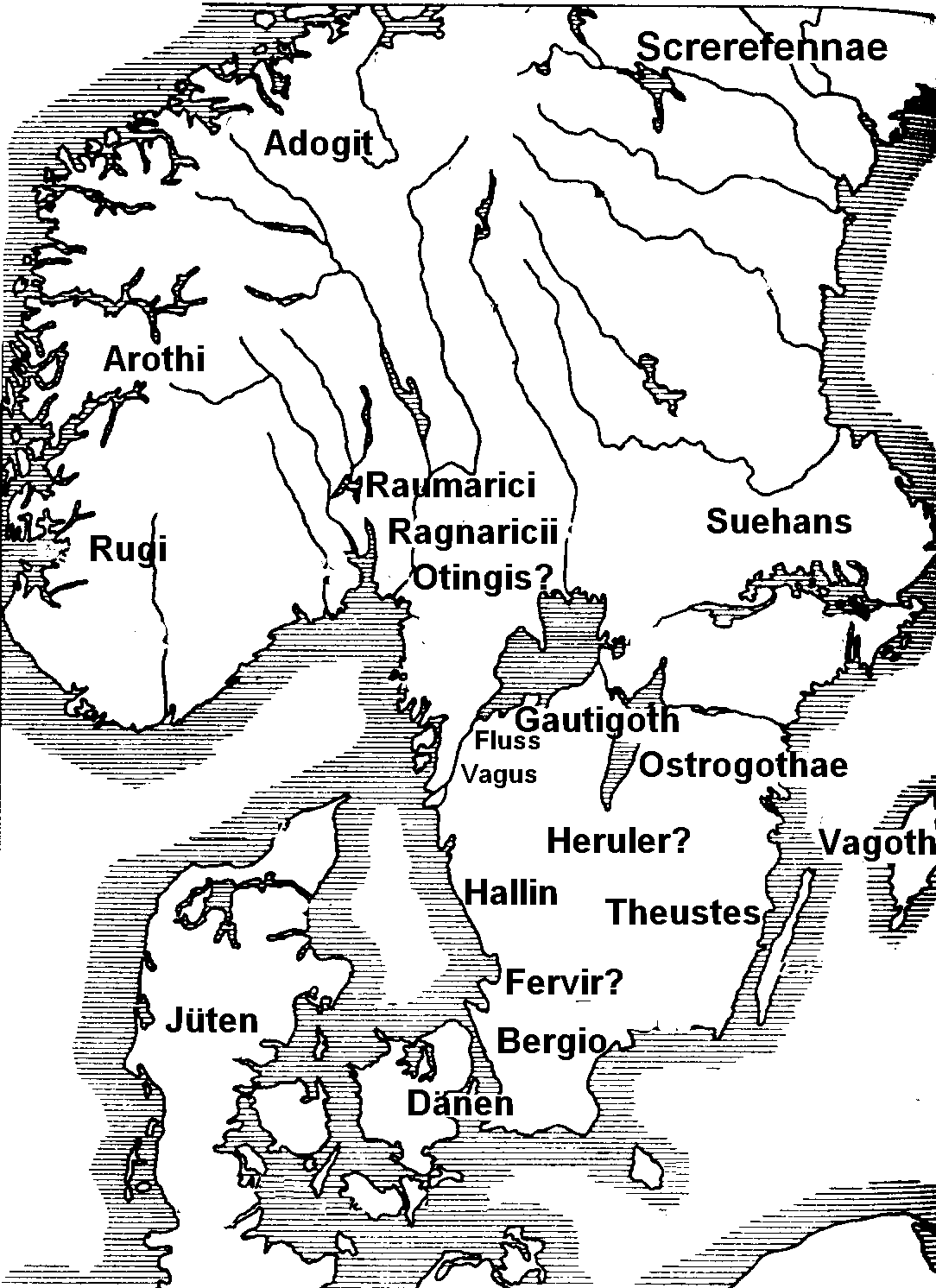
Danes
North Germanic tribe who founded Denmark and shaped the Viking Age
The Danes were a North Germanic tribe from southern Scandinavia, mainly present-day Denmark and southern Sweden, active from the Nordic Iron Age through the Viking Age. They are known for founding the Kingdom of Denmark, speaking Proto-Norse and Old Norse, and for their influential Viking raids and settlements across England, Ireland, France, and beyond.
- Founded the Kingdom of Denmark in southern Scandinavia
- Spoke Proto-Norse and later Old Norse, using runes for writing
- Led Viking raids and settlements in England, Ireland, France, and the Netherlands
- Built major trading towns like Hedeby and Ribe
- Converted from Norse religion to Christianity in the 10th century
Who were the Danes?
The Danes were a North Germanic tribe who lived in southern Scandinavia during the Nordic Iron Age and Viking Age. They are best known for founding the Kingdom of Denmark and for their far-reaching influence during the Viking Age. The Danes shared language, beliefs, and customs with neighboring Scandinavian peoples, but developed a distinct identity through their royal lineages, settlements, and military activities. Their society was held together by kinship, shared mythology, and allegiance to local chieftains and later kings.
Where did the Danes live?
The Danes' homeland was in what is now Denmark, especially the islands of Zealand and Scania (now southern Sweden), as well as parts of Jutland. Their territory included fertile farmland, forests, and coastal areas ideal for fishing and seafaring. The Danevirke, a large set of fortifications, marked their southern border. Over time, their influence extended to parts of England, Ireland, northern France, and the Netherlands through settlement and conquest.
What language did the Danes speak?
The Danes spoke Proto-Norse, which evolved into Old Norse by the Viking Age. Their language, called dǫnsk tunga ('Danish tongue'), was shared with other Scandinavian peoples. They used runes for writing, mainly on stones, wood, and objects, but left little written literature. Over time, Old Norse influenced local languages in areas where Danes settled, such as England and Normandy.
How did the Danes live?
The Danes made their living through farming, fishing, crafts, and trade. They built settlements and trading towns like Hedeby, Ribe, and Aarhus. Their ships, tools, and weapons were well-crafted, supporting both daily life and their famous seafaring raids. In the Viking Age, many Danes also gained wealth through organized raids and the establishment of new settlements abroad, especially in England, Ireland, and France.
How was Danes society organised?
Danish society was organized around kinship groups, clans, and royal dynasties such as the Skjöldungs. Leadership was held by chieftains and later kings, with legendary figures like King Dan and Offa appearing in both myth and early history. Decisions were made at assemblies, and oral traditions, legends, and poetry played a key role in preserving their history and values.


What did the Danes believe?
The Danes practiced the Norse religion, worshipping gods such as Thor, Odin, and Frey. Their beliefs were expressed in rituals, art, jewelry, and burial customs. In the 10th century, the Danes began converting to Christianity, as seen in rune stones and church buildings, but older Norse customs persisted for some time. Their mythology and sagas remain an important part of Scandinavian heritage.
The history of the Danes
The Danes first appear in written records in the 6th century. By the Viking Age, they were known for their seafaring raids and settlements across Europe. They established the Danelaw in England, founded towns in Ireland, and settled in Normandy, France. The Danes played a leading role in the formation of the Kingdom of Denmark, with royal seats at Lejre and later Jelling. Their influence shaped the cultures of the regions they settled and raided.
What became of the Danes?
The historical Danes no longer exist as a distinct tribe, but their descendants form the core of the modern Danish nation. Their legacy is visible in place names, archaeological sites, and cultural traditions in Denmark and former Viking territories. The Danes' language, mythology, and history continue to be studied and celebrated in Scandinavia and beyond.
Questions people ask about the Danes
Where did the Danes live?
The Danes lived in southern Scandinavia, mainly in present-day Denmark and southern Sweden, and later settled in parts of England, Ireland, France, and the Netherlands during the Viking Age.
How many Danes were there?
The sources do not provide a specific population figure for the Danes as a tribe.
What language did the Danes speak?
The Danes spoke Proto-Norse, which evolved into Old Norse by the Viking Age. Their language was closely related to those of other Scandinavian peoples.
What were the Danes known for?
The Danes are known for founding the Kingdom of Denmark, leading Viking raids and settlements across Europe, and influencing the cultures of the regions they reached.
What religion did the Danes follow?
The Danes practiced the Norse religion, worshipping gods like Thor and Odin, and later converted to Christianity during the 10th century.
Sources and further reading
- Danes (tribe) on WikipediaEncyclopedia
- More photos on Wikimedia CommonsPhotos
- Wikidata recordOpen data
This page was written with AI assistance from the sources above and checked automatically before publishing. It may contain mistakes, and it is no substitute for hearing from the Danes themselves. If something is wrong, tell us. Last refreshed 2026-10-02.
Neighbours in Sweden
All peoples of Sweden Swedessvear
🇸🇪 SwedenNorth Germanic tribe of Svealand, central Sweden
Historical, North Germanic
Swedessvear
🇸🇪 SwedenNorth Germanic tribe of Svealand, central Sweden
Historical, North Germanic
 Kurdsکورد
🇹🇷 Turkey and 8 moreIndigenous Iranic people of Kurdistan, spanning Turkey, Iran, Iraq, and Syria
About 38 million, Western Iranic
Kurdsکورد
🇹🇷 Turkey and 8 moreIndigenous Iranic people of Kurdistan, spanning Turkey, Iran, Iraq, and Syria
About 38 million, Western Iranic
 Sámisámit
🇳🇴 Norway and 3 moreIndigenous reindeer herders and fishers of northern Fennoscandia and Russia
About 80,000, Uralic
Sámisámit
🇳🇴 Norway and 3 moreIndigenous reindeer herders and fishers of northern Fennoscandia and Russia
About 80,000, Uralic
 AssyriansĀṯūrāyē / Suryoye / Suryāyē
🇮🇶 Iraq and 14 moreAn indigenous Christian people of northern Mesopotamia, speaking Neo-Aramaic.
About 1.2 million, Semitic
AssyriansĀṯūrāyē / Suryoye / Suryāyē
🇮🇶 Iraq and 14 moreAn indigenous Christian people of northern Mesopotamia, speaking Neo-Aramaic.
About 1.2 million, Semitic