
Mentawai
They call themselves suku Mentawai
Rainforest islanders of the Mentawai Islands, known for tattoos and Arat Sabulungan beliefs
The Mentawai are an Austronesian people living mainly on the Mentawai Islands off West Sumatra, Indonesia. Numbering around 64,000, they are known for their traditional longhouses, body tattoos, and the animist Arat Sabulungan belief system. Many now also follow Christianity or Islam, but some clans maintain their ancestral ways.
Who are the Mentawai?
The Mentawai are an indigenous people of the Mentawai Islands, located off the west coast of Sumatra in Indonesia. They are bound together by shared language, customs, and a strong sense of community centered around their traditional longhouses, called uma. Their identity is marked by distinctive tattoos, spiritual beliefs, and a close relationship with the rainforest environment. Despite pressures from outside influences, some Mentawai clans continue to uphold their ancestral practices and social structures.
Where do the Mentawai live?
The Mentawai live on the main islands of Siberut, Sipura, North Pagai, and South Pagai, which make up the Mentawai Islands. These islands are covered in dense rainforest and are separated from the Sumatran mainland by about 100 miles of ocean. Rivers are central to village life, and settlements are often located along their banks. The rainforest provides food, materials, and spiritual significance for the Mentawai people.
What language do the Mentawai speak?
Mentawai people speak the Mentawai language, which belongs to the Austronesian family. There are three main dialects: North Siberut, South Siberut, and Sipora-Pagai, with the latter being the most widely spoken. Indonesian is also used, especially in schools and official settings. The language remains vital in daily life, though younger generations increasingly use Indonesian.
How do the Mentawai live?
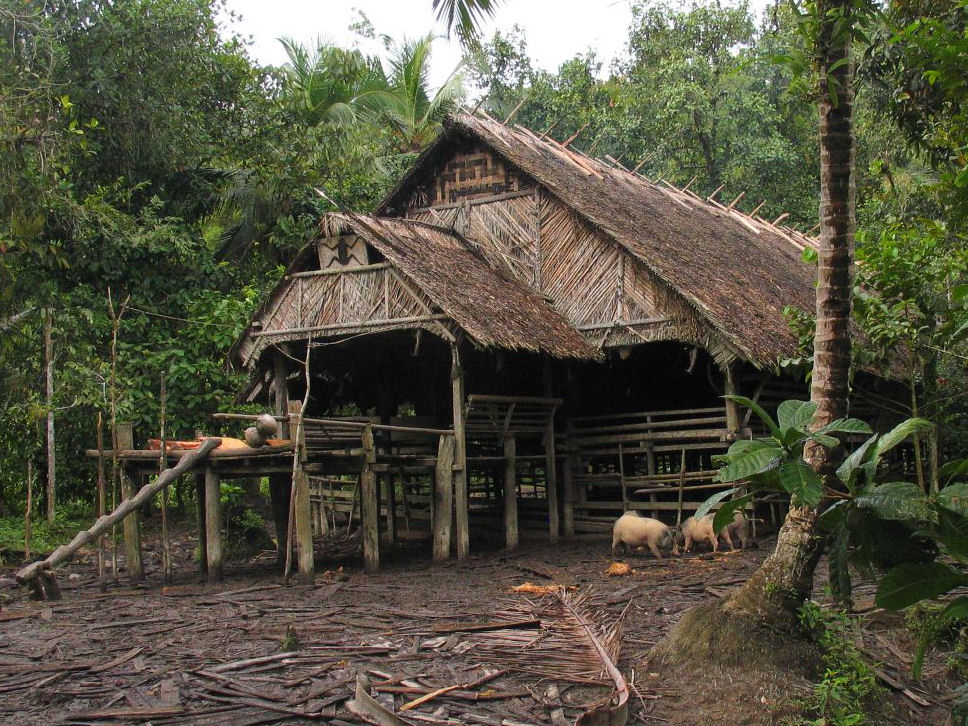
Traditionally, the Mentawai are semi-nomadic hunter-gatherers, relying on hunting, fishing, and gathering wild plants. Men hunt animals such as pigs and deer using bows and poisoned arrows, while women gather yams and sago, a staple starch. They also keep pigs, dogs, and chickens. Their homes are longhouses built from bamboo and wood, raised on stilts. Today, some Mentawai also farm, fish, make crafts, and work for wages.
How is Mentawai society organised?
Mentawai society is organized around clans and family groups living in uma longhouses. Villages are often divided between original settlers and later arrivals, with land rights managed by clan leaders. Marriage and descent are important, and social roles are marked by tattoos and ritual. Decisions are made collectively, with elders and shamans (Sikerei) holding respected positions.


What do the Mentawai believe?
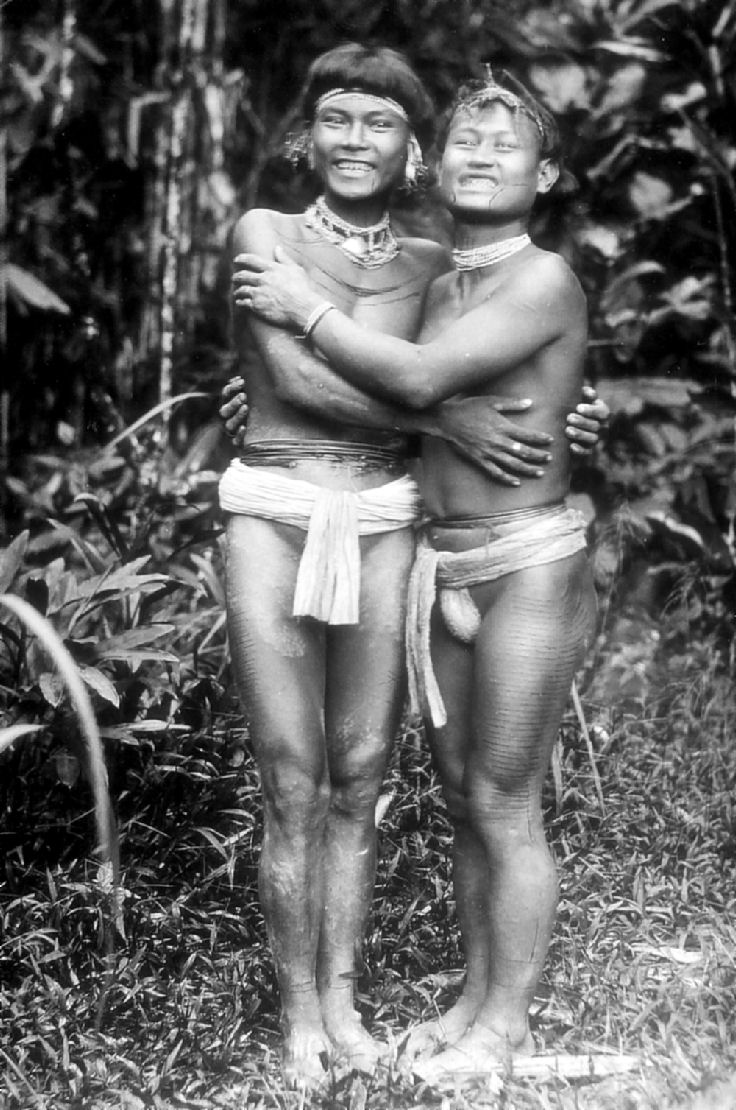
The traditional religion, Arat Sabulungan, is animist, holding that all things in nature have spirits. Rituals honor ancestral and nature spirits, and shamans act as healers and spiritual leaders. Tattoos are deeply spiritual, believed to help ancestors recognize the living in the afterlife. While many Mentawai now follow Christianity or Islam, some still practice Arat Sabulungan and maintain traditional ceremonies, dress, and body art.
The history of the Mentawai
The Mentawai are thought to have migrated from Nias island between 2000 and 500 BCE, living in isolation until Dutch contact in 1621. Colonial and later Indonesian government policies suppressed their religion and customs, especially after 1954. Traditional practices like tattooing and shamanism were discouraged or banned, and many Mentawai were resettled or pressured to adopt new religions and ways of life. Despite this, some clans have preserved their traditions.
Mentawai life today
Today, the Mentawai face challenges from deforestation, land rights issues, and cultural change. Most now live in government settlements, and only a small minority continue traditional practices. Community-driven educational programs aim to revive Mentawai language and culture. Environmental threats, especially logging and palm oil plantations, remain a concern, but local efforts continue to protect their land and heritage.
Questions people ask about the Mentawai
Where do the Mentawai live?
The Mentawai live in Indonesia, in the Mentawai Islands, off the west coast of Sumatra.
How many Mentawai people are there?
Our sources give the Mentawai population as about 64,000 (2024). Counts of peoples vary with who is counted and when.
What language do the Mentawai speak?
The Mentawai speak Mentawai, Indonesian, which belongs to the Austronesian family of languages.
How do the Mentawai make a living?
The Mentawai are known for hunting and gathering, settled farming, fishing and the sea, craft and trade and towns and wage work. Like most peoples, they combine several ways of making a living, and these have changed over time.
Sources and further reading
- Mentawai people on WikipediaEncyclopedia
- More photos on Wikimedia CommonsPhotos
- Wikidata recordOpen data
This page was written with AI assistance from the sources above and checked automatically before publishing. It may contain mistakes, and it is no substitute for hearing from the Mentawai themselves. If something is wrong, tell us. Last refreshed 2026-10-02.
Neighbours in Indonesia
All peoples of Indonesia MalaysOrang Melayu
🇲🇾 Malaysia and 4 moreAustronesian people of the Malay Peninsula, Sumatra, Borneo and nearby islands
About 30 million, Austronesian
MalaysOrang Melayu
🇲🇾 Malaysia and 4 moreAustronesian people of the Malay Peninsula, Sumatra, Borneo and nearby islands
About 30 million, Austronesian
 Minangkabaubangso Minangkabau
🇮🇩 Indonesia and 3 moreMatrilineal Muslim society from the highlands of West Sumatra
About 6.6 million, Austronesian
Minangkabaubangso Minangkabau
🇮🇩 Indonesia and 3 moreMatrilineal Muslim society from the highlands of West Sumatra
About 6.6 million, Austronesian
 Sundaneseᮅᮛᮀ ᮞᮥᮔ᮪ᮓ (Urang Sunda)
🇮🇩 Indonesia and 3 moreThe native people of western Java, Indonesia, known for their language and traditions
About 42 million, Austronesian
Sundaneseᮅᮛᮀ ᮞᮥᮔ᮪ᮓ (Urang Sunda)
🇮🇩 Indonesia and 3 moreThe native people of western Java, Indonesia, known for their language and traditions
About 42 million, Austronesian
 Balineseanak Bali
🇮🇩 IndonesiaHindu-majority people of Bali, known for art, dance, and water-temple farming
About 3.9 million, Austronesian
Balineseanak Bali
🇮🇩 IndonesiaHindu-majority people of Bali, known for art, dance, and water-temple farming
About 3.9 million, Austronesian
Other Austronesian speakers
See them all Sama-BajauSama
🇵🇭 Philippines and 3 moreSeafaring Austronesian people of the southern Philippines, Borneo, and eastern Indonesia
About 1.3 million, Austronesian
Sama-BajauSama
🇵🇭 Philippines and 3 moreSeafaring Austronesian people of the southern Philippines, Borneo, and eastern Indonesia
About 1.3 million, Austronesian
 TorajaTo Raya
🇮🇩 IndonesiaHighland people of South Sulawesi known for elaborate funerals and tongkonan houses
About 1.1 million, Austronesian
TorajaTo Raya
🇮🇩 IndonesiaHighland people of South Sulawesi known for elaborate funerals and tongkonan houses
About 1.1 million, Austronesian
 MadureseOrèng Mâdhurâ
🇮🇩 Indonesia and 2 moreCattle herders and satay makers from Madura Island and eastern Java
About 7.2 million, Austronesian
MadureseOrèng Mâdhurâ
🇮🇩 Indonesia and 2 moreCattle herders and satay makers from Madura Island and eastern Java
About 7.2 million, Austronesian
 IbanDayak Iban
🇲🇾 Malaysia and 2 moreDayak people of northwestern Borneo, known for longhouses and weaving
About 740,000, Austronesian
IbanDayak Iban
🇲🇾 Malaysia and 2 moreDayak people of northwestern Borneo, known for longhouses and weaving
About 740,000, Austronesian