
Chamorro
They call themselves Chamoru
Indigenous people of the Mariana Islands, mainly Guam and Northern Marianas
The Chamorro are the Indigenous people of the Mariana Islands, especially Guam and the Northern Mariana Islands. Numbering over 168,000 (2020), they speak Chamorro, an Austronesian language, and are known for their matrilineal society, seafaring skills, and unique traditions shaped by centuries of colonial rule.
Who are the Chamorro?
The Chamorro, or Chamoru, are the Indigenous people of the Mariana Islands, a group of islands in Micronesia that includes Guam and the Northern Mariana Islands. Their identity is rooted in shared ancestry, language, and cultural traditions that have survived centuries of change. Historically, Chamorro society was organized around matrilineal clans, and their culture includes unique customs, folklore, and a strong sense of community. Today, Chamorro people live not only in their island homeland but also in the United States and elsewhere, maintaining connections through language, family, and cultural events.
Where do the Chamorro live?
The Chamorro homeland is the Mariana Islands, a chain of islands in the western Pacific Ocean. The largest and most populous of these is Guam, followed by the islands of Saipan, Tinian, and Rota in the Northern Mariana Islands. The islands are volcanic and limestone in origin, with tropical forests, coastal plains, and coral reefs. The land and sea have always been central to Chamorro life, providing food, materials, and a sense of place. Traditional villages were often located near freshwater sources and fertile land for farming.
What language do the Chamorro speak?
Chamorro is an Austronesian language, part of the Malayo-Polynesian subgroup. It has many Spanish loanwords due to over 300 years of colonial rule. While Chamorro is still spoken in many homes, its use has declined, but there is a revival effort. Laws now require Chamorro language instruction in all public schools in Guam and the Northern Mariana Islands. The greeting 'håfa adai' is commonly used. The language is a vital part of Chamorro identity and cultural preservation.
How do the Chamorro live?
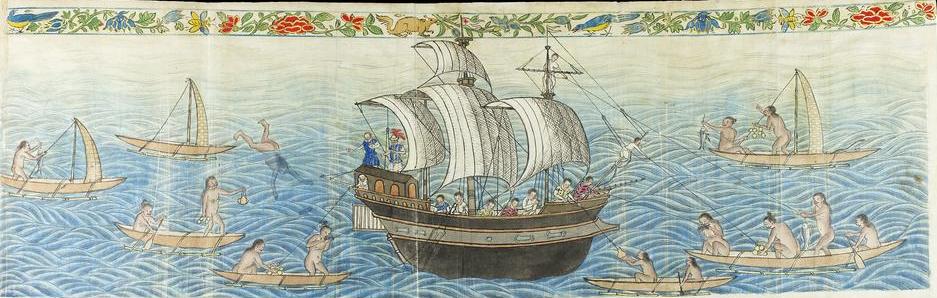
Traditionally, the Chamorro made their living through farming, fishing, and crafts. They grew crops like yams and sweet potatoes, often planting according to the phases of the moon. Fishing in the surrounding reefs and deep sea was a key source of food, and Chamorro were skilled seafarers. They built houses on latte stones—large stone pillars that are now a symbol of their culture. Today, many Chamorro work in wage jobs, but farming and fishing remain important, especially in rural areas.
How is Chamorro society organised?
Chamorro society was historically organized into matrilineal clans, with descent and inheritance passing through the mother’s line. The maternal uncle played a key role in raising children. There were distinct social classes, with the highest being the Chamori, followed by Achoti and Manachang. Marriage and social relations were shaped by these classes, though the system faded under Spanish rule. Community decisions were often made collectively, and respect for elders remains important.


What do the Chamorro believe?
Chamorro beliefs blend ancient traditions with Roman Catholicism, introduced during Spanish rule. Their creation story tells of siblings Puntan and Fu'uña, whose bodies became the world. Ancestor veneration was central, and spirits called taotaomo'na are still respected. Folklore includes legends about powerful spirits and magical feats. Catholic festivals and rituals are widely observed, but traditional practices and respect for the land and ancestors continue to shape Chamorro identity.
The history of the Chamorro
The Chamorro are believed to have settled the Mariana Islands around 1500 BC, likely from eastern Indonesia or the Philippines. They developed a complex society known for seafaring, pottery, and the use of latte stones. Spanish colonization began in the 16th century, bringing Catholicism, new social structures, and significant population loss from disease and conflict. Later, the islands were controlled by Germany, Japan, and the United States. Chamorro culture has endured despite these changes, adapting while retaining core traditions.
Chamorro life today
Today, over 168,000 people of Chamorro ancestry live in Guam, the Northern Mariana Islands, and the United States. While many now live in cities and work wage jobs, efforts to revive the Chamorro language and traditions are strong. Public schools teach Chamorro, and cultural events celebrate their heritage. The community faces challenges from land loss, migration, and cultural change, but there is a strong movement to preserve and promote Chamorro identity.
Questions people ask about the Chamorro
Where do the Chamorro live?
The Chamorro live in the United States, Guam and Micronesia, in the Mariana Islands in Micronesia.
How many Chamorro people are there?
Our sources give the Chamorro population as over 168,000 (2020). Counts of peoples vary with who is counted and when.
What language do the Chamorro speak?
The Chamorro speak Chamorro, which belongs to the Austronesian family of languages.
How do the Chamorro make a living?
The Chamorro are known for settled farming, fishing and the sea, craft and trade and towns and wage work. Like most peoples, they combine several ways of making a living, and these have changed over time.
Sources and further reading
- Chamorro people on WikipediaEncyclopedia
- Encyclopaedia BritannicaArticle
- More photos on Wikimedia CommonsPhotos
- Wikidata recordOpen data
This page was written with AI assistance from the sources above and checked automatically before publishing. It may contain mistakes, and it is no substitute for hearing from the Chamorro themselves. If something is wrong, tell us. Last refreshed 2026-10-02.
Neighbours in the United States
All peoples of the United States AmboneseOrang Ambon
🇮🇩 Indonesia and 4 moreMixed Austronesian-Melanesian people of Ambon and southwest Seram, Maluku, Indonesia
About 1.6 million, Austronesian
AmboneseOrang Ambon
🇮🇩 Indonesia and 4 moreMixed Austronesian-Melanesian people of Ambon and southwest Seram, Maluku, Indonesia
About 1.6 million, Austronesian
 Jewsיהודים
🇮🇱 Israel and 11 moreAn ethnoreligious group with ancient roots in Israel and a global presence today
About 15 million
Jewsיהודים
🇮🇱 Israel and 11 moreAn ethnoreligious group with ancient roots in Israel and a global presence today
About 15 million
 Uyghursئۇيغۇرلار / Уйғурлар / Uyghurlar
🇨🇳 China and 12 moreA Turkic people of Xinjiang, China, with deep roots in Central Asia
About 12 million, Turkic (Karluk branch)
Uyghursئۇيغۇرلار / Уйғурлар / Uyghurlar
🇨🇳 China and 12 moreA Turkic people of Xinjiang, China, with deep roots in Central Asia
About 12 million, Turkic (Karluk branch)
 Palestiniansفلسطينيون
🇵🇸 Palestine and 8 moreAn Arab people native to Palestine, with a large diaspora worldwide
About 14 million, Semitic
Palestiniansفلسطينيون
🇵🇸 Palestine and 8 moreAn Arab people native to Palestine, with a large diaspora worldwide
About 14 million, Semitic
Other Austronesian speakers
See them all MalaysOrang Melayu
🇲🇾 Malaysia and 4 moreAustronesian people of the Malay Peninsula, Sumatra, Borneo and nearby islands
About 30 million, Austronesian
MalaysOrang Melayu
🇲🇾 Malaysia and 4 moreAustronesian people of the Malay Peninsula, Sumatra, Borneo and nearby islands
About 30 million, Austronesian
 Minangkabaubangso Minangkabau
🇮🇩 Indonesia and 3 moreMatrilineal Muslim society from the highlands of West Sumatra
About 6.6 million, Austronesian
Minangkabaubangso Minangkabau
🇮🇩 Indonesia and 3 moreMatrilineal Muslim society from the highlands of West Sumatra
About 6.6 million, Austronesian
 Sundaneseᮅᮛᮀ ᮞᮥᮔ᮪ᮓ (Urang Sunda)
🇮🇩 Indonesia and 3 moreThe native people of western Java, Indonesia, known for their language and traditions
About 42 million, Austronesian
Sundaneseᮅᮛᮀ ᮞᮥᮔ᮪ᮓ (Urang Sunda)
🇮🇩 Indonesia and 3 moreThe native people of western Java, Indonesia, known for their language and traditions
About 42 million, Austronesian
 Balineseanak Bali
🇮🇩 IndonesiaHindu-majority people of Bali, known for art, dance, and water-temple farming
About 3.9 million, Austronesian
Balineseanak Bali
🇮🇩 IndonesiaHindu-majority people of Bali, known for art, dance, and water-temple farming
About 3.9 million, Austronesian