
Uyghurs
They call themselves ئۇيغۇرلار / Уйғурлар / Uyghurlar
A Turkic people of Xinjiang, China, with deep roots in Central Asia
The Uyghurs are a Turkic ethnic group mainly living in the Xinjiang Uyghur Autonomous Region of northwest China, with significant communities in Central Asia and beyond. Numbering over 12 million, they speak the Uyghur language and are predominantly Sunni Muslim, known for their oasis towns, rich culture, and recent history of state persecution.
Who are the Uyghurs?
The Uyghurs are a Turkic-speaking people whose main homeland is the Xinjiang Uyghur Autonomous Region in northwest China. They share cultural and historical ties to Central Asia and are recognized as one of China’s 55 official ethnic minorities. Uyghur identity is shaped by a shared language, Sunni Muslim faith, and a history of oasis agriculture and urban life in towns like Kashgar and Hotan. Their ancestry is diverse, tracing back to ancient Turkic, Tocharian, and Saka peoples, and their sense of unity has grown especially in the 20th century as a response to political changes and pressures.
Where do the Uyghurs live?
Uyghurs traditionally live in the Tarim Basin and surrounding areas of Xinjiang, a vast region of deserts, mountains, and fertile oases in northwest China. The land is marked by the Taklamakan Desert, bordered by the Tianshan and Kunlun mountains. Most Uyghurs are settled in oasis towns such as Kashgar, Hotan, and Turpan, where irrigation supports agriculture. Smaller Uyghur communities are found in Central Asian countries and in diaspora worldwide.
What language do the Uyghurs speak?
Uyghurs speak the Uyghur language, which belongs to the Karluk branch of the Turkic language family and is closely related to Uzbek. Uyghur is written in several scripts, including Arabic, Cyrillic, and Latin, though the Arabic script is most common in China. The language is actively spoken in Xinjiang and among diaspora communities, but faces pressure from policies promoting Mandarin Chinese.
How do the Uyghurs live?
Traditionally, Uyghurs have been settled farmers, growing wheat, corn, cotton, fruits, and vegetables in irrigated oasis lands. They are also known for crafts such as carpet weaving, metalwork, and trade, reflecting their history as merchants along the Silk Road. In cities, many Uyghurs work in markets, shops, or wage jobs. Their homes are often built from mud brick, with courtyards and flat roofs suited to the dry climate.
How is Uyghurs society organised?
Uyghur society is organized around extended families and local communities. Descent is patrilineal, and marriages are important social events, often arranged by families. Community elders and religious leaders play key roles in decision-making and conflict resolution. Social life centers on family, mosque, and neighborhood, with strong traditions of hospitality and mutual aid.


What do the Uyghurs believe?
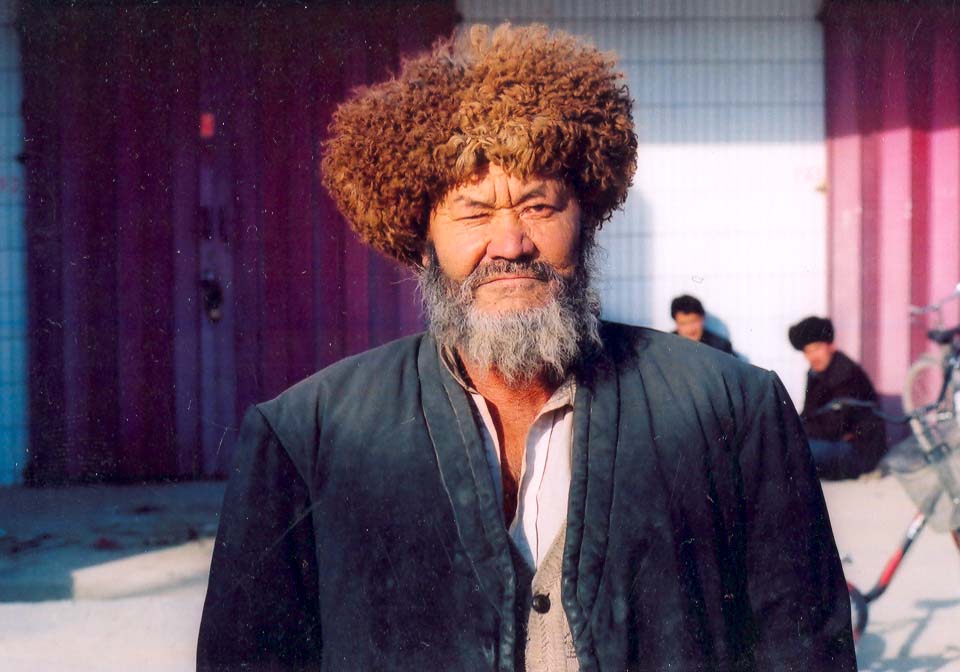
Most Uyghurs are Sunni Muslims, and Islam is central to their identity and daily life. Religious practices include prayer, fasting during Ramadan, and attending mosque. Uyghur culture is rich in music, dance, and oral storytelling, with the muqam musical tradition being especially important. Traditional dress includes embroidered caps and long robes, though styles vary by region and occasion.
The history of the Uyghurs
Uyghur history traces back to ancient Turkic tribes in Mongolia and the Altai, with the Uyghur Khaganate forming in the 8th century. After its fall, Uyghurs migrated to the Tarim Basin, mixing with local peoples and adopting oasis agriculture. They gradually converted to Islam from the 10th century onward. The region came under Qing rule in the 18th century, and Uyghur identity was formalized in the 20th century, especially after Soviet and Chinese policies promoted the modern ethnonym. Since 2014, Uyghurs in China have faced widespread persecution, including detention and forced labor.
Uyghurs life today
Today, over 12 million Uyghurs live in China, mainly in Xinjiang, with smaller communities in Central Asia and beyond. They are officially recognized as a minority but face severe restrictions on religious, cultural, and political life. Reports of mass detention, forced labor, and other abuses have drawn international concern. Uyghur culture persists in diaspora communities, where efforts to preserve language and traditions continue.
Questions people ask about the Uyghurs
Where do the Uyghurs live?
The Uyghurs live in China, Kazakhstan, Kyrgyzstan, Uzbekistan, Turkey and Pakistan, in the Tarim Basin and Xinjiang region of northwest China.
How many Uyghurs people are there?
Our sources give the Uyghurs population as more than 12 million (disputed; 2020 census and other sources). Counts of peoples vary with who is counted and when.
What language do the Uyghurs speak?
The Uyghurs speak Uyghur, which belongs to the Turkic (Karluk branch) family of languages.
How do the Uyghurs make a living?
The Uyghurs are known for settled farming, craft and trade and towns and wage work. Like most peoples, they combine several ways of making a living, and these have changed over time.
Sources and further reading
- Uyghurs on WikipediaEncyclopedia
- Encyclopaedia BritannicaArticle
- More photos on Wikimedia CommonsPhotos
- Wikidata recordOpen data
This page was written with AI assistance from the sources above and checked automatically before publishing. It may contain mistakes, and it is no substitute for hearing from the Uyghurs themselves. If something is wrong, tell us. Last refreshed 2026-10-02.
Neighbours in China
All peoples of China Sherpaཤར་པ།
🇳🇵 Nepal and 3 moreMountain people of the Himalayas, renowned for guiding climbers
About 520,000, Tibeto-Burman
Sherpaཤར་པ།
🇳🇵 Nepal and 3 moreMountain people of the Himalayas, renowned for guiding climbers
About 520,000, Tibeto-Burman
 Yao
🇨🇳 China and 3 moreMountain peoples of southern China and Southeast Asia, known for diverse languages and traditions
About 4 million, Hmong-Mien, Tai–Kadai, Sinitic
Yao
🇨🇳 China and 3 moreMountain peoples of southern China and Southeast Asia, known for diverse languages and traditions
About 4 million, Hmong-Mien, Tai–Kadai, Sinitic
 Lisuꓡꓲ‐ꓢꓴ
🇨🇳 China and 3 moreTibeto-Burman people of the mountains in China, Myanmar, Thailand, and India
About 1.4 million, Tibeto-Burman
Lisuꓡꓲ‐ꓢꓴ
🇨🇳 China and 3 moreTibeto-Burman people of the mountains in China, Myanmar, Thailand, and India
About 1.4 million, Tibeto-Burman
 KhalkhaХалха
🇲🇳 Mongolia and 15 moreLargest subgroup of Mongols, central to Mongolia's history and culture
About 2.7 million, Mongolic
KhalkhaХалха
🇲🇳 Mongolia and 15 moreLargest subgroup of Mongols, central to Mongolia's history and culture
About 2.7 million, Mongolic