
Xerente
Central Jê people of Tocantins, Brazil, with strong clan traditions
The Xerente are an Indigenous people living in Tocantins, Brazil, numbering about 3,509. They speak the Xerente language, part of the Jê family, and are known for their clan-based society and ongoing efforts to address the impacts of the Lajeado Dam on their land.
- Live in Tocantins, central Brazil
- Speak the Xerente language, part of the Jê family
- Society divided into sun and moon moieties
- Sought compensation for Lajeado Dam impacts
- Population about 3,509
Who are the Xerente?
The Xerente are an Indigenous people of central Brazil, closely related to the Xavante and part of the Central Jê linguistic and cultural group. Their identity is shaped by a strong clan system and a dual social organization based on mythic heroes associated with the sun and moon. The Xerente have maintained their language and many traditions, even as they have adapted to broader Brazilian society. Their community is bound by shared ancestry, ritual, and a collective memory of their land and history.
Where do the Xerente live?
The Xerente live in the Tocantins region of central Brazil. This area is characterized by savanna-like landscapes and river systems. Their villages were traditionally arranged in a semi-circular pattern, reflecting their social organization. The land is central to their way of life, providing resources for farming and sustaining their cultural practices.
What language do the Xerente speak?
The Xerente speak their own language, which belongs to the Jê family. As of 2007, use of the Xerente language was universal among community members, with most children being monolingual in Xerente until the age of five. The language remains a vital part of their identity and daily life.
How do the Xerente live?
Traditionally, the Xerente have relied on farming and the resources of their homeland for their livelihood. Their villages once followed a semi-circular layout, but have since adopted more Brazilian patterns of organization. Farming remains important, and the community adapts their practices to the local environment.
How is Xerente society organised?
Xerente society is organized into two exogamous moieties, or social divisions, based on their creation myth: the sun moiety (Doí) and the moon moiety (Wahirê). Each moiety contains several clans. Marriage occurs between members of different moieties, reinforcing social bonds and the dual structure. This organization shapes many aspects of social life, including rituals and decision-making.
What do the Xerente believe?
The Xerente creation myth centers on the duality of mythic heroes associated with the sun and the moon. This belief underpins the division of society into two moieties. Rituals and ceremonies reflect this dual structure, and traditional stories are passed down through generations. These beliefs remain important in Xerente cultural life.
The history of the Xerente
The Xerente have lived in central Brazil for generations and are related to other Central Jê peoples like the Xavante. From the nineteenth century onward, they generally maintained peaceful relations with outsiders. In recent decades, the construction of the Lajeado Dam brought significant changes and challenges. The community sought compensation for the dam's impact through legal action, but a 2013 court decision favored the dam’s builders.
Xerente life today
Today, the Xerente number about 3,509 people. They continue to speak their language and maintain many traditions, though their society has adapted to Brazilian norms. The community faces ongoing challenges from development projects like the Lajeado Dam, and they have sought legal recognition and compensation for these impacts. Their language and social structure remain strong.
Questions people ask about the Xerente
Where do the Xerente live?
The Xerente live in the Tocantins region of central Brazil, where they have maintained their traditional homeland.
How many Xerente are there?
There are about 3,509 Xerente people, according to the most recent figures given in the sources.
What language do the Xerente speak?
The Xerente speak their own language, which belongs to the Jê language family. Most children are monolingual in Xerente until age five.
How is Xerente society organized?
Xerente society is divided into two moieties, or social groups, called Doí (sun) and Wahirê (moon), each with several clans. Marriage occurs between the moieties.
What challenges have the Xerente faced recently?
The Xerente have faced impacts from the Lajeado Dam and sought compensation through legal action, but a 2013 court decision favored the dam’s builders.
Sources and further reading
- Xerente on WikipediaEncyclopedia
- Encyclopaedia BritannicaArticle
- More photos on Wikimedia CommonsPhotos
- Wikidata recordOpen data
This page was written with AI assistance from the sources above and checked automatically before publishing. It may contain mistakes, and it is no substitute for hearing from the Xerente themselves. If something is wrong, tell us. Last refreshed 2026-10-02.
Neighbours in Brazil
All peoples of Brazil KayapoMebêngôkre
🇧🇷 BrazilIndigenous people of Brazil's Xingu River basin, known for activism and body art
About 12,000, Jê
Kaingangkanhgág
🇧🇷 BrazilIndigenous people of southern Brazil with a dual clan society
About 51,000, Jê
KayapoMebêngôkre
🇧🇷 BrazilIndigenous people of Brazil's Xingu River basin, known for activism and body art
About 12,000, Jê
Kaingangkanhgág
🇧🇷 BrazilIndigenous people of southern Brazil with a dual clan society
About 51,000, Jê
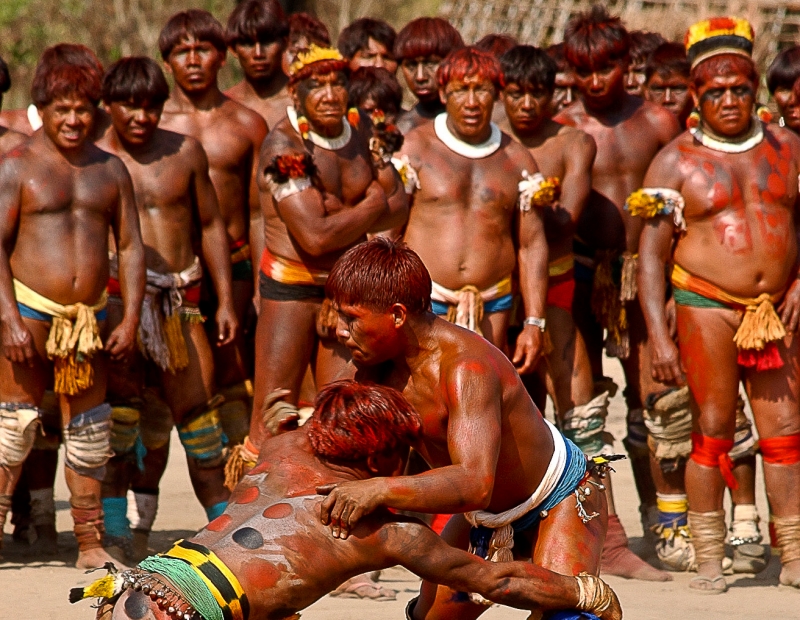 Xavante
🇧🇷 BrazilIndigenous people of eastern Mato Grosso, Brazil, known for dual-clan society
About 30,000, Jê
SuyáKisêdjê
🇧🇷 BrazilIndigenous people of Brazil's Upper Xingu, known for collective life and lip plates
About 424, Jê
Xavante
🇧🇷 BrazilIndigenous people of eastern Mato Grosso, Brazil, known for dual-clan society
About 30,000, Jê
SuyáKisêdjê
🇧🇷 BrazilIndigenous people of Brazil's Upper Xingu, known for collective life and lip plates
About 424, Jê