
Kayapo
They call themselves Mebêngôkre
Indigenous people of Brazil's Xingu River basin, known for activism and body art
The Kayapo, or Mebêngôkre, are an Indigenous people living in Brazil, mainly in Pará and Mato Grosso, along the Xingu River and its tributaries. Numbering over 11,000, they are recognized for their vibrant body painting, traditional ceremonies, and strong defense of their rainforest homeland against mining, logging, and dam projects.
- Live in the Xingu River basin in Brazil's eastern Amazon
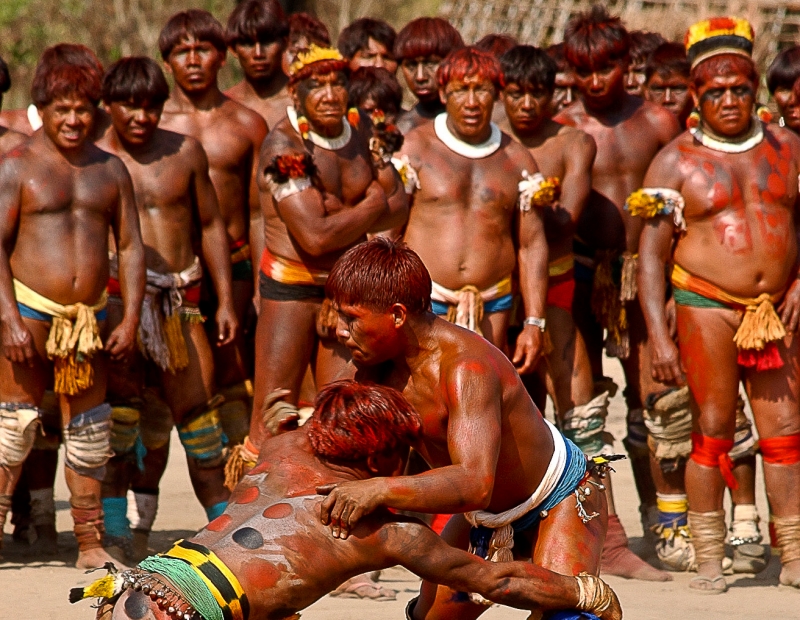
- Known for intricate black body painting and feathered headdresses
- Practice slash-and-burn (swidden) farming and fishing
- Led major protests against the Belo Monte Dam
- Call themselves Mebêngôkre, meaning 'people from the water's source'
Who are the Kayapo?
The Kayapo, who call themselves Mebêngôkre, are an Indigenous people of Brazil. They live in scattered villages along the Xingu River and its tributaries, in the states of Pará and Mato Grosso. Their identity is rooted in their language, ceremonies, and a deep connection to their land. The Kayapo are known for their elaborate body painting, feathered headdresses, and strong sense of community. They are part of the larger Mebêngôkre nation, which means 'people from the water's source.'
Where do the Kayapo live?
Kayapo territory covers a vast area of tropical rainforest and savannah in the eastern Amazon basin. Their villages are located south of the Amazon River, mainly along the Xingu River and its many tributaries. The land includes forests, grasslands, hills, and river valleys, supporting a rich diversity of plants and animals. This region is one of the largest protected tropical areas in the world and is vital to the Kayapo's way of life.
What language do the Kayapo speak?
The Kayapo speak the Kayapo language, also known as Mẽbêngôkre, which belongs to the Jê language family. There are several dialects among different Kayapo groups. Oratory is highly valued, and the Kayapo call themselves 'those who speak beautifully.' While some Kayapo speak Portuguese, knowledge of it varies by community and contact history.
How do the Kayapo live?
The Kayapo make their living through swidden (shifting) agriculture, fishing, foraging, and farming. They practice slash-and-burn farming, clearing small plots for crops like sweet potatoes, which are a staple of their diet. Fishing and gathering wild foods from the forest and rivers are also important. Villages consist of huts arranged around a central meeting house, and traditional tools and crafts are still used alongside some modern items.
How is Kayapo society organised?
Kayapo society is organized around villages, each with a central hut for meetings. Family and clan ties are important, and naming ceremonies mark a child's coming of age. Men and women have distinct roles and dress, with men often wearing feathered headdresses and, in the past, wooden lip disks. Decisions are discussed collectively, especially by men in the central hut, and beauty is highly valued in names and ceremonial life.


What do the Kayapo believe?
The Kayapo believe their ancestors learned from insects, which is reflected in their body painting and rituals. Black body paint helps them blend into the forest and communicate with the spirit world. Feathered headdresses, especially those worn by chiefs, represent cosmic elements like the sun. Naming ceremonies and other rituals are important, and traditional dress and adornment remain significant, though some Western clothing is now worn.
The history of the Kayapo
The Kayapo first encountered Portuguese-Brazilian explorers in the 18th century, leading to westward migration. In the 20th century, increased contact with outsiders brought both opportunities and challenges, including disease and social change. The Kayapo have faced threats from mining, logging, and dam projects, notably the Belo Monte Dam. They have organized protests and formed alliances to defend their land, drawing international attention and support.
Kayapo life today
Today, the Kayapo number over 11,000 and continue to live in their traditional territory. They face ongoing threats from development, pollution, and land loss but remain active in defending their rights and environment. Conservation partnerships and activism have helped protect parts of their land, but pressures from outside interests persist. The Kayapo maintain much of their culture while adapting to new realities.
Questions people ask about the Kayapo
Where do the Kayapo live?
The Kayapo live in Brazil, mainly in the states of Pará and Mato Grosso, along the Xingu River and its tributaries in the eastern Amazon basin.
How many Kayapo are there?
There are about 11,675 Kayapo people, according to recent figures.
What language do the Kayapo speak?
They speak the Kayapo language, also called Mẽbêngôkre, which is part of the Jê language family.
How do the Kayapo make a living?
The Kayapo practice swidden (shifting) agriculture, fishing, foraging, and farming, with sweet potatoes as a dietary staple.
What are the Kayapo known for?
They are known for their activism to protect their land, elaborate body painting, feathered headdresses, and strong community traditions.
Sources and further reading
This page was written with AI assistance from the sources above and checked automatically before publishing. It may contain mistakes, and it is no substitute for hearing from the Kayapo themselves. If something is wrong, tell us. Last refreshed 2026-10-02.
Neighbours in Brazil
All peoples of Brazil Xerente
🇧🇷 BrazilCentral Jê people of Tocantins, Brazil, with strong clan traditions
About 4,000, Jê
Xerente
🇧🇷 BrazilCentral Jê people of Tocantins, Brazil, with strong clan traditions
About 4,000, Jê
 Xavante
🇧🇷 BrazilIndigenous people of eastern Mato Grosso, Brazil, known for dual-clan society
About 30,000, Jê
SuyáKisêdjê
🇧🇷 BrazilIndigenous people of Brazil's Upper Xingu, known for collective life and lip plates
About 424, Jê
Xavante
🇧🇷 BrazilIndigenous people of eastern Mato Grosso, Brazil, known for dual-clan society
About 30,000, Jê
SuyáKisêdjê
🇧🇷 BrazilIndigenous people of Brazil's Upper Xingu, known for collective life and lip plates
About 424, Jê