Kaingang
They call themselves kanhgág
Indigenous people of southern Brazil with a dual clan society
The Kaingang are an Indigenous people living mainly in the southern Brazilian states of Paraná, Santa Catarina, Rio Grande do Sul, and São Paulo. Numbering around 51,000 as of 2022, they are known for their distinct language, dual clan system, and ongoing efforts to protect their land and rights.
- Live mainly in Paraná, Santa Catarina, Rio Grande do Sul, and São Paulo
- Society divided into two exogamic clans: kamé and kanhru
- Distinctive body painting marks clan identity
- Speak the Kaingang language, part of the Jê family
- Won compensation for land use from a hydroelectric company in 2006
Who are the Kaingang?
The Kaingang are an Indigenous people native to southern Brazil. They are recognized for their unique social structure, which divides society into two exogamic (marrying outside the group) clans: kamé and kanhru. These clans are central to Kaingang identity, shaping marriage, body art, and worldview. The Kaingang speak their own language, which is part of the Jê family, and maintain cultural practices that distinguish them from neighboring groups. Their connection to ancestral land and traditions continues to hold their community together.
Where do the Kaingang live?
The Kaingang live in the southern Brazilian states of Paraná, Santa Catarina, Rio Grande do Sul, and São Paulo. Their territory includes forests, grasslands, and river valleys. Historically, they were also the first inhabitants of the province of Misiones in Argentina. The Kaingang maintain a strong relationship with the land, valuing places where their ancestors are buried and where their communities have long lived.
What language do the Kaingang speak?
The Kaingang speak the Kaingang language, which belongs to the Jê language family. Their language is distinct from those of neighboring peoples, such as the Guaraní. The Kaingang language remains a key part of their identity and is still spoken within their communities.
How is Kaingang society organised?
Kaingang society is organized around two main clans: kamé and kanhru (also called kairu). These clans are exogamic, meaning people must marry outside their own clan. Each clan has its own traditional body markings: kamé use lines and zigzags, while kanhru use dots and circles. Clan membership is patrilineal, passed down from the father, except when the father is not Kaingang, in which case it comes from the maternal grandfather. This dual system shapes social life, marriage, and ritual.
What do the Kaingang believe?
Body painting is an important cultural expression among the Kaingang, with each clan using specific patterns to mark identity. Kamé members paint straight lines and zigzags, while kanhru use dots and circles. These markings reflect their worldview, connecting people to nature and humanity. Rituals and beliefs are closely tied to clan identity, but further details are not provided in the sources.
The history of the Kaingang
The Kaingang were the original inhabitants of areas now in southern Brazil and parts of Argentina. Over time, they have faced pressures from colonization and development. In recent history, the Kaingang have actively defended their land rights. In 2006, they secured compensation from a state-owned power company for the use of their land for a hydroelectric plant, following a standoff. This reflects a broader movement among Indigenous groups in Brazil to challenge energy projects and assert their rights.
Kaingang life today
Today, the Kaingang number about 51,000 and live mainly in southern Brazil. They continue to maintain their language and social structure. The Kaingang face ongoing challenges related to land rights and development pressures but have achieved some successes in defending their territories. Their identity and traditions remain strong, and they are recognized as an important Indigenous group in Brazil.
Questions people ask about the Kaingang
Where do the Kaingang live?
The Kaingang live mainly in the southern Brazilian states of Paraná, Santa Catarina, Rio Grande do Sul, and São Paulo.
How many Kaingang are there?
There are about 51,000 Kaingang people, according to a 2022 estimate.
What language do the Kaingang speak?
The Kaingang speak the Kaingang language, which belongs to the Jê language family.
How is Kaingang society organized?
Kaingang society is divided into two exogamic clans, kamé and kanhru, which shape marriage and identity.
What is unique about Kaingang culture?
The Kaingang are known for their dual clan system and distinctive body painting patterns that mark clan identity.
Sources and further reading
- Kaingang on WikipediaEncyclopedia
- Encyclopaedia BritannicaArticle
- More photos on Wikimedia CommonsPhotos
- Wikidata recordOpen data
This page was written with AI assistance from the sources above and checked automatically before publishing. It may contain mistakes, and it is no substitute for hearing from the Kaingang themselves. If something is wrong, tell us. Last refreshed 2026-10-02.
Neighbours in Brazil
All peoples of Brazil KayapoMebêngôkre
🇧🇷 BrazilIndigenous people of Brazil's Xingu River basin, known for activism and body art
About 12,000, Jê
KayapoMebêngôkre
🇧🇷 BrazilIndigenous people of Brazil's Xingu River basin, known for activism and body art
About 12,000, Jê
 Xerente
🇧🇷 BrazilCentral Jê people of Tocantins, Brazil, with strong clan traditions
About 4,000, Jê
Xerente
🇧🇷 BrazilCentral Jê people of Tocantins, Brazil, with strong clan traditions
About 4,000, Jê
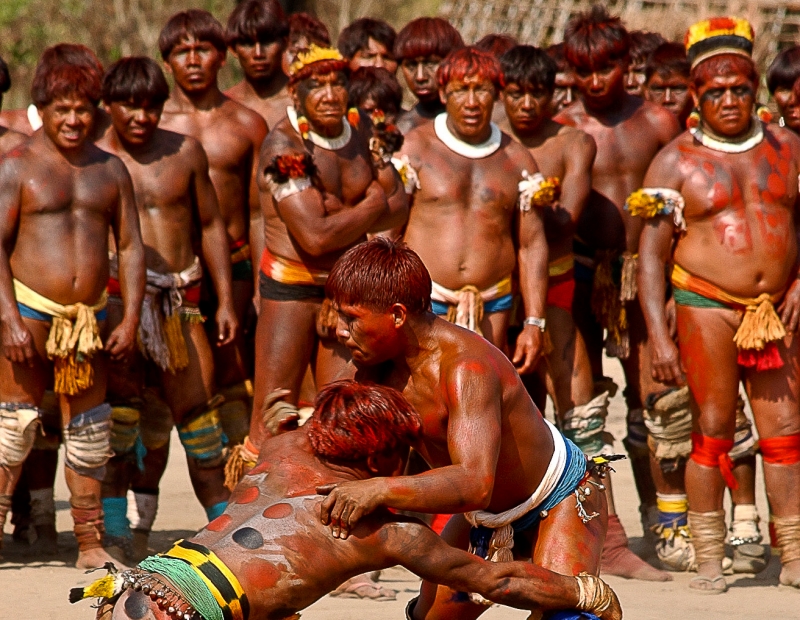 Xavante
🇧🇷 BrazilIndigenous people of eastern Mato Grosso, Brazil, known for dual-clan society
About 30,000, Jê
SuyáKisêdjê
🇧🇷 BrazilIndigenous people of Brazil's Upper Xingu, known for collective life and lip plates
About 424, Jê
Xavante
🇧🇷 BrazilIndigenous people of eastern Mato Grosso, Brazil, known for dual-clan society
About 30,000, Jê
SuyáKisêdjê
🇧🇷 BrazilIndigenous people of Brazil's Upper Xingu, known for collective life and lip plates
About 424, Jê