Nubians
They call themselves Nⲟⲃⲓ̄
Indigenous people of the Nile valley between southern Egypt and northern Sudan
The Nubians are an indigenous ethnic group of the Nile valley, living mainly in southern Egypt and northern Sudan. They speak Nubian languages of the Nilo-Saharan family and Arabic, and are known for their ancient kingdoms, rich history, and resilience after large-scale displacement caused by the Aswan High Dam.
- Indigenous to the Nile valley between Egypt and Sudan
- Speak Nubian languages and Arabic
- Displaced by the Aswan High Dam in the 20th century
- Descendants of ancient kingdoms like Kush and Meroë
- Practice Sunni Islam, with some Coptic Christians
Who are the Nubians?
Nubians are the indigenous people of Nubia, a region along the Nile valley stretching from southern Egypt into northern Sudan. They are united by shared languages, history, and cultural traditions distinct from their Egyptian and Sudanese neighbors. Historically, Nubians have formed powerful kingdoms and have a deep connection to the Nile, which shapes their way of life. Today, they maintain a strong sense of identity, despite centuries of political change and displacement.
Where do the Nubians live?
Nubia is a stretch of the Nile valley that includes arid deserts, fertile riverbanks, and ancient settlements. The river is central to Nubian life, supporting agriculture and fishing. In Egypt, Nubians mainly live in Aswan Governorate and nearby villages, while in Sudan, they are found from Wadi Halfa to al Dabbah, as well as in cities like Khartoum. The construction of the Aswan High Dam flooded much of their ancestral land, leading to forced relocations.
What language do the Nubians speak?
Nubians speak several Nubian languages, the most widely spoken being Nobiin, Kenzi, and Dongolawi. These languages belong to the Eastern Sudanic branch of the Nilo-Saharan family. Arabic is also widely spoken, especially in urban areas. While Nubian languages are still used in daily life and cultural practices, there is concern about their future due to displacement and the dominance of Arabic.
How do the Nubians live?
Traditionally, Nubians are farmers, herders, and fishers, relying on the Nile’s waters for irrigation and food. Their villages are known for distinctive mud-brick houses, often decorated with colorful patterns. Nubians also practice crafts such as pottery and weaving. In recent decades, many have moved to cities and now work in wage labor, trade, and public service, but ties to their rural homeland remain strong.
How is Nubians society organised?
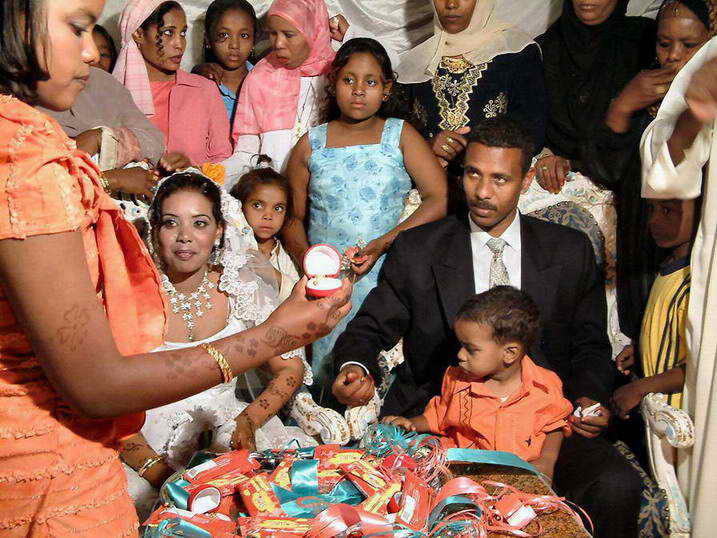
Nubian society is organized around extended families and clans, with strong community bonds. Marriage within the community is common, helping preserve language and customs. Elders and respected leaders often guide decision-making. Social life centers on communal gatherings, music, and festivals, which reinforce group identity and transmit traditions to younger generations.


What do the Nubians believe?
Most Nubians today are Sunni Muslims, though some in Egypt follow the Coptic Orthodox Church. Religious practices are blended with local customs and celebrations. Historically, Nubians were known for their ancient temples and Christian kingdoms before Islamization. Music, dance, and colorful dress are important in festivals and daily life, reflecting both ancient and modern influences.
The history of the Nubians
Nubia has been inhabited since prehistoric times, with settlements dating back to 7000 BC. Nubians built powerful kingdoms such as Kerma, Kush, and Meroë, and at times ruled Egypt as pharaohs. They were renowned archers and traders. Over centuries, Nubia saw shifts from Christianity to Islam and endured conquest by Egyptians, Greeks, Romans, and later colonial powers. The 20th-century construction of the Aswan High Dam caused massive displacement, flooding ancestral lands and forcing many Nubians to relocate.
Nubians life today
Today, Nubians number in the millions but remain divided between Egypt and Sudan. Many have been resettled far from their original villages, facing challenges to their language and culture. Despite this, Nubian identity remains strong, with efforts to revive traditions and advocate for land rights. Urban migration and integration bring new opportunities and pressures, but community ties and cultural pride persist.
Questions people ask about the Nubians
Where do the Nubians live today?
Nubians mainly live in southern Egypt (especially Aswan Governorate) and northern Sudan, with communities also in large cities like Cairo and Khartoum.
How many Nubians are there?
There are over 5 million Nubians according to estimates, though exact numbers vary.
What language do Nubians speak?
Nubians speak several Nubian languages, such as Nobiin and Kenzi, which belong to the Nilo-Saharan family. Arabic is also widely spoken.
What happened to Nubian lands?
Much of Nubia was flooded by the construction of the Aswan High Dam, which forced about 100,000 Nubians in Egypt and Sudan to relocate.
What religions do Nubians follow?
Most Nubians are Sunni Muslims, but some in Egypt are Coptic Orthodox Christians.
Sources and further reading
This page was written with AI assistance from the sources above and checked automatically before publishing. It may contain mistakes, and it is no substitute for hearing from the Nubians themselves. If something is wrong, tell us. Last refreshed 2026-10-02.
Neighbours in Egypt
All peoples of Egypt BerbersImaziɣen
🇲🇦 Morocco and 8 moreIndigenous peoples of North Africa with deep roots in the Maghreb
About 25 million, Afroasiatic
BerbersImaziɣen
🇲🇦 Morocco and 8 moreIndigenous peoples of North Africa with deep roots in the Maghreb
About 25 million, Afroasiatic
 Bedouinبدو
🇸🇦 Saudi Arabia and 15 moreNomadic and semi-nomadic Arab tribes of deserts from Arabia to North Africa
About 22 million, Afro-Asiatic
Bedouinبدو
🇸🇦 Saudi Arabia and 15 moreNomadic and semi-nomadic Arab tribes of deserts from Arabia to North Africa
About 22 million, Afro-Asiatic
 Israelitesבני ישראל
🇮🇱 Israel and 11 moreAncient Semitic-speaking people of Canaan, known for their tribal confederation
Historical, Canaanite (Northwest Semitic)
Abazins
🇷🇺 Russia and 5 moreNorthwest Caucasian people now living in Russia, Turkey, and the Middle East
About 210,000, Northwest Caucasian
Israelitesבני ישראל
🇮🇱 Israel and 11 moreAncient Semitic-speaking people of Canaan, known for their tribal confederation
Historical, Canaanite (Northwest Semitic)
Abazins
🇷🇺 Russia and 5 moreNorthwest Caucasian people now living in Russia, Turkey, and the Middle East
About 210,000, Northwest Caucasian