
Minahasan
They call themselves suku Minahasa
Austronesian people of North Sulawesi, Indonesia, known for their Christian heritage
The Minahasan are an Austronesian ethnic group native to North Sulawesi, Indonesia, numbering about 1.4 million. They speak several indigenous languages and Manado Malay, and are known for their Christian-majority society in a Muslim-majority country. Their history includes early migrations, contact with European powers, and a strong connection to Dutch colonial rule.
- Largest ethnic group in North Sulawesi, Indonesia
- Speak several indigenous languages and Manado Malay
- Christian-majority in a Muslim-majority country
- Historically organized into independent walak groups
- Strong historical ties to Dutch colonial rule
Who are the Minahasan?
The Minahasan are an Austronesian people native to the Minahasan peninsula in North Sulawesi, Indonesia. They are the largest ethnic group in the region and have a distinct identity shaped by their languages, history, and Christian faith. Traditionally, the Minahasan were organized into independent groups called walak, each with its own territory and leadership. Over time, especially under Dutch colonial influence, these groups became more unified. Today, Minahasan identity is tied to their homeland, language, and shared customs.
Where do the Minahasan live?
Minahasa lies in the northern peninsula of Sulawesi, a region of volcanic mountains, lakes, and fertile valleys. The area includes cities such as Manado, Tomohon, and Bitung, as well as rural regencies. The land is known for its rich soil, which has supported farming for centuries. Coastal areas provide access to fishing grounds, while the interior is marked by forests and highlands. The region's geography has influenced settlement patterns and livelihoods.
What language do the Minahasan speak?
There are nine indigenous languages in the Minahasan peninsula, mostly from the Malayo-Polynesian branch of the Austronesian family. Five are considered Minahasan languages, while others belong to the Sangiric and Gorontalo–Mongondow groups. Manado Malay, a local creole with influences from Portuguese, Spanish, and Dutch, is widely spoken and serves as a lingua franca. Indonesian is also commonly used, especially in education and public life.
How do the Minahasan live?
Traditionally, the Minahasan people have relied on farming, cultivating crops such as rice and coffee in the fertile volcanic soils. Fishing is important in coastal communities. Crafts and trade have long been part of local economies, and today many Minahasans work in towns and cities in various occupations. Houses are often built on stilts, suited to the tropical climate. Food traditions reflect both local resources and outside influences.
How is Minahasan society organised?
Minahasan society was historically organized into independent groups (walak), each led by its own chiefs. Clans and descent lines played important roles in social organization, and alliances or conflicts between groups were common. Marriage and family ties helped bind communities together. Decision-making traditionally involved elders and leaders, though Dutch colonial rule brought changes in administration and social structure.


What do the Minahasan believe?
The majority of Minahasans are Protestant Christians, a legacy of Dutch missionary activity. There are also Roman Catholic and Sunni Muslim minorities. Before conversion, Minahasans had their own creation myths and rituals, some of which are remembered in stories and ceremonies. Traditional music, dance, and dress remain important in cultural events. The region is known for its distinctive festivals and performances.
The history of the Minahasan
The Minahasan peninsula was settled by Austronesian migrants thousands of years ago. Early communities were organized into independent groups, often in conflict. The region had contact with North Maluku, Chinese, and Malay traders before the arrival of Europeans in the 1500s. Portuguese and Spanish influence was followed by Dutch colonization, which brought Christianity and new forms of government. The Dutch helped unite the Minahasan groups and encouraged the use of Manado Malay. The Minahasan people developed a strong connection to Dutch culture and Protestantism, which shaped their identity.
Minahasan life today
Today, the Minahasan number about 1.4 million, mostly living in North Sulawesi but also in other parts of Indonesia and abroad. The region remains a Christian-majority area in Indonesia. Many Minahasans work in cities or overseas, and there is a significant diaspora in the Netherlands. Traditional culture is maintained through festivals and community life, though pressures from modernization and migration continue to shape society.
Questions people ask about the Minahasan
Where do the Minahasan people live?
The Minahasan people are native to the Minahasan peninsula in North Sulawesi, Indonesia. Many also live in other parts of Indonesia and overseas, especially in the Netherlands.
How many Minahasan people are there?
There are about 1.4 million Minahasan people, making them the largest ethnic group in North Sulawesi.
What language do the Minahasan speak?
They speak several indigenous Minahasan languages, as well as Manado Malay and Indonesian.
What is the main religion of the Minahasan?
Most Minahasans are Protestant Christians, with smaller Roman Catholic and Sunni Muslim communities.
What are the main ways the Minahasan make a living?
Farming and fishing are traditional livelihoods, with many also working in crafts, trade, and wage jobs in towns and cities.
Sources and further reading
This page was written with AI assistance from the sources above and checked automatically before publishing. It may contain mistakes, and it is no substitute for hearing from the Minahasan themselves. If something is wrong, tell us. Last refreshed 2026-10-02.
Neighbours in Indonesia
All peoples of Indonesia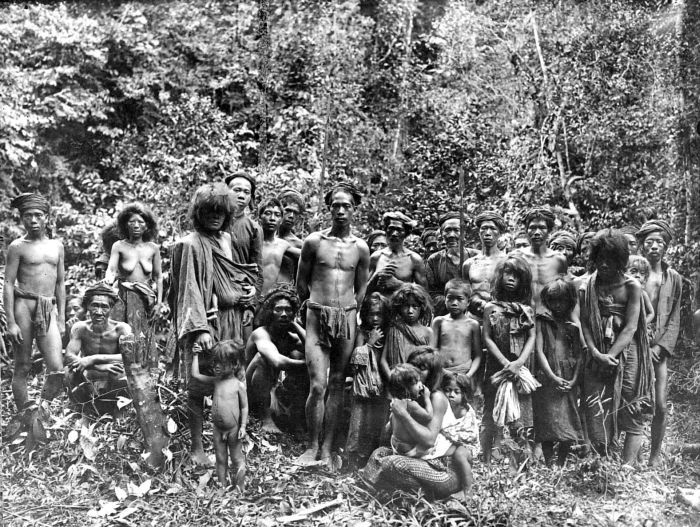 Kubusuku bangsa Kubu
🇮🇩 IndonesiaMobile forest peoples of southeast Sumatra, Indonesia
About 200,000, Austronesian (Malayo-Polynesian branch)
Kubusuku bangsa Kubu
🇮🇩 IndonesiaMobile forest peoples of southeast Sumatra, Indonesia
About 200,000, Austronesian (Malayo-Polynesian branch)
 MalaysOrang Melayu
🇲🇾 Malaysia and 4 moreAustronesian people of the Malay Peninsula, Sumatra, Borneo and nearby islands
About 30 million, Austronesian
MalaysOrang Melayu
🇲🇾 Malaysia and 4 moreAustronesian people of the Malay Peninsula, Sumatra, Borneo and nearby islands
About 30 million, Austronesian
 Minangkabaubangso Minangkabau
🇮🇩 Indonesia and 3 moreMatrilineal Muslim society from the highlands of West Sumatra
About 6.6 million, Austronesian
Minangkabaubangso Minangkabau
🇮🇩 Indonesia and 3 moreMatrilineal Muslim society from the highlands of West Sumatra
About 6.6 million, Austronesian
 Sundaneseᮅᮛᮀ ᮞᮥᮔ᮪ᮓ (Urang Sunda)
🇮🇩 Indonesia and 3 moreThe native people of western Java, Indonesia, known for their language and traditions
About 42 million, Austronesian
Sundaneseᮅᮛᮀ ᮞᮥᮔ᮪ᮓ (Urang Sunda)
🇮🇩 Indonesia and 3 moreThe native people of western Java, Indonesia, known for their language and traditions
About 42 million, Austronesian