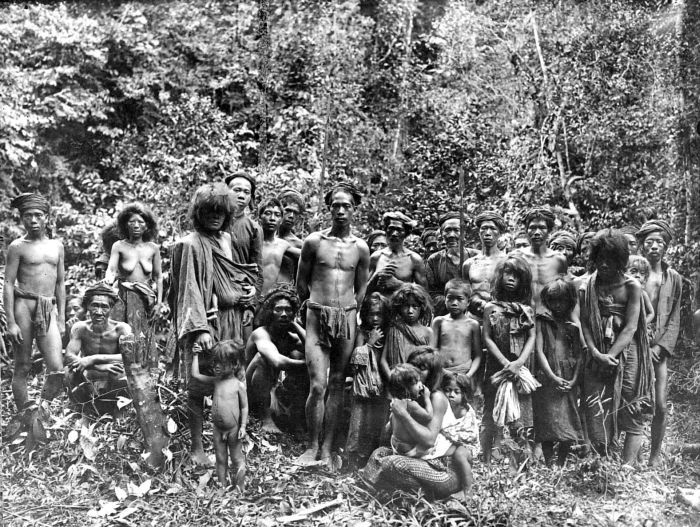
Kubu
They call themselves suku bangsa Kubu
Mobile forest peoples of southeast Sumatra, Indonesia
The Kubu, also known as Orang Batin Sembilan, Orang Rimba, or Anak Dalam, are mobile forest peoples living in the lowland forests of southeast Sumatra, Indonesia. Numbering around 200,000, they are known for their swidden farming, foraging, and strong ties to the forest. Many have faced displacement due to deforestation and settlement projects.
Who are the Kubu?
The Kubu are a collective name for several related forest-dwelling groups in southeast Sumatra, Indonesia. They include the Orang Batin Sembilan, who are mainly swidden farmers, and the Orang Rimba, who combine foraging and farming. Their identity is closely tied to the forest, which shapes their ways of living, beliefs, and social relations. They are known for their mobility and for maintaining distinct cultural and economic systems from neighboring Malay communities.
Where do the Kubu live?
The Kubu live throughout the lowland forests of southeast Sumatra, especially in the provinces of Jambi and South Sumatra. Their homeland consists of tropical forests, rivers, and swidden fields. These forests provide food, materials, and spiritual meaning. However, much of their land has been lost to logging and palm oil plantations, leading to displacement and pressure on their traditional way of life.
What language do the Kubu speak?
The Kubu speak various closely related languages that belong to the Malayo-Polynesian branch of the Austronesian family. These languages are isolects of Malay and are spoken in the upstream regions of South Sumatra and Jambi. Most Kubu people also speak Indonesian, the national language, especially when interacting with outsiders.
How do the Kubu live?
Traditionally, the Kubu make a living through swidden (shifting) farming, foraging for wild yams and other forest foods, hunting, trapping, and fishing. Some groups, like the Orang Rimba, are highly mobile and live in small, flexible camps. Others, such as the Orang Batin Sembilan, are more settled and focus on swidden fields as base camps. Many now also tap rubber or work in logging and other wage labor due to shrinking forests.
How is Kubu society organised?
Kubu social life is organized around extended families and small camps. Their society is generally egalitarian, with status based on age, gender, and knowledge of cultural and religious law. Camps can be small, such as a nuclear family, or larger, including several extended families, especially during farming. Decisions are made collectively, and social relations are flexible to adapt to their mobile lifestyle.


What do the Kubu believe?
Most Kubu traditionally follow animist beliefs, seeing the forest as full of spirits and sacred places. Rituals and customs are closely tied to the land and daily life. Some Kubu have adopted Christianity or Islam, often under outside pressure. Their art, music, and dress reflect their forest environment and beliefs, though these are changing as contact with outsiders increases.
The history of the Kubu
Historically, the Kubu have been labeled by outsiders as 'wild' or 'civilized' based on their lifestyle. They have long used the forest as a refuge from outside control. Since the 1970s, large-scale logging and palm oil plantations have taken much of their land. Government settlement projects and religious conversion efforts have further disrupted their way of life, leading to loss of territory and cultural change.
Kubu life today
Today, the Kubu face ongoing challenges from deforestation, land loss, and forced settlement. Many have been displaced from their traditional forests and pressured to adopt state-approved religions. Despite these pressures, some communities continue to maintain their distinct identity and fight for their rights to land and culture.
Questions people ask about the Kubu
Where do the Kubu live?
The Kubu live in Indonesia, in the lowland forests of southeast Sumatra.
How many Kubu people are there?
Our sources give the Kubu population as about 200,000. Counts of peoples vary with who is counted and when.
What language do the Kubu speak?
The Kubu speak Kubu language, Indonesian, which belongs to the Austronesian (Malayo-Polynesian branch) family of languages.
How do the Kubu make a living?
The Kubu are known for shifting cultivation, hunting and gathering, settled farming, fishing and the sea and towns and wage work. Like most peoples, they combine several ways of making a living, and these have changed over time.
Sources and further reading
- Orang Rimba people on WikipediaEncyclopedia
- Encyclopaedia BritannicaArticle
- More photos on Wikimedia CommonsPhotos
- Wikidata recordOpen data
This page was written with AI assistance from the sources above and checked automatically before publishing. It may contain mistakes, and it is no substitute for hearing from the Kubu themselves. If something is wrong, tell us. Last refreshed 2026-10-02.
Neighbours in Indonesia
All peoples of Indonesia Minahasansuku Minahasa
🇮🇩 Indonesia and 7 moreAustronesian people of North Sulawesi, Indonesia, known for their Christian heritage
About 1.4 million, Austronesian (Malayo-Polynesian branch)
Minahasansuku Minahasa
🇮🇩 Indonesia and 7 moreAustronesian people of North Sulawesi, Indonesia, known for their Christian heritage
About 1.4 million, Austronesian (Malayo-Polynesian branch)
 MalaysOrang Melayu
🇲🇾 Malaysia and 4 moreAustronesian people of the Malay Peninsula, Sumatra, Borneo and nearby islands
About 30 million, Austronesian
MalaysOrang Melayu
🇲🇾 Malaysia and 4 moreAustronesian people of the Malay Peninsula, Sumatra, Borneo and nearby islands
About 30 million, Austronesian
 Minangkabaubangso Minangkabau
🇮🇩 Indonesia and 3 moreMatrilineal Muslim society from the highlands of West Sumatra
About 6.6 million, Austronesian
Minangkabaubangso Minangkabau
🇮🇩 Indonesia and 3 moreMatrilineal Muslim society from the highlands of West Sumatra
About 6.6 million, Austronesian
 Sundaneseᮅᮛᮀ ᮞᮥᮔ᮪ᮓ (Urang Sunda)
🇮🇩 Indonesia and 3 moreThe native people of western Java, Indonesia, known for their language and traditions
About 42 million, Austronesian
Sundaneseᮅᮛᮀ ᮞᮥᮔ᮪ᮓ (Urang Sunda)
🇮🇩 Indonesia and 3 moreThe native people of western Java, Indonesia, known for their language and traditions
About 42 million, Austronesian