Igbo
They call themselves Ńdị́ Ìgbò
A major ethnic group of southeastern Nigeria with a rich history and diaspora
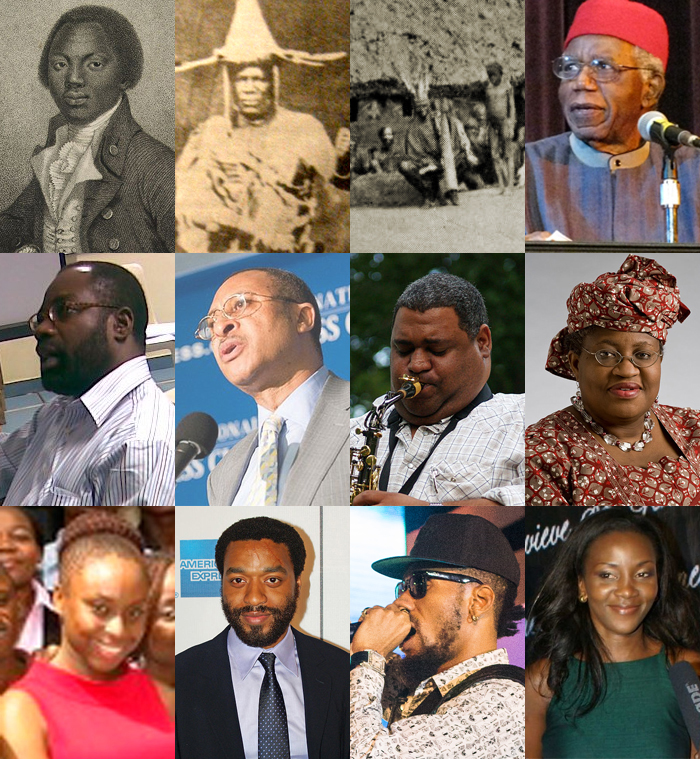
The Igbo are one of Africa's largest ethnic groups, mainly living in southeastern Nigeria, with communities in Cameroon, Gabon, and Equatorial Guinea, and a global diaspora. They speak the Igbo language, follow Christianity and traditional beliefs, and are known for their republican social structure, vibrant culture, and the historic Kingdom of Nri.
- Igbo-Ukwu reveals ancient bronze and beadwork from the 9th–10th centuries.
- The Igbo calendar has a four-day week and is still used for market days.
- The Kingdom of Nri was a historic religious center in Igboland.
- Millions of Igbo live in diaspora communities worldwide.
- The Igbo tried to form Biafra, leading to the Nigerian Civil War.
Who are the Igbo?
The Igbo are a large ethnic group whose homeland lies in southeastern Nigeria, especially in the states of Abia, Anambra, Ebonyi, Enugu, and Imo. They are bound together by the Igbo language, shared customs, and a sense of identity shaped by both tradition and modern history. The Igbo have a strong tradition of community governance, where councils of elders and titled societies play central roles. Their society values equality and participation, and their identity has grown stronger in the context of colonialism, independence, and the events of the Nigerian Civil War.
Where do the Igbo live?
Igboland covers a fertile region east of the lower Niger River, stretching into the Niger Delta and bordering the Cross River area. The landscape includes forests, rivers, and farmlands, supporting both agriculture and fishing. The heartland is recognized as the area around Owerri, Okigwe, Orlu, Awgu, Udi, and Awka. Archaeological sites such as Igbo-Ukwu reveal a long history of settlement and craftsmanship in this region. Many Igbo communities also live in neighboring countries and in cities around the world.
What language do the Igbo speak?
Igbo is a Niger-Congo language with many dialects, all mutually intelligible. It is the main language of daily life and cultural expression for the Igbo, though Nigerian Pidgin and English are also widely spoken. The Igbo language remains strong, with efforts in place to preserve it among younger generations and in the diaspora. Traditional symbols, such as the ideographic Nsibidi script, are part of their cultural heritage.
How do the Igbo live?
Traditionally, the Igbo are farmers, growing crops like yam, cassava, and maize. Fishing and crafts, such as bronze casting and beadwork, are also important. In towns and cities, many Igbo work in trade, business, and wage employment. Their villages are often organized around family compounds, and markets play a central role in economic and social life, with a unique four-day week used to set market days. The Isusu system, a traditional form of savings and loans, is still practiced.
How is Igbo society organised?
Igbo society is organized around patrilineal descent groups called Umunna, with the eldest male as the head. Decision-making is typically collective, involving councils of elders and titled men. Some towns, like Onitsha and Nri, have kings or priest-kings, but most communities are governed in a republican manner. Social roles are flexible, and gender can be constructed according to social needs. Marriage and family ties are central, and law is often mediated within the lineage.


What do the Igbo believe?
Most Igbo are Christian, but traditional beliefs known as Omenala or Odinala are still practiced, especially in rural areas. The Kingdom of Nri was historically a religious center, with the Eze Nri as a spiritual leader. Rituals, festivals, and respect for ancestors are important. Art includes bronze and copper casting, beadwork, and the use of Nsibidi symbols. The Igbo calendar, with its four-day week and unique months, guides festivals and market days.
The history of the Igbo
The Igbo have ancient roots, with archaeological finds at Igbo-Ukwu dating to the 9th and 10th centuries. The Kingdom of Nri was a major religious and cultural center from at least the 10th century. The Igbo were involved in regional trade networks and developed a decentralized, republican system of governance. During the transatlantic slave trade, many Igbo were taken to the Americas. In the 20th century, British colonial rule and missionary activity led to widespread conversion to Christianity. After Nigeria's independence, the Igbo attempted to form the state of Biafra, leading to the Nigerian Civil War and a humanitarian crisis.
Igbo life today
Today, the Igbo number over 40 million, mostly in Nigeria but also in a global diaspora. They remain a major part of Nigeria's population and economy. Many Igbo continue to face challenges related to political representation, land, and cultural preservation. Movements for greater autonomy or independence, such as IPOB, reflect ongoing debates about identity and rights. Efforts to revive language and traditions are active both in Nigeria and abroad.
Questions people ask about the Igbo
Where do the Igbo live?
The Igbo mainly live in southeastern Nigeria, especially in Abia, Anambra, Ebonyi, Enugu, and Imo States. There are also Igbo communities in Cameroon, Gabon, Equatorial Guinea, and a global diaspora.
How many Igbo people are there?
There are about 41.6 million Igbo people as of a 2025 estimate, making them one of the largest ethnic groups in Africa.
What language do the Igbo speak?
The Igbo speak the Igbo language, which belongs to the Niger-Congo family. Many also speak Nigerian Pidgin and English.
What are the main religions of the Igbo?
Most Igbo are Christian, but some still practice traditional beliefs known as Omenala or Odinala.
What is the Igbo diaspora?
The Igbo diaspora refers to Igbo communities living outside Nigeria, including in the United States, United Kingdom, Cameroon, Gabon, and other countries, due to migration and the legacy of the transatlantic slave trade.
Sources and further reading
- Igbo people on WikipediaEncyclopedia
- Encyclopaedia BritannicaArticle
- More photos on Wikimedia CommonsPhotos
- Wikidata recordOpen data
This page was written with AI assistance from the sources above and checked automatically before publishing. It may contain mistakes, and it is no substitute for hearing from the Igbo themselves. If something is wrong, tell us. Last refreshed 2026-10-02.
Neighbours in Nigeria
All peoples of Nigeria YorubaÌran Yorùbá
🇳🇬 Nigeria and 11 moreA major West African people rooted in Nigeria, Benin, and Togo
About 53 million, Volta-Niger (Niger–Congo)
YorubaÌran Yorùbá
🇳🇬 Nigeria and 11 moreA major West African people rooted in Nigeria, Benin, and Togo
About 53 million, Volta-Niger (Niger–Congo)
 FulaniFulɓe
🇳🇬 Nigeria and 21 moreCattle herders and farmers spread across West and Central Africa
About 39 million, Atlantic-Congo (Niger-Congo)
FulaniFulɓe
🇳🇬 Nigeria and 21 moreCattle herders and farmers spread across West and Central Africa
About 39 million, Atlantic-Congo (Niger-Congo)
 HausaHausawa
🇳🇬 Nigeria and 20 moreA major West African people of the Sahel and savanna, known for trade and Islamic heritage
About 86 million, Afro-Asiatic
HausaHausawa
🇳🇬 Nigeria and 20 moreA major West African people of the Sahel and savanna, known for trade and Islamic heritage
About 86 million, Afro-Asiatic
 Baggaraعرب البقارة
🇸🇩 Sudan and 6 moreNomadic cattle herders of the Sahel between Lake Chad and the Nile
About 6 million, Afro-Asiatic, Semitic
Baggaraعرب البقارة
🇸🇩 Sudan and 6 moreNomadic cattle herders of the Sahel between Lake Chad and the Nile
About 6 million, Afro-Asiatic, Semitic
