
Choctaw
They call themselves Chahta
A Southeastern Woodland people with deep roots in Mississippi, Oklahoma, and Louisiana
The Choctaw are an Indigenous people of the Southeastern Woodlands, mainly in Mississippi, Oklahoma, and Louisiana. Numbering over 214,000, they are known for their matrilineal clans, the Choctaw language, and traditions such as stickball, basketry, and the annual Choctaw Indian Fair.
Who are the Choctaw?
The Choctaw are an Indigenous people whose homeland covers present-day Mississippi, Louisiana, and Alabama. They are organized into matrilineal clans and historically grouped into three main divisions: Okla Falaya, Okla Tannap, and Okla Hannali. Today, most Choctaw belong to three federally recognized tribes. Their identity is rooted in shared language, kinship, and traditions such as communal labor, stickball, basketry, and annual gatherings. The Choctaw maintain a strong sense of community and cultural continuity, with many still practicing traditional arts and participating in tribal events.
Where do the Choctaw live?
The Choctaw homeland lies in the woodlands and river valleys of Mississippi, Louisiana, and Alabama. This region is marked by forests, rivers, and fertile land, which supported their traditional ways of life. Central to their origin stories and spiritual life is Nanih Waiya, a large earthwork mound in Mississippi, considered sacred and a site of pilgrimage. Today, Choctaw communities are mainly found in Oklahoma, Mississippi, and Louisiana, with some families in Texas.
What language do the Choctaw speak?
The Choctaw language, called Chahta anumpa, belongs to the Muskogean family and is closely related to Chickasaw. It remains in daily use on the Mississippi reservation and is taught in Oklahoma and Louisiana. Although the number of speakers declined in the 20th century, revitalization efforts have led to a recent resurgence. The language uses a Roman alphabet-based writing system developed in the 19th century.
How do the Choctaw live?
Historically, the Choctaw practiced communal farming, fishing, and crafts such as basketry and pottery. They built distinct summer and winter houses and stored food in corn houses. Today, many Choctaw work in a mix of traditional crafts and modern wage labor. Traditional foods and communal meals remain important, especially during gatherings like the Choctaw Indian Fair. Basketry, beadwork, and other crafts are still made and sold, preserving cultural knowledge.
How is Choctaw society organised?
Choctaw society is matrilineal, meaning descent and clan membership are traced through the mother. Children belong to their mother's clan, and maternal uncles play a key role in upbringing. The people are organized into moieties and clans, each with its own responsibilities and traditions. Decision-making was traditionally communal, with leaders chosen from respected families. Women hold a prominent place in social and spiritual life, reflected in the reverence for the Mother Mound, Nanih Waiya.


What do the Choctaw believe?
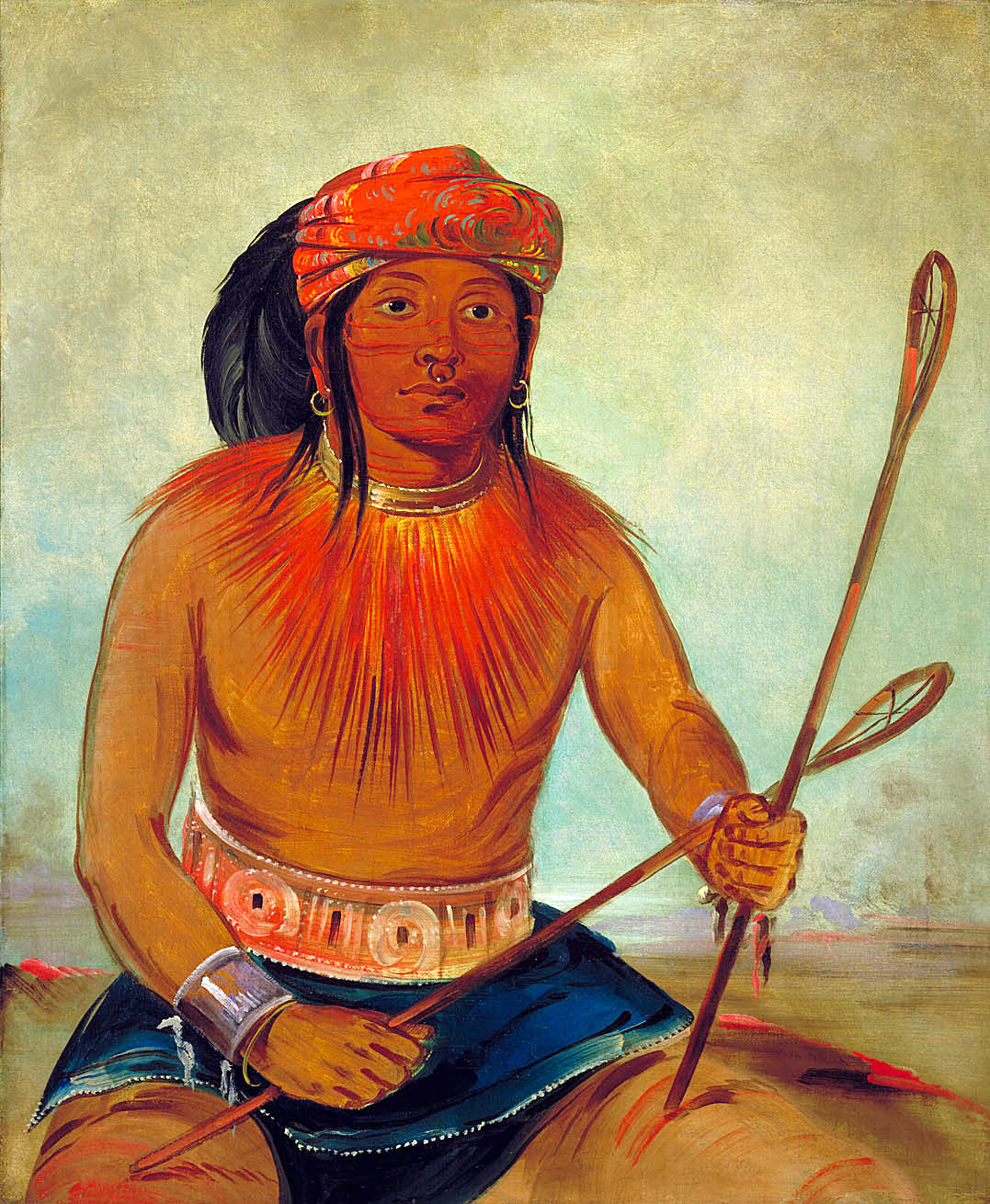
Traditional Choctaw beliefs centered on the sun, seen as a powerful spiritual being, and a balance between benevolent and malevolent spirits. Rituals often involved song, dance, and offerings at sacred sites. Today, most Choctaw are Protestant or Catholic, but many still honor ancestral customs through ceremonies, crafts, and the annual fair. Stickball, music, and colorful handmade clothing decorated with symbolic motifs remain important cultural expressions.
The history of the Choctaw
The Choctaw emerged as a distinct people in the 16th century, forming three main divisions. They were first recorded by French explorers and later interacted with Spanish, English, and American settlers. The Choctaw developed complex political and trade relationships with Europeans. In the 19th century, the U.S. government forced most Choctaw to move west during the Trail of Tears, breaking treaties and causing great hardship. Some remained in Mississippi, while others rebuilt communities in Oklahoma and Louisiana.
Choctaw life today
Today, the Choctaw number over 214,000, with major communities in Oklahoma, Mississippi, and Louisiana. They are organized into three federally recognized tribes. The Choctaw have revived language and cultural practices, and their annual fairs and gatherings draw people from across the country. While many work in modern jobs, traditional crafts and ceremonies remain central. The Choctaw continue to face challenges but maintain a strong sense of identity and community.
Questions people ask about the Choctaw
Where do the Choctaw live?
The Choctaw live in the United States, in the Mississippi, Louisiana, and Alabama woodlands.
How many Choctaw people are there?
Our sources give the Choctaw population as Approximately 214,884 total (2023); 212,000 in Oklahoma (2023); 11,000 in Mississippi (2020); 284 in Louisiana (2011). Counts of peoples vary with who is counted and when.
What language do the Choctaw speak?
The Choctaw speak Choctaw, American English, which belongs to the Muskogean family of languages.
How do the Choctaw make a living?
The Choctaw are known for settled farming, fishing and the sea, craft and trade and towns and wage work. Like most peoples, they combine several ways of making a living, and these have changed over time.
Sources and further reading
- Choctaw on WikipediaEncyclopedia
- Official websiteOfficial site
- Encyclopaedia BritannicaArticle
- More photos on Wikimedia CommonsPhotos
- Wikidata recordOpen data
This page was written with AI assistance from the sources above and checked automatically before publishing. It may contain mistakes, and it is no substitute for hearing from the Choctaw themselves. If something is wrong, tell us. Last refreshed 2026-10-02.
Neighbours in the United States
All peoples of the United States Miccosukee
🇺🇸 United StatesHitchiti-speaking people of the Everglades, related to the Seminole
About 640, Muskogean
Miccosukee
🇺🇸 United StatesHitchiti-speaking people of the Everglades, related to the Seminole
About 640, Muskogean
 Jewsיהודים
🇮🇱 Israel and 11 moreAn ethnoreligious group with ancient roots in Israel and a global presence today
About 15 million
Jewsיהודים
🇮🇱 Israel and 11 moreAn ethnoreligious group with ancient roots in Israel and a global presence today
About 15 million
 Uyghursئۇيغۇرلار / Уйғурлар / Uyghurlar
🇨🇳 China and 12 moreA Turkic people of Xinjiang, China, with deep roots in Central Asia
About 12 million, Turkic (Karluk branch)
Uyghursئۇيغۇرلار / Уйғурлар / Uyghurlar
🇨🇳 China and 12 moreA Turkic people of Xinjiang, China, with deep roots in Central Asia
About 12 million, Turkic (Karluk branch)
 Palestiniansفلسطينيون
🇵🇸 Palestine and 8 moreAn Arab people native to Palestine, with a large diaspora worldwide
About 14 million, Semitic
Palestiniansفلسطينيون
🇵🇸 Palestine and 8 moreAn Arab people native to Palestine, with a large diaspora worldwide
About 14 million, Semitic