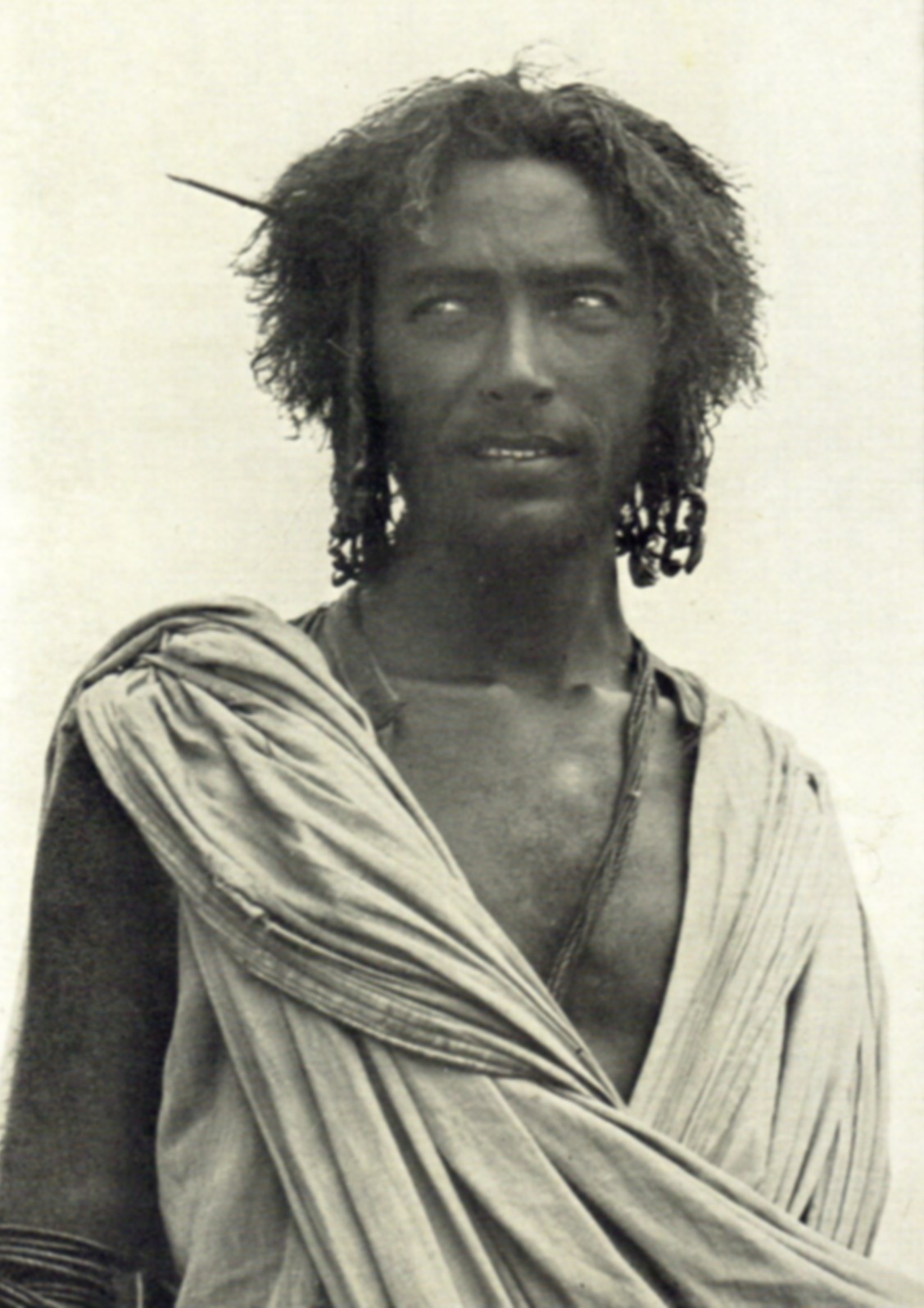
Afar
They call themselves Qafár
Nomadic herders of the Horn of Africa's deserts and coasts
The Afar are a Cushitic people living mainly in Ethiopia's Afar Region, northern Djibouti, and southern Eritrea. Numbering over 3 million, they are known for their nomadic herding, salt trading, and distinct clan society. The Afar speak their own language and have a long history of sultanates and Islamic tradition.
- Afar lands border both the Red Sea and Gulf of Aden
- Known for salt trading across the Danakil Desert
- Society organized into clans and historic sultanates
- Speak the Cushitic Afar language
- Predominantly Sunni Muslim with Sufi traditions
Who are the Afar?
The Afar are a Cushitic-speaking people whose homeland stretches across the deserts and coasts of Ethiopia, Djibouti, and Eritrea. They are bound together by language, clan ties, and a shared history of sultanates and Islamic faith. Traditionally, Afar society is organized into clans and sub-tribes, with elders and sultans playing key roles. Their identity is shaped by their nomadic lifestyle, herding livestock in harsh environments, and by their reputation as skilled traders and fighters. The Afar maintain a strong sense of community through oral traditions, rituals, and a deep connection to their land.
Where do the Afar live?
The Afar live in the Danakil Desert and surrounding lowlands, a region marked by arid plains, salt flats, and volcanic landscapes. Their territory stretches from Ethiopia's Afar Region into northern Djibouti and the southern coast of Eritrea, bordering both the Red Sea and the Gulf of Aden. The land is hot and dry, with little rainfall, but supports grazing for camels, goats, and sheep. The Awash River and its delta provide some fertile areas, while salt lakes and mineral deposits have shaped Afar livelihoods for centuries.
What language do the Afar speak?
The Afar speak the Afar language, which belongs to the Cushitic branch of the Afroasiatic language family. It is closely related to Saho and is spoken across the Afar Region, northern Djibouti, and southern Eritrea. As nomads, Afar speakers are found in scattered communities, and the language remains vital in daily life and oral tradition. Afar is distinct from the official languages of the countries where they live, but it is widely used within the community.
How do the Afar live?
Traditionally, the Afar are nomadic herders, raising camels, goats, sheep, and some cattle. Their movements follow seasonal grazing and water sources across the desert. Some Afar also engage in small-scale farming near rivers and oases, growing crops where possible. Salt trading has been a major occupation, with Afar caravans transporting salt from desert flats to highland markets. Environmental changes and shrinking pastures have led some Afar to take up wage labor, cultivation, and trade in towns. Their homes are portable huts made of mats and wood, suited to a mobile life.
How is Afar society organised?
Afar society is organized into clans and sub-tribes, each led by elders or sultans. There are two main social classes: the asaimara (reds), who are the traditional nobility, and the adoimara (whites), who are the working class. Clans can be flexible, sometimes including outsiders. Decisions are made by councils of elders, and leadership is often hereditary within noble families. Marriage is usually within the clan, and family ties are central to social life. The Afar value hospitality, loyalty, and martial skill, with oral traditions and songs reinforcing social bonds.


What do the Afar believe?
The Afar are predominantly Sunni Muslims, mainly following the Shafi'i school. Islam has shaped their culture since the 13th century, but older beliefs and rituals persist. Sufi orders, especially the Qadiriyya, are common, and religious life blends Islamic practices with pre-Islamic customs such as rain sacrifices, divination, and folk healing. Men often carry a curved knife called a jile, and traditional dress and battle songs are important cultural markers. Religious leaders and elders guide community rituals and resolve disputes.
The history of the Afar
The Afar have a long recorded history, first mentioned in the 13th century. Their land was known as Adal in Ethiopian chronicles, and they were organized into sultanates such as Aussa, Tadjourah, and Rahaito. The Afar played roles in regional politics, trade, and conflicts, including the lucrative salt trade and the Red Sea slave trade. In the late 19th century, their coastal sultanates came under Italian and French colonial rule, while the inland Sultanate of Aussa maintained autonomy longer. In the 20th century, Afar regions were divided among Ethiopia, Eritrea, and Djibouti. Political movements emerged to defend Afar interests, including the Afar Liberation Front and the Afar Revolutionary Democratic Front.
Afar life today
Today, the Afar number over 3 million, mainly in Ethiopia, with significant populations in Djibouti and Eritrea. They are recognized as an ethnic group in Ethiopia and have some regional autonomy. However, their traditional way of life faces challenges from environmental change, land loss, and political marginalization. Some Afar have moved to towns or taken up new livelihoods. Despite pressures, Afar language and culture remain strong, and political organizations continue to advocate for their rights and interests.
Questions people ask about the Afar
Where do the Afar live?
The Afar mainly live in the Afar Region of Ethiopia, northern Djibouti, and the southern coast of Eritrea, across the Danakil Desert and nearby lowlands.
How many Afar people are there?
There are about 3,350,000 Afar people, according to estimates from 2019 to 2022.
What language do the Afar speak?
The Afar speak the Afar language, which is part of the Cushitic branch of the Afroasiatic family.
What is the main religion of the Afar?
The Afar are predominantly Sunni Muslims, mainly following the Shafi'i school, with some Sufi and pre-Islamic practices.
How do the Afar make a living?
Traditionally, the Afar are nomadic herders of camels, goats, and sheep, and are known for salt trading. Some also farm or work in towns.
Sources and further reading
- Afar people on WikipediaEncyclopedia
- Encyclopaedia BritannicaArticle
- More photos on Wikimedia CommonsPhotos
- Wikidata recordOpen data
This page was written with AI assistance from the sources above and checked automatically before publishing. It may contain mistakes, and it is no substitute for hearing from the Afar themselves. If something is wrong, tell us. Last refreshed 2026-10-02.
Neighbours in Ethiopia
All peoples of Ethiopia FulaniFulɓe
🇳🇬 Nigeria and 21 moreCattle herders and farmers spread across West and Central Africa
About 39 million, Atlantic-Congo (Niger-Congo)
FulaniFulɓe
🇳🇬 Nigeria and 21 moreCattle herders and farmers spread across West and Central Africa
About 39 million, Atlantic-Congo (Niger-Congo)
 HausaHausawa
🇳🇬 Nigeria and 20 moreA major West African people of the Sahel and savanna, known for trade and Islamic heritage
About 86 million, Afro-Asiatic
HausaHausawa
🇳🇬 Nigeria and 20 moreA major West African people of the Sahel and savanna, known for trade and Islamic heritage
About 86 million, Afro-Asiatic
 Somalis
🇸🇴 Somalia and 6 morePastoral and trading people native to the Horn of Africa
About 28 million, Cushitic (Afroasiatic)
Somalis
🇸🇴 Somalia and 6 morePastoral and trading people native to the Horn of Africa
About 28 million, Cushitic (Afroasiatic)
 OromoOromoo
🇪🇹 Ethiopia and 4 moreCushitic-speaking people of Ethiopia and Kenya, known for the gadaa system
About 25 million, Cushitic
OromoOromoo
🇪🇹 Ethiopia and 4 moreCushitic-speaking people of Ethiopia and Kenya, known for the gadaa system
About 25 million, Cushitic