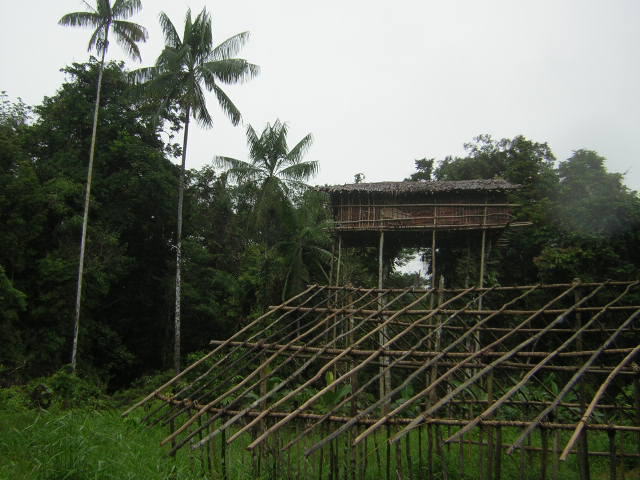
Korowai
They call themselves Kolufo-yanop, Klufo-fyumanop
Treehouse-dwelling horticulturalists of southeastern Papua, Indonesia
The Korowai, also called Kolufo, are an indigenous people living in the forested lowlands of southeastern Papua, Indonesia, mainly in South Papua and Highland Papua provinces. Numbering about 4,000 to 4,400, they are best known for their elevated treehouses and shifting cultivation, and have drawn attention for their distinct beliefs and social life.
- Korowai treehouses are built high above the ground in the rainforest.
- They practice shifting cultivation and rely on sago as a staple food.
- Patriclans and exogamous, polygynous marriages structure their society.
- Their beliefs center on spirits and a creator god named Gimigi.
- Some Korowai now earn income from tourism and hosting visitors.
Who are the Korowai?
The Korowai are an indigenous people of southeastern Papua, Indonesia, who call themselves Kolufo-yanop or Klufo-fyumanop. Their society is organized around patriclans, with kinship and clan ties shaping social, economic, and political life. They are known for their unique treehouse dwellings, which are built high above the ground in the dense rainforest. The Korowai have a rich oral tradition and maintain distinct beliefs, rituals, and customs that set them apart from neighboring groups.
Where do the Korowai live?
The Korowai live in the forested lowlands and river valleys of southeastern Papua, within the Indonesian provinces of South Papua and Highland Papua. Their territory spans several regencies, including Boven Digoel, Mappi, Asmat, Pegunungan Bintang, and Yahukimo. The region is characterized by dense tropical rainforest, numerous rivers, and a humid climate. Some Korowai now also live in villages along riverbanks, but many still reside in remote forest areas.
What language do the Korowai speak?
The Korowai speak the Korowai language, which belongs to the Awyu–Dumut family within the Trans–New Guinea phylum. Indonesian is also spoken, especially in village settings and in contact with outsiders. The Korowai language has been documented in a dictionary and grammar book, supporting its continued use and study.
How do the Korowai live?
The Korowai practice shifting cultivation, growing crops such as sago, and supplement their diet with hunting and fishing. Sago is a staple food, and its preparation is a key part of daily life. Traditional houses are built high in the trees, providing protection from floods and insects. The Korowai also craft bamboo smoking pipes and use sago shavings as filters. In recent decades, some have earned income by participating in tourism, hosting visitors, and performing traditional displays.
How is Korowai society organised?
Korowai society is organized around patriclans, with exogamous and polygynous marriages. Kinship follows the Omaha I pattern, with a strong distinction between cross and parallel relatives. Leadership is based on the personal qualities of 'big men' rather than formal institutions. Social life includes gender-specific activities and avoidance relationships, such as between certain in-laws. Interclan conflict can arise, often related to beliefs about witchcraft and sorcery.
What do the Korowai believe?
The Korowai believe in a world filled with spirits and honor a red-headed creator god called Gimigi. Rituals, such as the sago grub festival, are held to ensure prosperity and fertility. Ancestor spirits are honored, and pigs may be sacrificed in times of trouble. The Korowai have a rich oral tradition of myths, folktales, and magical sayings. Some have converted to Christianity, but traditional beliefs remain important.
The history of the Korowai
The first documented contact with Westerners occurred in 1974. In the late 1970s, Dutch missionaries arrived, followed by anthropologists and film crews. The Korowai became the subject of documentaries and anthropological studies, especially for their treehouses and reports of ritual cannibalism. Some clans have moved to villages since the 1980s, while others remain in forest areas. Tourism has brought new opportunities and challenges, sometimes encouraging the performance of traditional practices for visitors.
Korowai life today
Today, the Korowai number about 4,000 to 4,400. Some live in villages, while others remain in forest treehouses. Tourism and outside contact have increased, bringing both income and pressures to change. Some Korowai have converted to Christianity, but many traditional beliefs and practices continue. The community faces challenges from outside influences, but their language and culture remain distinct.
Questions people ask about the Korowai
Where do the Korowai live?
The Korowai live in the forested lowlands of southeastern Papua, Indonesia, mainly in South Papua and Highland Papua provinces.
How many Korowai are there?
There are about 4,000 to 4,400 Korowai people.
What language do the Korowai speak?
The Korowai speak the Korowai language, part of the Trans–New Guinea family. Indonesian is also used, especially in villages.
What are the Korowai best known for?
They are best known for building elevated treehouses and for their shifting cultivation lifestyle.
What do the Korowai believe?
The Korowai believe in a world filled with spirits and honor a creator god called Gimigi. Some have also converted to Christianity.
Sources and further reading
- Korowai people on WikipediaEncyclopedia
- More photos on Wikimedia CommonsPhotos
- Wikidata recordOpen data
This page was written with AI assistance from the sources above and checked automatically before publishing. It may contain mistakes, and it is no substitute for hearing from the Korowai themselves. If something is wrong, tell us. Last refreshed 2026-10-02.
Neighbours in Indonesia
All peoples of Indonesia MalaysOrang Melayu
🇲🇾 Malaysia and 4 moreAustronesian people of the Malay Peninsula, Sumatra, Borneo and nearby islands
About 30 million, Austronesian
MalaysOrang Melayu
🇲🇾 Malaysia and 4 moreAustronesian people of the Malay Peninsula, Sumatra, Borneo and nearby islands
About 30 million, Austronesian
 Minangkabaubangso Minangkabau
🇮🇩 Indonesia and 3 moreMatrilineal Muslim society from the highlands of West Sumatra
About 6.6 million, Austronesian
Minangkabaubangso Minangkabau
🇮🇩 Indonesia and 3 moreMatrilineal Muslim society from the highlands of West Sumatra
About 6.6 million, Austronesian
 Sundaneseᮅᮛᮀ ᮞᮥᮔ᮪ᮓ (Urang Sunda)
🇮🇩 Indonesia and 3 moreThe native people of western Java, Indonesia, known for their language and traditions
About 42 million, Austronesian
Sundaneseᮅᮛᮀ ᮞᮥᮔ᮪ᮓ (Urang Sunda)
🇮🇩 Indonesia and 3 moreThe native people of western Java, Indonesia, known for their language and traditions
About 42 million, Austronesian
 BugisTo Ugi
🇮🇩 Indonesia and 2 moreRice farmers, traders and sailors of South Sulawesi and beyond
About 7 million, Austronesian (South Sulawesi languages)
BugisTo Ugi
🇮🇩 Indonesia and 2 moreRice farmers, traders and sailors of South Sulawesi and beyond
About 7 million, Austronesian (South Sulawesi languages)