
Bugis
They call themselves To Ugi
Rice farmers, traders and sailors of South Sulawesi and beyond
The Bugis are an Austronesian people native to South Sulawesi, Indonesia, numbering about 6 to 7 million. They are known for their rice farming, maritime skills, and widespread migration across Indonesia and Malaysia. Most Bugis speak their own language, Bugis (Basa Ugi), and follow Islam, with minorities practicing Christianity or the indigenous Tolotang belief.
Who are the Bugis?
The Bugis are the largest of the three main ethnolinguistic groups in South Sulawesi, Indonesia. They call themselves To Ugi and are united by their language, shared ancestry, and a long tradition of rice farming and seafaring. The Bugis have a strong sense of identity rooted in their homeland around Lake Tempe and Lake Sidenreng, but many have migrated across the Indonesian archipelago and into Malaysia and Singapore. Their society is shaped by a history of kingdoms, trade, and a hierarchical social structure.
Where do the Bugis live?
The Bugis homeland lies in the fertile region around Lake Tempe and Lake Sidenreng, in the southwest peninsula of Sulawesi. This area is rich in fish, wildlife, and supports both wet rice farming and swidden (shifting) cultivation. The landscape includes lakes, rivers, and lowland plains, which have long provided the basis for Bugis agriculture and settlement. Over centuries, Bugis communities have also spread to other parts of Indonesia and the Malay Peninsula.
What language do the Bugis speak?
Most Bugis speak the Bugis language (Basa Ugi), which belongs to the South Sulawesi branch of the Austronesian language family. In addition to their own language, many Bugis are fluent in Indonesian and regional Malay varieties. The Bugis language remains widely spoken in their homeland and among diaspora communities, helping maintain cultural ties.
How do the Bugis live?
Traditionally, the Bugis are rice farmers, using both wet and shifting cultivation methods. Fishing in lakes and rivers is also important, as is gathering forest produce. Bugis communities are known for their skills in weaving and metalwork. Many Bugis have a long history as traders and sailors, traveling across the Indonesian archipelago and beyond. Today, some work in crafts, trade, and wage labor in towns and cities.
How is Bugis society organised?
Bugis society is organized around a hierarchical structure with a nobility and commoners. Historically, they formed kingdoms and local chiefdoms, with power held by elite families. Family and kinship ties are strong, and descent is traced through both parents. Marriage and alliances between families have played a key role in social organization. Decision-making often involves elders and respected leaders.



What do the Bugis believe?
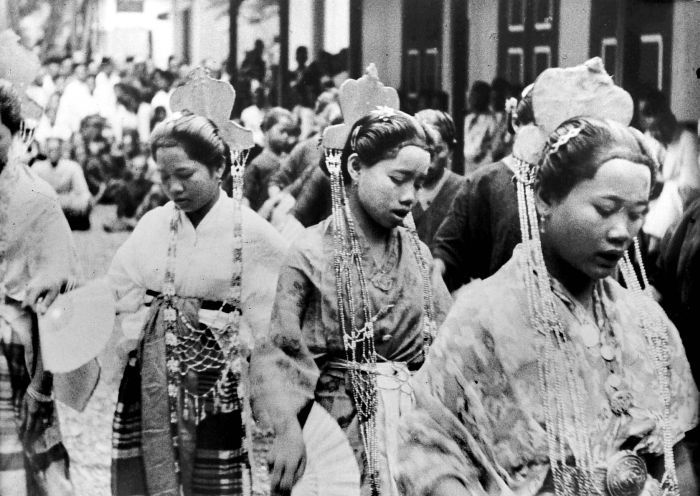
The Bugis are predominantly Muslim, having converted from earlier animist beliefs in the early 17th century. Small minorities follow Christianity or the indigenous Tolotang faith, which preserves pre-Islamic traditions. Rituals related to agriculture, fertility, and ancestor worship were important in the past. Oral epics, such as the story of La Galigo, are central to Bugis cultural heritage. Traditional dress and ceremonies, especially at weddings, remain important.
The history of the Bugis
The Bugis trace their ancestry to Austronesian settlers who arrived in South Sulawesi around 2500 BC, mixing with earlier forager populations. By the 13th century, Bugis communities had developed rice farming and formed kingdoms around the lakes. Trade and contact with other parts of Southeast Asia brought prosperity and new ideas, but the Bugis largely resisted outside religious influence until their conversion to Islam in 1605. From the late 17th century, Bugis migration spread their influence across the Indonesian archipelago and the Malay Peninsula.
Bugis life today
Today, the Bugis number about 7 million, mostly in Indonesia, with significant communities in Malaysia and Singapore. They are active in politics, trade, and urban life, while many still farm or fish in their homeland. The Bugis language and traditions remain strong, though modern pressures and migration have brought change. Some Bugis leaders have held high office in Indonesia and Malaysia, reflecting their ongoing influence.
Questions people ask about the Bugis
Where do the Bugis live?
The Bugis live in Indonesia, Singapore and Malaysia, in the lake region and lowlands of South Sulawesi, Indonesia.
How many Bugis people are there?
Our sources give the Bugis population as about 7 million (2010 census). Counts of peoples vary with who is counted and when.
What language do the Bugis speak?
The Bugis speak Bugis (Basa Ugi), Indonesian, Makassar Malay, Malay, Massenrempulu, which belongs to the Austronesian (South Sulawesi languages) family of languages.
How do the Bugis make a living?
The Bugis are known for settled farming, shifting cultivation, fishing and the sea, craft and trade and towns and wage work. Like most peoples, they combine several ways of making a living, and these have changed over time.
Sources and further reading
- Bugis on WikipediaEncyclopedia
- Encyclopaedia BritannicaArticle
- More photos on Wikimedia CommonsPhotos
- Wikidata recordOpen data
This page was written with AI assistance from the sources above and checked automatically before publishing. It may contain mistakes, and it is no substitute for hearing from the Bugis themselves. If something is wrong, tell us. Last refreshed 2026-10-02.
Neighbours in Indonesia
All peoples of Indonesia MalaysOrang Melayu
🇲🇾 Malaysia and 4 moreAustronesian people of the Malay Peninsula, Sumatra, Borneo and nearby islands
About 30 million, Austronesian
MalaysOrang Melayu
🇲🇾 Malaysia and 4 moreAustronesian people of the Malay Peninsula, Sumatra, Borneo and nearby islands
About 30 million, Austronesian
 Minangkabaubangso Minangkabau
🇮🇩 Indonesia and 3 moreMatrilineal Muslim society from the highlands of West Sumatra
About 6.6 million, Austronesian
Minangkabaubangso Minangkabau
🇮🇩 Indonesia and 3 moreMatrilineal Muslim society from the highlands of West Sumatra
About 6.6 million, Austronesian
 Sundaneseᮅᮛᮀ ᮞᮥᮔ᮪ᮓ (Urang Sunda)
🇮🇩 Indonesia and 3 moreThe native people of western Java, Indonesia, known for their language and traditions
About 42 million, Austronesian
Sundaneseᮅᮛᮀ ᮞᮥᮔ᮪ᮓ (Urang Sunda)
🇮🇩 Indonesia and 3 moreThe native people of western Java, Indonesia, known for their language and traditions
About 42 million, Austronesian
 Balineseanak Bali
🇮🇩 IndonesiaHindu-majority people of Bali, known for art, dance, and water-temple farming
About 3.9 million, Austronesian
Balineseanak Bali
🇮🇩 IndonesiaHindu-majority people of Bali, known for art, dance, and water-temple farming
About 3.9 million, Austronesian