
Hoti
A historic Albanian tribe of the Malësia region, now in Albania and Montenegro
The Hoti are a historical Albanian tribe (fis) from the mountainous Malësia region, straddling northern Albania and southern Montenegro. They are known for their strong community ties, Catholic faith, and a history of resistance to foreign rule. Today, Hoti people live in both Albania and Montenegro, with diaspora communities abroad.
- The Hoti are among the oldest Albanian tribes, first recorded in 1330.
- Their homeland spans the mountainous Malësia region of Albania and Montenegro.
- They played a leading role in the 1911 Albanian uprising against Ottoman rule.
- Most Hoti are Catholic, with a few Muslim families.
- Many Hoti have emigrated, forming communities in the US and elsewhere.
Who are the Hoti?
The Hoti are one of the oldest and most prominent Albanian tribes, known locally as a fis. Their identity is shaped by shared ancestry, oral traditions, and a strong sense of community. The tribe has played a leading role in the social and political life of the Malësia region. Hoti people maintain close ties through extended families and brotherhoods, even as many have migrated to other regions or abroad. Their history is marked by resistance to foreign rule and efforts to preserve their land and customs.
Where do the Hoti live?
The Hoti homeland lies in the rugged Malësia region, along the border between northern Albania and southern Montenegro. The landscape is mostly mountainous, with some villages on flatter ground near Lake Shkodër (Lake of Hoti). Traditional Hoti settlements include Rrapshë and Traboin, with others spread across both Albania and Montenegro. The region is known for its natural beauty, grazing lands, and strategic location at the crossroads of several tribal territories.
What language do the Hoti speak?
The Hoti speak Albanian, which is part of the Indo-European language family. Albanian is the main language of daily life, oral tradition, and cultural expression. The tribe’s oral histories and genealogies are passed down in Albanian, helping to preserve their identity across generations and migrations.
How do the Hoti live?
Traditionally, the Hoti made their living through herding and farming, taking advantage of the mountain pastures and fertile valleys near Lake Shkodër. They raised livestock, especially sheep and goats, and cultivated crops suited to the terrain. Over time, some Hoti have moved to towns or emigrated abroad, working in various trades and professions. Their houses were often stone-built, adapted to the mountainous environment, and their tools reflected both local needs and outside influences.
How is Hoti society organised?
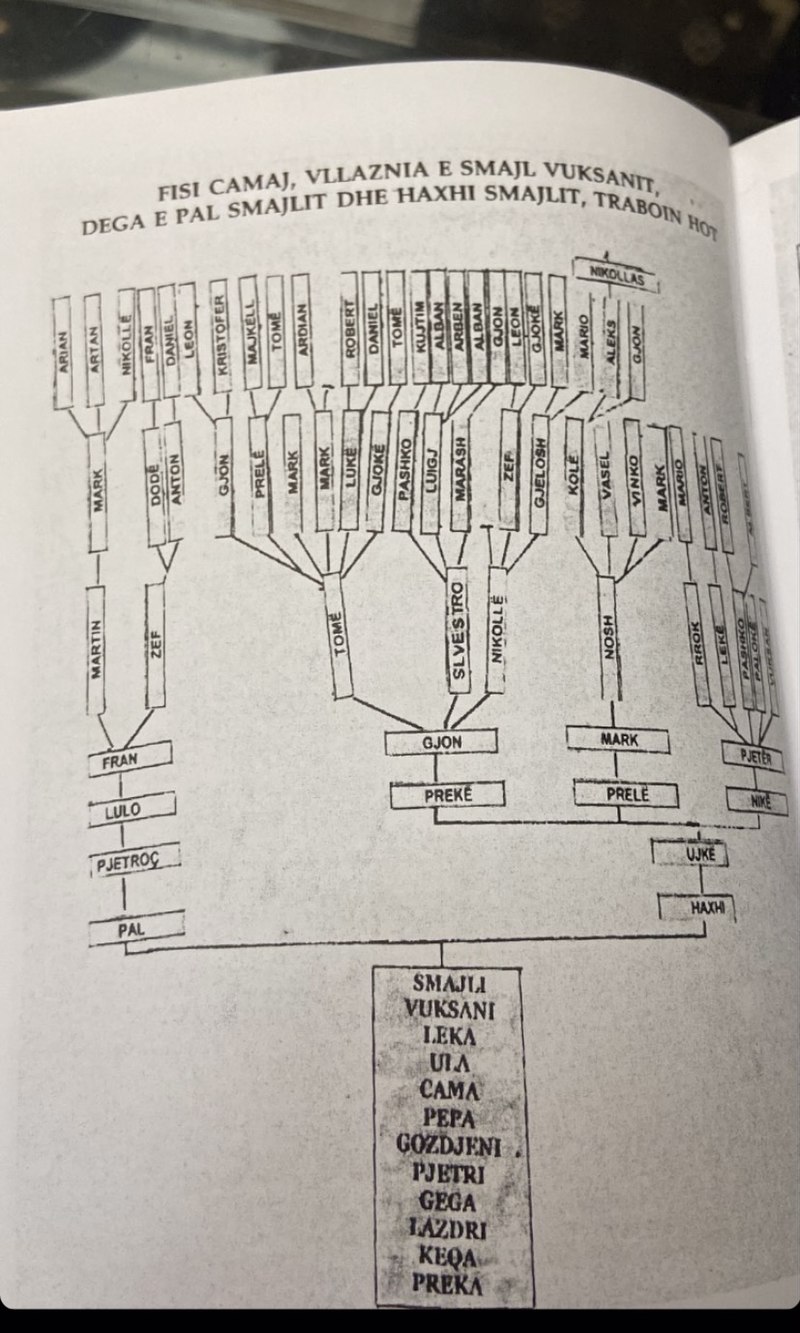
Hoti society is organized around extended families and brotherhoods, tracing descent through the male line. Marriage within the tribe is traditionally avoided, with alliances formed with neighboring tribes such as Kastrati and certain brotherhoods of Triepshi. Decisions are often made collectively, with elders and respected leaders playing key roles. The tribe’s cohesion is maintained through shared customs, rituals, and a sense of mutual responsibility.



What do the Hoti believe?
The Hoti are predominantly Catholic, with a minority of Muslim families. Religious life centers on church and family rituals, with traditions shaped by centuries of contact with neighboring peoples and empires. Oral traditions, songs, and stories are important in preserving both religious and cultural identity. Dress and art reflect both local styles and broader Balkan influences.
The history of the Hoti
The Hoti are first mentioned in historical records in 1330. By the 15th century, they had formed a distinct community in Malësia. Over the centuries, they played a significant role in resisting Ottoman and later Montenegrin control. In 1911, the Hoti leader Ded Gjo Luli raised the Albanian flag in the battle of Deçiq, a key moment in Albanian national history. The tribe’s territory was divided after the Balkan Wars and World War I, with many Hoti becoming refugees or emigrating. Despite these changes, the tribe has maintained its identity and traditions.
Hoti life today
Today, the Hoti are divided between Albania and Montenegro, with communities in both countries and a significant diaspora abroad, especially in the United States. While many still live in their traditional homeland, others have moved to urban areas or emigrated for work. The tribe continues to face challenges related to borders, migration, and cultural preservation, but community ties remain strong.
Questions people ask about the Hoti
Where do the Hoti live?
The Hoti live in the Malësia region, which straddles northern Albania and southern Montenegro, with traditional villages near Lake Shkodër. Some have also settled in Kosovo, Bosnia and Herzegovina, and abroad.
How many Hoti are there?
The sources do not give a specific population number for the Hoti tribe today. Their descendants live in Albania, Montenegro, and in diaspora communities.
What language do the Hoti speak?
The Hoti speak Albanian, which is part of the Indo-European language family. Albanian is used in daily life and for passing down oral traditions.
What religion do the Hoti follow?
The Hoti are almost entirely Catholic, though a few families are Muslim. Religious traditions are important in their community life.
What are the main ways the Hoti make a living?
Traditionally, the Hoti made their living through herding and farming in the mountains. Today, some also work in towns or have emigrated for wage work.
Sources and further reading
This page was written with AI assistance from the sources above and checked automatically before publishing. It may contain mistakes, and it is no substitute for hearing from the Hoti themselves. If something is wrong, tell us. Last refreshed 2026-10-02.
Neighbours in Albania
All peoples of Albania KrasniqiKrasniqë
🇦🇱 Albania and 2 moreA historical Albanian tribe from the Accursed Mountains and Gjakova highlands
Indo-European
Dushmani
🇦🇱 AlbaniaA former tribal group from northern Albania, known for their strict customary law
Historical, Indo-European
KrasniqiKrasniqë
🇦🇱 Albania and 2 moreA historical Albanian tribe from the Accursed Mountains and Gjakova highlands
Indo-European
Dushmani
🇦🇱 AlbaniaA former tribal group from northern Albania, known for their strict customary law
Historical, Indo-European
 Scordisci
🇷🇸 Serbia and 2 moreA mixed people of the central Balkans, active from the 3rd to 1st century BC
Historical
Scordisci
🇷🇸 Serbia and 2 moreA mixed people of the central Balkans, active from the 3rd to 1st century BC
Historical
 Drobnjaci
🇲🇪 Montenegro and 7 moreA Serb tribal community from Old Herzegovina, now in Montenegro
About 15,000, Slavic
Drobnjaci
🇲🇪 Montenegro and 7 moreA Serb tribal community from Old Herzegovina, now in Montenegro
About 15,000, Slavic

