Caspians
Ancient people of the southwestern Caspian Sea region
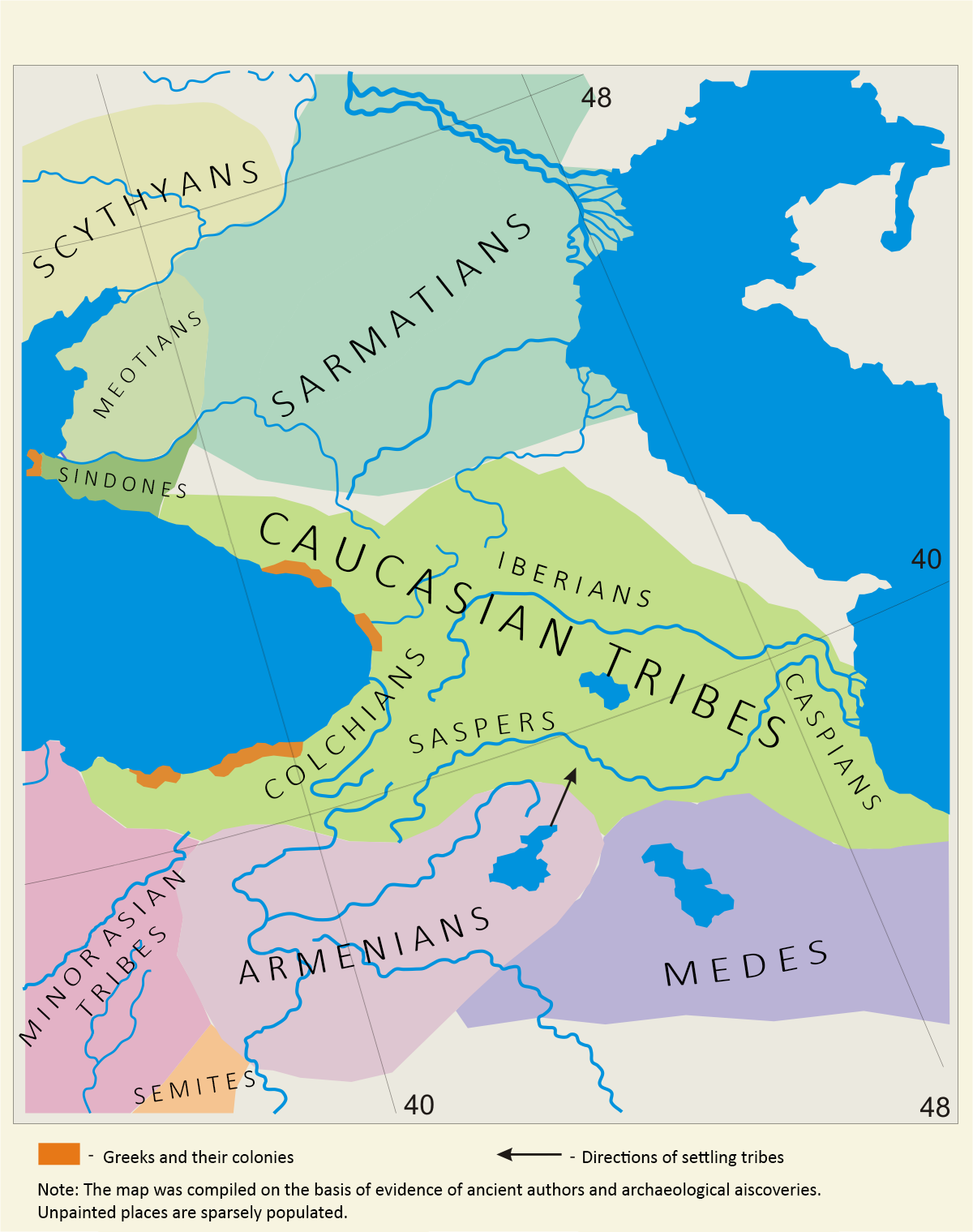
The Caspians were an ancient people who lived along the southwestern shores of the Caspian Sea, in a region known as Caspiane. They are mentioned in Greek, Persian, Aramaic, and Armenian sources and are thought to be a pre-Indo-European group, possibly related to the Saka-Massagetae or Kassites. Their language and origins remain debated.
- Lived along the southwestern shores of the Caspian Sea
- Mentioned by Herodotus and Strabo among Achaemenid satrapies
- Served as a regiment in Persian-ruled Egypt in the 5th century BC
- Possibly linked to the Saka-Massagetae or Kassites
- Practiced burial customs involving dogs
Who were the Caspians?
The Caspians were a people of antiquity known from Greek, Persian, Aramaic, and Armenian records. They lived along the southwestern shores of the Caspian Sea, in an area called Caspiane. Ancient writers such as Herodotus and Strabo mention them among the peoples of the Achaemenid Empire. Their identity is debated, with some scholars linking them to the Saka-Massagetae tribes or the Kassites. The Caspians are often described as a pre-Indo-European group, though some evidence suggests Iranian cultural influence.
Where did the Caspians live?
The Caspians lived in the region along the southwestern shores of the Caspian Sea, an area known as Caspiane. This region lies in what is now northern Iran and possibly parts of modern Azerbaijan. The land is characterized by its proximity to the large inland Caspian Sea and was historically a crossroads for various peoples and empires.
What language did the Caspians speak?
The language of the Caspians is not clearly identified in the sources. Some scholars have linked them to the Kassites, whose language is not connected to any known group. Other evidence from names in Aramaic papyri suggests some Iranian elements or influence. The exact linguistic affiliation of the Caspians remains uncertain.
What did the Caspians believe?
Some sources mention that the Caspians buried their dead with fighting dogs, which may reflect a variant of the Zoroastrian custom of sky burial, where the dead are left for animals to consume. This suggests possible religious or ritual practices connected to their beliefs about death and the afterlife, and hints at Iranian cultural influence.
The history of the Caspians
The Caspians are first mentioned in Greek sources among the satrapies of Darius the Great. They appear in various ancient texts under different names and are sometimes identified with the Saka-Massagetae or the Kassites. In the 5th century BC, a regiment of Caspians served in the Persian garrison at Elephantine in Egypt, alongside other Iranian peoples. Later, Roman and medieval writers continued to mention the Caspians, sometimes associating them with Scythian peoples or using their name to refer to contemporary groups.
What became of the Caspians?
The Caspians no longer exist as a distinct community. Their name survives mainly in historical texts and in the name of the Caspian Sea. The region they once inhabited is now part of northern Iran and Azerbaijan, and their descendants, if any, have merged with other peoples of the area.
Questions people ask about the Caspians
Where did the Caspians live?
The Caspians lived along the southwestern shores of the Caspian Sea, in a region known as Caspiane, which is now part of northern Iran and possibly Azerbaijan.
Are the Caspians still a distinct people today?
No, the Caspians are a historical people and no longer exist as a distinct community. Their name survives in historical records and in the name of the Caspian Sea.
What language did the Caspians speak?
The language of the Caspians is not clearly known. Some scholars link them to the Kassites, whose language is not related to any known group, while other evidence suggests Iranian influence.
What are the Caspians known for?
The Caspians are known for living along the Caspian Sea in antiquity, being mentioned in Greek and Persian sources, and for burial customs involving dogs, possibly related to Zoroastrian sky burial.
Did the Caspians serve in foreign lands?
Yes, in the 5th century BC, a regiment of Caspians served in the Persian garrison at Elephantine in Egypt, alongside other Iranian peoples.
Sources and further reading
This page was written with AI assistance from the sources above and checked automatically before publishing. It may contain mistakes, and it is no substitute for hearing from the Caspians themselves. If something is wrong, tell us. Last refreshed 2026-10-02.
Neighbours in Azerbaijan
All peoples of Azerbaijan Kurdsکورد
🇹🇷 Turkey and 8 moreIndigenous Iranic people of Kurdistan, spanning Turkey, Iran, Iraq, and Syria
About 38 million, Western Iranic
Kurdsکورد
🇹🇷 Turkey and 8 moreIndigenous Iranic people of Kurdistan, spanning Turkey, Iran, Iraq, and Syria
About 38 million, Western Iranic
 ChechensНохчий (Nokhchiy)
🇷🇺 Russia and 11 moreA Northeast Caucasian people rooted in Chechnya and the North Caucasus
About 1.7 million, Northeast Caucasian
ChechensНохчий (Nokhchiy)
🇷🇺 Russia and 11 moreA Northeast Caucasian people rooted in Chechnya and the North Caucasus
About 1.7 million, Northeast Caucasian
 AssyriansĀṯūrāyē / Suryoye / Suryāyē
🇮🇶 Iraq and 14 moreAn indigenous Christian people of northern Mesopotamia, speaking Neo-Aramaic.
About 1.2 million, Semitic
AssyriansĀṯūrāyē / Suryoye / Suryāyē
🇮🇶 Iraq and 14 moreAn indigenous Christian people of northern Mesopotamia, speaking Neo-Aramaic.
About 1.2 million, Semitic