
Mandinka
Descendants of the Mali Empire living across West Africa
The Mandinka are a major West African people, numbering about 11 million, living mainly in Guinea, Mali, Senegal, The Gambia, and Sierra Leone. They speak Mandinka and related Manding languages, are known for their history as founders of the Mali Empire, and today are mostly rural farmers with a rich oral tradition.
- Descendants of the founders of the Mali Empire
- Speak Mandinka and related Manding languages
- Known for griots—oral historians and musicians
- Mostly Sunni Muslim today
- Live mainly in rural villages across West Africa
Who are the Mandinka?
The Mandinka are one of the largest ethnic groups in West Africa, united by a shared language, history, and cultural traditions. They trace their roots to the Mali Empire, which they founded in the 13th century. Today, Mandinka communities are spread across several countries, but they remain connected through their Manding languages, oral storytelling, and social customs. Most Mandinka live in rural villages, where extended families share compounds and maintain close ties. Their society is known for its griots—oral historians and musicians—who preserve and pass down collective memory. The Mandinka have a strong sense of identity shaped by their past and their ongoing traditions.
Where do the Mandinka live?
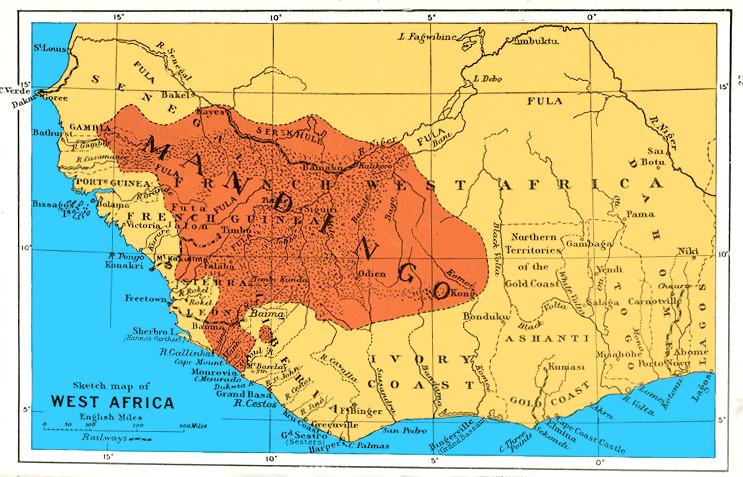
Mandinka communities are concentrated in the West Sudanian savanna, a broad region of grasslands and scattered trees stretching from The Gambia and southern Senegal through Mali and into Guinea. This landscape supports their farming way of life. The region includes river valleys, plateaus, and fertile plains, with the Niger River basin being especially important in Mali. Over centuries, Mandinka families have migrated within this area in search of good land and opportunities, but their core homeland remains in these savanna and riverine environments.
What language do the Mandinka speak?
Mandinka speak Mandinka and related Manding languages, which belong to the larger Mande language family. These languages serve as a lingua franca in much of West Africa, helping Mandinka communities communicate across borders. The Mandinka language is mainly oral, with traditions and history passed down by word of mouth. While many Mandinka also speak national languages like French, English, or Portuguese, their own language remains central to their identity and daily life.
How do the Mandinka live?
Most Mandinka are subsistence farmers, growing crops such as millet, sorghum, maize, and rice. They often keep small livestock like goats and chickens. Villages are made up of family compounds, with houses built from mud bricks and thatched roofs. Farming is done with simple tools, and work is shared among family members. In some areas, Mandinka also engage in small-scale trade or crafts, but agriculture remains the mainstay of their economy. Their diet is based on what they grow, and food is prepared and shared communally.
How is Mandinka society organised?
Mandinka society is organized around extended families and compounds, often led by a male elder or chief. Social life is structured by a caste system, with hereditary roles such as farmers, smiths, and griots (oral historians and musicians). Marriage is usually within the community, and family ties are strong. Decisions are made by elders and chiefs, who guide the community and resolve disputes. Oral tradition is central, with griots preserving history, genealogy, and stories. Social status and roles are inherited, and respect for elders and tradition is important.



What do the Mandinka believe?
Today, most Mandinka are Sunni Muslims, a faith that spread through their region over centuries. Islam shapes daily life, rituals, and festivals. However, some traditional beliefs and practices remain, especially in rural areas. The Mandinka are known for their griots, who play a key role in ceremonies and keep oral traditions alive through music and storytelling. Art, music, and dress reflect both Islamic and older Mandinka influences, with distinctive styles for special occasions and rituals.
The history of the Mandinka
The Mandinka trace their origins to the Mali Empire, founded in the 13th century by Sundiata Keita. The empire became one of the most powerful in West Africa, known for its wealth, trade, and rulers like Mansa Musa. Over time, Mandinka people migrated west and south, founding new communities. From the 16th to 19th centuries, Mandinka lands were affected by the trans-Saharan and trans-Atlantic slave trades, with many Mandinka captured and sold abroad. Despite these upheavals, Mandinka communities maintained their traditions and social structures, adapting to new circumstances while preserving their identity.
Mandinka life today
Mandinka people number about 11 million and live mainly in Guinea, Mali, Senegal, The Gambia, and Sierra Leone. Most still live in rural villages and farm for a living. They face pressures from modernization and land changes, but their language and traditions remain strong. Mandinka oral history, music, and social customs continue to play a central role in community life. In many countries, they are a significant minority and maintain a distinct identity within the wider national context.
Questions people ask about the Mandinka
Where do the Mandinka live?
The Mandinka live mainly in Guinea, Mali, Senegal, The Gambia, Sierra Leone, and neighboring countries, with their homeland in the West Sudanian savanna.
How many Mandinka are there?
There are about 11 million Mandinka people, making them one of the largest ethnic groups in West Africa.
What language do the Mandinka speak?
They speak Mandinka and related Manding languages, which are part of the Mande language family and widely used as lingua franca in West Africa.
What are the Mandinka known for?
The Mandinka are known for their history as founders of the Mali Empire, their oral tradition kept by griots, and their rural farming lifestyle.
What is the main religion of the Mandinka?
Most Mandinka are Sunni Muslims, though some traditional beliefs and practices are still observed, especially in rural areas.
Sources and further reading
- Mandinka people on WikipediaEncyclopedia
- More photos on Wikimedia CommonsPhotos
- Wikidata recordOpen data
This page was written with AI assistance from the sources above and checked automatically before publishing. It may contain mistakes, and it is no substitute for hearing from the Mandinka themselves. If something is wrong, tell us. Last refreshed 2026-10-02.
