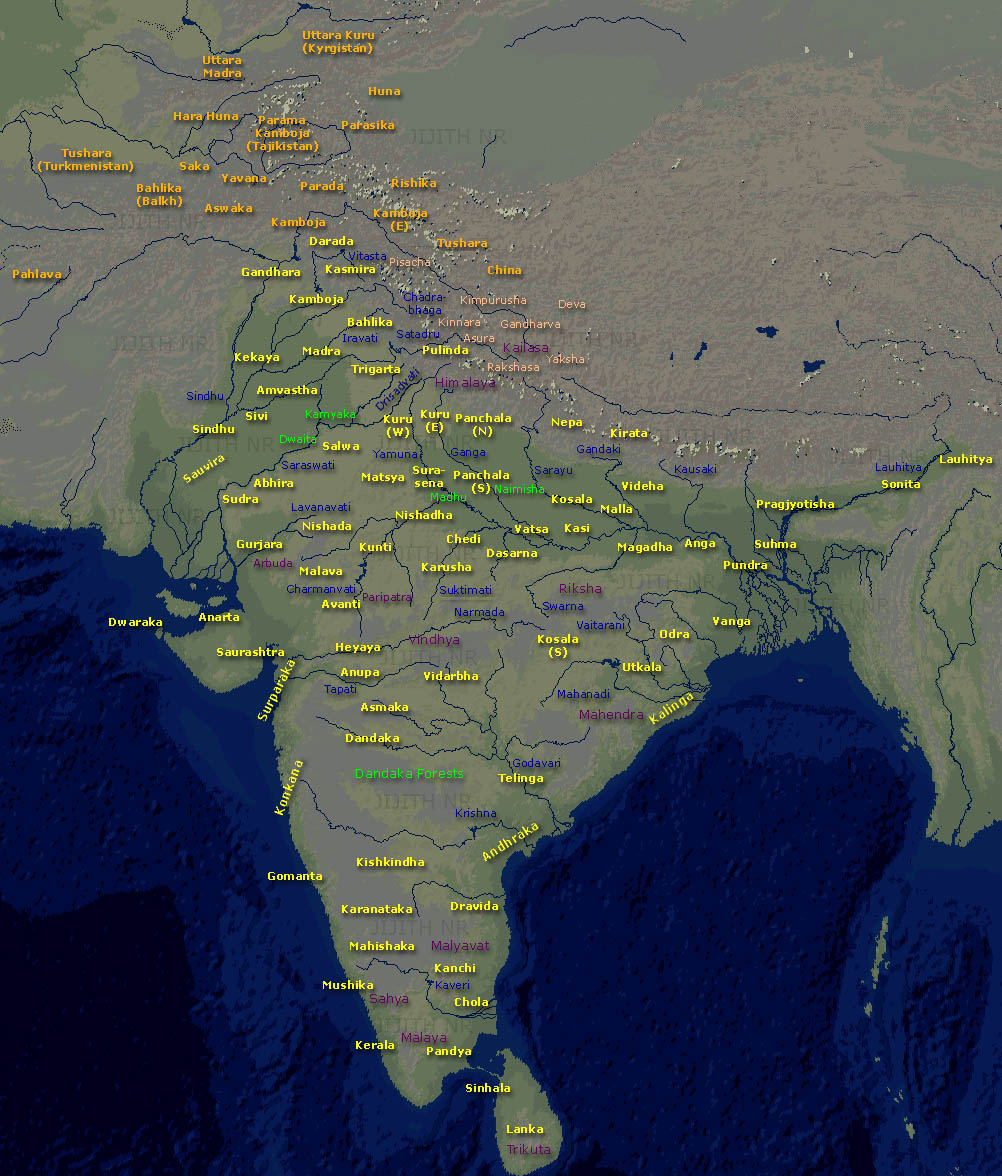
Kirata
Mountain peoples of the Himalayas and Northeast India in ancient texts
The Kirata are a group described in ancient Sanskrit literature as mountain-dwelling peoples of the Himalayas and Northeast India, believed to be of Sino-Tibetan origin. They are known for their mention in early Indian texts and are often associated with Tibeto-Burman speaking groups.
- Mentioned in the Yajurveda and Atharvaveda as mountain dwellers
- Believed to be of Sino-Tibetan origin
- Known for foraging and trapping in the Himalayas
- Associated with Tibeto-Burman languages
- Referenced in the Mahabharata and other ancient texts
Who were the Kirata?
The Kirata are a people mentioned in ancient Sanskrit literature as inhabitants of the Himalayan and Northeast Indian mountains. The term was used by writers of the plains to refer to various non-Aryan hill-folk, especially those believed to be of Sino-Tibetan origin. Their identity is described in relation to their mountainous homeland and distinct appearance, and they are often grouped with other Tibeto-Burman speaking peoples. The Kirata are remembered for their role in mythology and early Indian history.
Where did the Kirata live?
The Kirata lived in the mountainous regions of the Himalayas and Northeast India. Ancient texts place them to the east of Videha and generally in the eastern Himalayas. Their territory was rugged, forested, and remote from the plains. These lands were known for their natural resources, including aromatic plants, and were home to diverse groups of hill peoples.
What language did the Kirata speak?
Ancient sources describe the Kirata as speaking a Tibeto-Burman language, which is part of the larger Sino-Tibetan family. The name Kirata may be related to modern groups like the Kirant or Kiranti of eastern Nepal, who speak related languages. The specific language or dialects spoken by the historical Kirata are not preserved.
How did the Kirata live?
The Kirata are described in early texts as jungle trappers and foragers, known for digging pits to capture deer and other animals. They lived off the land, making use of the forests and mountains for food and resources. Some groups were also noted for trading aromatic plants such as malabathrum. Their way of life was closely tied to the rugged terrain they inhabited.
How was Kirata society organised?
Details about Kirata society are limited in the sources. They are sometimes described as having chiefs or kings, such as King Suraghu mentioned in ancient texts. The Kirata were viewed as distinct from the plains peoples, with their own customs and social structures, but specifics about family, clans, or marriage practices are not provided.
What did the Kirata believe?
The beliefs and rituals of the Kirata are not described in detail in the sources. They appear in Indian mythology, such as in the Mahabharata and the poem Kirātārjunīya, where they are depicted as mountain dwellers and hunters. Their appearance and customs were often contrasted with those of the plains peoples in ancient literature.
The history of the Kirata
The Kirata are first mentioned in the Yajurveda and Atharvaveda, and appear in later texts such as the Mahabharata. They were often grouped with other non-Aryan peoples like the Cinas and Nishadas. Ancient writers described them as skilled in hunting and sometimes as traders. Over time, the term Kirata became a general label for Tibeto-Burman speaking groups of the Himalayas and Northeast India. Their distinct identity faded as these groups became more integrated or were identified by other names.
What became of the Kirata?
The historical Kirata as described in ancient texts no longer exist as a single distinct group. The term survives in the names of modern ethnic groups such as the Kirant or Kiranti in Nepal, but the original Kirata are known mainly through literature and historical accounts. Their legacy remains in the traditions and languages of present-day Himalayan peoples.
Questions people ask about the Kirata
Where did the Kirata live?
The Kirata lived in the mountainous regions of the Himalayas and Northeast India, especially in the eastern Himalayas, as described in ancient Indian texts.
How many Kirata were there?
The sources do not provide a specific population figure for the Kirata. Their numbers are not recorded in the historical texts.
What language did the Kirata speak?
The Kirata are described as speaking a Tibeto-Burman language, which is part of the Sino-Tibetan family. The exact language is not preserved.
Are the Kirata still around today?
The Kirata as described in ancient texts do not exist as a single group today. However, related names and traditions survive among some Himalayan peoples, such as the Kirant or Kiranti in Nepal.
What were the Kirata known for?
The Kirata were known for living in the mountains, foraging, trapping animals, and appearing in Indian mythology and early literature.
Sources and further reading
This page was written with AI assistance from the sources above and checked automatically before publishing. It may contain mistakes, and it is no substitute for hearing from the Kirata themselves. If something is wrong, tell us. Last refreshed 2026-10-02.
Neighbours in India
All peoples of India Rohingyaruáingga
🇧🇩 Bangladesh and 7 moreA stateless Muslim community from Rakhine State, Myanmar, now mostly displaced
About 1.7 million, Indo-Aryan
Rohingyaruáingga
🇧🇩 Bangladesh and 7 moreA stateless Muslim community from Rakhine State, Myanmar, now mostly displaced
About 1.7 million, Indo-Aryan
 Sherpaཤར་པ།
🇳🇵 Nepal and 3 moreMountain people of the Himalayas, renowned for guiding climbers
About 520,000, Tibeto-Burman
Sherpaཤར་པ།
🇳🇵 Nepal and 3 moreMountain people of the Himalayas, renowned for guiding climbers
About 520,000, Tibeto-Burman
 Sentinelese
🇮🇳 IndiaHunter-gatherers living in isolation on North Sentinel Island, India
About 150
Sentinelese
🇮🇳 IndiaHunter-gatherers living in isolation on North Sentinel Island, India
About 150
 Rajput
🇮🇳 India and 2 morePatrilineal clans with a history of warriorhood in northern and western India
About 38 million
Rajput
🇮🇳 India and 2 morePatrilineal clans with a history of warriorhood in northern and western India
About 38 million