
Ho-Chunk
They call themselves Hoocąk
Siouan-speaking Native people of Wisconsin and Nebraska, known for effigy mounds
The Ho-Chunk, also called Hoocąk or Winnebago, are a Native American people whose traditional lands cover parts of Wisconsin, Minnesota, Iowa, and Illinois. Today, about 12,000 Ho-Chunk live mainly in Wisconsin and Nebraska, organized in two federally recognized tribes. They are known for building effigy mounds and for their efforts to revitalize their language and culture.
- Ho-Chunk built thousands of effigy mounds in Wisconsin and nearby states
- Organized into 12 clans, each with specific roles
- Suffered forced removal and loss of land in the 19th century
- Two federally recognized tribes: in Wisconsin and Nebraska
- Active language revitalization with digital tools and classes
Who are the Ho-Chunk?
The Ho-Chunk are a Native American people with deep roots in the Upper Midwest of the United States. Their own name, Hoocąk, means "People of the Sacred Voice." Historically, they lived in permanent villages, organized into 12 clans, each with its own role and responsibilities. The Ho-Chunk are united by their language, traditions, and shared history, including the building of effigy mounds and a strong oral tradition. Today, they are enrolled in two federally recognized tribes, maintaining their identity and sovereignty.
Where do the Ho-Chunk live?
The Ho-Chunk homeland stretches across present-day Wisconsin, Minnesota, Iowa, and Illinois. This region is marked by forests, rivers, and prairies, providing a rich environment for hunting, fishing, and farming. The land is dotted with ancient effigy mounds, earthworks shaped like animals, which their ancestors built. Many Ho-Chunk still live in Wisconsin and Nebraska, with land holdings in several counties and some parcels recognized as reservations.
What language do the Ho-Chunk speak?
The Ho-Chunk speak Hocąk, a Siouan language they believe was given to them by their creator. The language is central to their identity and is the focus of revitalization efforts, including digital tools and educational programs. English is also widely spoken. The Ho-Chunk Nation has developed a Hocąk-language app and online dictionary to support language learning.
How do the Ho-Chunk live?
Traditionally, the Ho-Chunk lived by farming corn, squash, beans, and wild rice, as well as hunting, fishing, and gathering wild foods. Women managed crops and food processing, while men hunted and fished. They lived in wigwams and used dugout canoes for travel. Today, many Ho-Chunk work in a variety of fields, including tribal enterprises such as casinos, and continue traditional crafts and foodways.
How is Ho-Chunk society organised?
Ho-Chunk society is organized into 12 clans, each with specific roles. Family and clan ties are central, and responsibilities are divided by gender and age. Leadership has historically come from respected elders and clan leaders. Decision-making often involves councils, and both men and women play important roles in maintaining the community. Rites of passage, such as fasting for guardian spirits, are part of their tradition.


What do the Ho-Chunk believe?
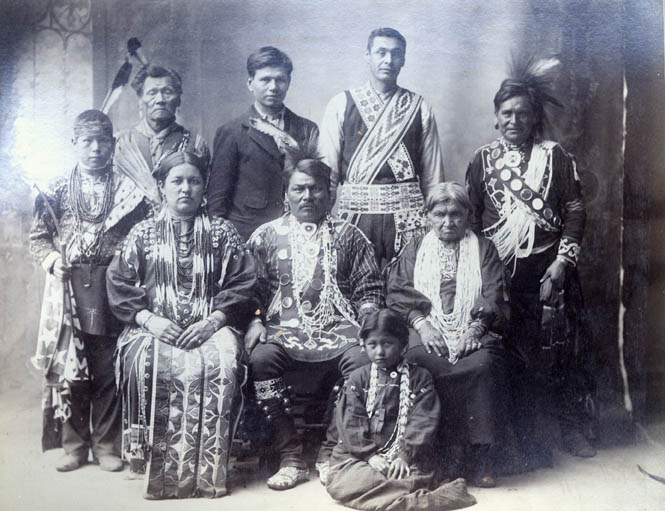
The Ho-Chunk follow a mix of traditional beliefs, the Native American Church, and Christianity. Traditional practices include honoring spirits through offerings and ceremonies, such as the war-bundle feast. Art, music, and dress reflect their cultural heritage, with clothing made from tanned hides and jewelry crafted from silver and copper. Rituals and oral history remain important in daily life.
The history of the Ho-Chunk
The Ho-Chunk trace their ancestry to the builders of effigy mounds in the Late Woodland period. They were once the dominant tribe in their region, but suffered dramatic population loss in the 17th century due to disease, warfare, and a catastrophic lake storm. European contact brought further upheaval, including forced removals by the U.S. government, loss of land, and repeated relocations. Despite these hardships, the Ho-Chunk persisted, with some returning to their homelands and others establishing new communities in Nebraska.
Ho-Chunk life today
Today, the Ho-Chunk number around 12,000, with communities in Wisconsin and Nebraska. They are organized into two federally recognized tribes, each with its own government. The Ho-Chunk Nation of Wisconsin holds land in multiple counties, while the Winnebago Tribe of Nebraska has a reservation. Both tribes work to preserve their language and culture, and have developed successful enterprises to support their people.
Questions people ask about the Ho-Chunk
Where do the Ho-Chunk live today?
Most Ho-Chunk live in Wisconsin and Nebraska, with communities and land holdings in several counties. The two main groups are the Ho-Chunk Nation of Wisconsin and the Winnebago Tribe of Nebraska.
How many Ho-Chunk people are there?
There are about 12,055 Ho-Chunk people as of 2024, enrolled in two federally recognized tribes.
What language do the Ho-Chunk speak?
The Ho-Chunk speak Hocąk, a Siouan language. English is also widely used. The tribe is working to revitalize the Hocąk language through educational programs and digital resources.
What are the Ho-Chunk known for?
They are known for building effigy mounds, their clan system, and their resilience through forced removals. Today, they are active in cultural and language revitalization.
What is the traditional religion of the Ho-Chunk?
The Ho-Chunk follow traditional beliefs known as the Hocąk Way, as well as the Native American Church and Christianity.
Sources and further reading
- Ho-Chunk on WikipediaEncyclopedia
- Encyclopaedia BritannicaArticle
- More photos on Wikimedia CommonsPhotos
- Wikidata recordOpen data
This page was written with AI assistance from the sources above and checked automatically before publishing. It may contain mistakes, and it is no substitute for hearing from the Ho-Chunk themselves. If something is wrong, tell us. Last refreshed 2026-10-02.
Neighbours in the United States
All peoples of the United States CrowApsáalooke
🇺🇸 United StatesPlains people of southern Montana, known for their horse culture and Crow Fair
About 12,000, Siouan
CrowApsáalooke
🇺🇸 United StatesPlains people of southern Montana, known for their horse culture and Crow Fair
About 12,000, Siouan
 OsageWazhazhe
🇺🇸 United StatesIndigenous people of the Great Plains, now based in Oklahoma
About 28,000, Siouan
OsageWazhazhe
🇺🇸 United StatesIndigenous people of the Great Plains, now based in Oklahoma
About 28,000, Siouan
 Oglala LakotaOglála Lakhóta Oyáte
🇺🇸 United StatesLakota people living mainly on Pine Ridge Reservation in South Dakota
About 47,000, Siouan
Oglala LakotaOglála Lakhóta Oyáte
🇺🇸 United StatesLakota people living mainly on Pine Ridge Reservation in South Dakota
About 47,000, Siouan
 HunkpapaHúŋkpapȟa
🇺🇸 United States and 1 moreA Lakota division known for their role at Little Bighorn and life at Standing Rock
About 571, Siouan
HunkpapaHúŋkpapȟa
🇺🇸 United States and 1 moreA Lakota division known for their role at Little Bighorn and life at Standing Rock
About 571, Siouan
Other Siouan speakers
See them all MiniconjouMnikowoju
🇺🇸 United StatesA Lakota subdivision living in west-central South Dakota
Siouan
SicanguSičhą́ǧu Oyáte
🇺🇸 United StatesSouthern Lakota nation centered on the Rosebud and Lower Brule Reservations
Siouan
Sans ArcItázipčho
🇺🇸 United StatesA Lakota subdivision living on the Cheyenne River Reservation, South Dakota
Siouan
SihasapaSihásapa
🇺🇸 United StatesA Lakota division living on the Great Plains, now at Standing Rock and Cheyenne River
Siouan
MiniconjouMnikowoju
🇺🇸 United StatesA Lakota subdivision living in west-central South Dakota
Siouan
SicanguSičhą́ǧu Oyáte
🇺🇸 United StatesSouthern Lakota nation centered on the Rosebud and Lower Brule Reservations
Siouan
Sans ArcItázipčho
🇺🇸 United StatesA Lakota subdivision living on the Cheyenne River Reservation, South Dakota
Siouan
SihasapaSihásapa
🇺🇸 United StatesA Lakota division living on the Great Plains, now at Standing Rock and Cheyenne River
Siouan