
Taíno
Indigenous people of the Greater Antilles and Bahamas, with a living cultural legacy
The Taíno are the Indigenous people of most of the Caribbean's Greater Antilles and the Bahamas. Today, many people in Puerto Rico, Cuba, and the Dominican Republic identify as Taíno or as having Taíno ancestry. They are known for their matrilineal societies, agricultural villages, and a revival of their cultural traditions.
Who are the Taíno?
The Taíno are the Indigenous people who lived across the Greater Antilles—Puerto Rico, Cuba, Hispaniola (now Haiti and the Dominican Republic), Jamaica—and the Bahamas. They are part of the larger Arawak family of peoples. The Taíno historically organized themselves in agricultural societies with villages led by chiefs called caciques. Their social structure was matrilineal, meaning descent and inheritance passed through the mother's line. Today, many descendants and revivalist communities continue Taíno cultural practices, especially in Puerto Rico, Cuba, and the Dominican Republic.
Where do the Taíno live?
The Taíno homeland stretches from the Lucayan Archipelago (the Bahamas) through the Greater Antilles, including Cuba, Jamaica, Hispaniola, and Puerto Rico, and into the northern Lesser Antilles. This region is marked by tropical islands, coastal plains, and fertile valleys, which supported their settled agricultural way of life. The land provided resources for farming, fishing, and gathering, and many villages were built near rivers or along the coast.
What language do the Taíno speak?
The Taíno spoke an Arawakan language, with two main varieties: Classical Taíno in Puerto Rico and most of Hispaniola, and Ciboney Taíno in the Bahamas, Cuba, western Hispaniola, and Jamaica. The language is no longer spoken as a native tongue, but some words and phrases survive in local Spanish and English dialects. Today, Taíno descendants speak the dominant languages of their countries, such as Spanish, English, French, and Creole.
How do the Taíno live?
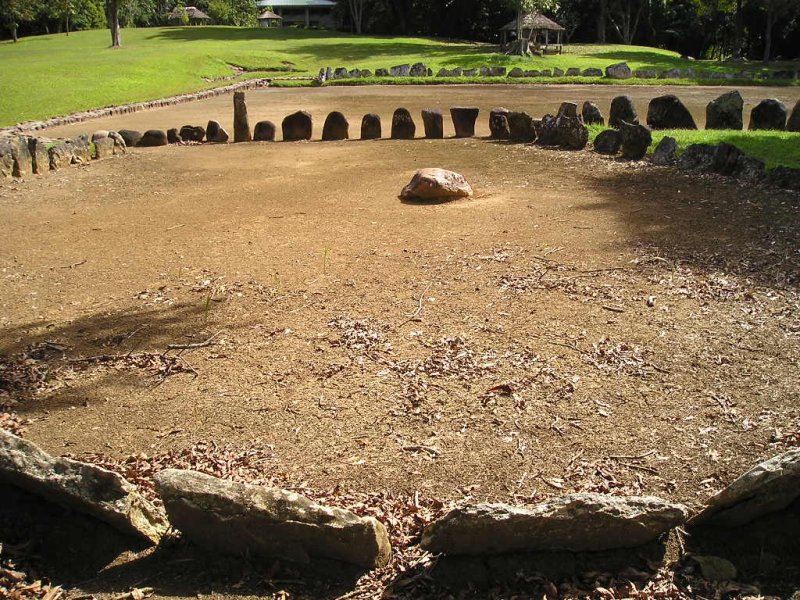
Historically, the Taíno were skilled farmers, growing crops like cassava, maize, sweet potatoes, and beans. They also fished, hunted small animals, and gathered wild plants. Villages were made up of thatched houses arranged around a central plaza. Tools and utensils were made from stone, wood, and shell. Their agricultural methods and village layouts supported large, stable communities.
How is Taíno society organised?
Taíno society was organized into chiefdoms led by caciques, with a clear social hierarchy. Four main classes were described: the cacique (chief), nitaínos (nobles), bohíques (spiritual leaders), and naborias (commoners). Inheritance and descent were matrilineal. Decisions were made by the cacique, often advised by elders and bohíques. Marriage and kinship ties helped form alliances between villages.


What do the Taíno believe?
The Taíno religion centered on the worship of zemis—spirit beings represented by carved figures. Rituals and ceremonies honored these spirits, ancestors, and natural forces. Bohíques acted as spiritual leaders and healers. Art, music, and dance were important in religious and social life. Traditional dress included cotton garments and body paint for ceremonies.
The history of the Taíno
The Taíno were the first Indigenous people encountered by Europeans in the New World. After contact, they suffered greatly from disease, violence, and forced labor under Spanish colonization. Many Taíno died or were absorbed into other populations. For centuries, scholars believed the Taíno had disappeared, but recent research and DNA studies show their descendants survive, especially in Puerto Rico and Cuba. Some communities maintain or revive Taíno cultural practices.
Taíno life today
Today, many people in the Caribbean, especially Puerto Rico, Cuba, and the Dominican Republic, identify as Taíno or as having Taíno ancestry. Revivalist groups work to reclaim and teach Taíno language, crafts, and traditions. DNA studies confirm Indigenous ancestry in large parts of the population. The Taíno legacy is visible in place names, foods, and cultural practices across the region.
Questions people ask about the Taíno
Where do the Taíno live?
The Taíno live in Puerto Rico, Cuba, the Dominican Republic, Haiti, Jamaica and The Bahamas, in the Greater Antilles and Lucayan Archipelago in the Caribbean.
What language do the Taíno speak?
The Taíno speak Taíno (historically); now Caribbean Spanish, English, French, Dutch, and Creole languages, which belongs to the Arawakan family of languages.
How do the Taíno make a living?
The Taíno are known for settled farming. Like most peoples, they combine several ways of making a living, and these have changed over time.
Sources and further reading
- Taíno on WikipediaEncyclopedia
- Encyclopaedia BritannicaArticle
- More photos on Wikimedia CommonsPhotos
- Wikidata recordOpen data
This page was written with AI assistance from the sources above and checked automatically before publishing. It may contain mistakes, and it is no substitute for hearing from the Taíno themselves. If something is wrong, tell us. Last refreshed 2026-10-02.
Other Arawakan speakers
See them all GarifunaGarínagu
🇭🇳 Honduras and 5 moreAfro-Indigenous people of Caribbean origin living in Central America and the US
About 400,000, Arawakan
Ciboney
🇨🇺 Cuba and 2 moreWestern Taíno-related people of central Cuba, now extinct as a distinct group
Historical, Arawakan
GarifunaGarínagu
🇭🇳 Honduras and 5 moreAfro-Indigenous people of Caribbean origin living in Central America and the US
About 400,000, Arawakan
Ciboney
🇨🇺 Cuba and 2 moreWestern Taíno-related people of central Cuba, now extinct as a distinct group
Historical, Arawakan
 AsháninkaAshaninka
🇵🇪 Peru and 1 moreIndigenous people of the central Amazonian rainforest of Peru and Brazil
About 99,000, Arawakan
AsháninkaAshaninka
🇵🇪 Peru and 1 moreIndigenous people of the central Amazonian rainforest of Peru and Brazil
About 99,000, Arawakan
 Terena
🇧🇷 BrazilAgricultural Indigenous people of Brazil's Mato Grosso do Sul region
About 26,000, Arawakan
Terena
🇧🇷 BrazilAgricultural Indigenous people of Brazil's Mato Grosso do Sul region
About 26,000, Arawakan