
Okjeo
They call themselves 옥저
Ancient tribal communities of northern Korea, known for farming and village chiefs
The Okjeo were an ancient tribal people who lived in the northern Korean peninsula, mainly in what is now North Korea, from about the 2nd century BCE to the 5th century CE. They are known for their village-based society, farming skills, and for being influenced and eventually absorbed by neighboring states such as Goguryeo.
- Okjeo villages each had their own hereditary chief.
- They lived along the coast and river valleys of northern Korea.
- Farming was their main way of life.
- Their language was similar to Goguryeo's.
- They were absorbed by Goguryeo in the early 5th century CE.
Who were the Okjeo?
The Okjeo were a group of tribal communities who lived in the northern part of the Korean peninsula for several centuries. Their society was organized around villages, each led by its own hereditary chief, rather than a single ruler. The Okjeo are remembered for their close ties to the land, their agricultural skills, and their interactions with larger neighboring states. Their language and customs were similar to those of Goguryeo, another ancient Korean kingdom.
Where did the Okjeo live?
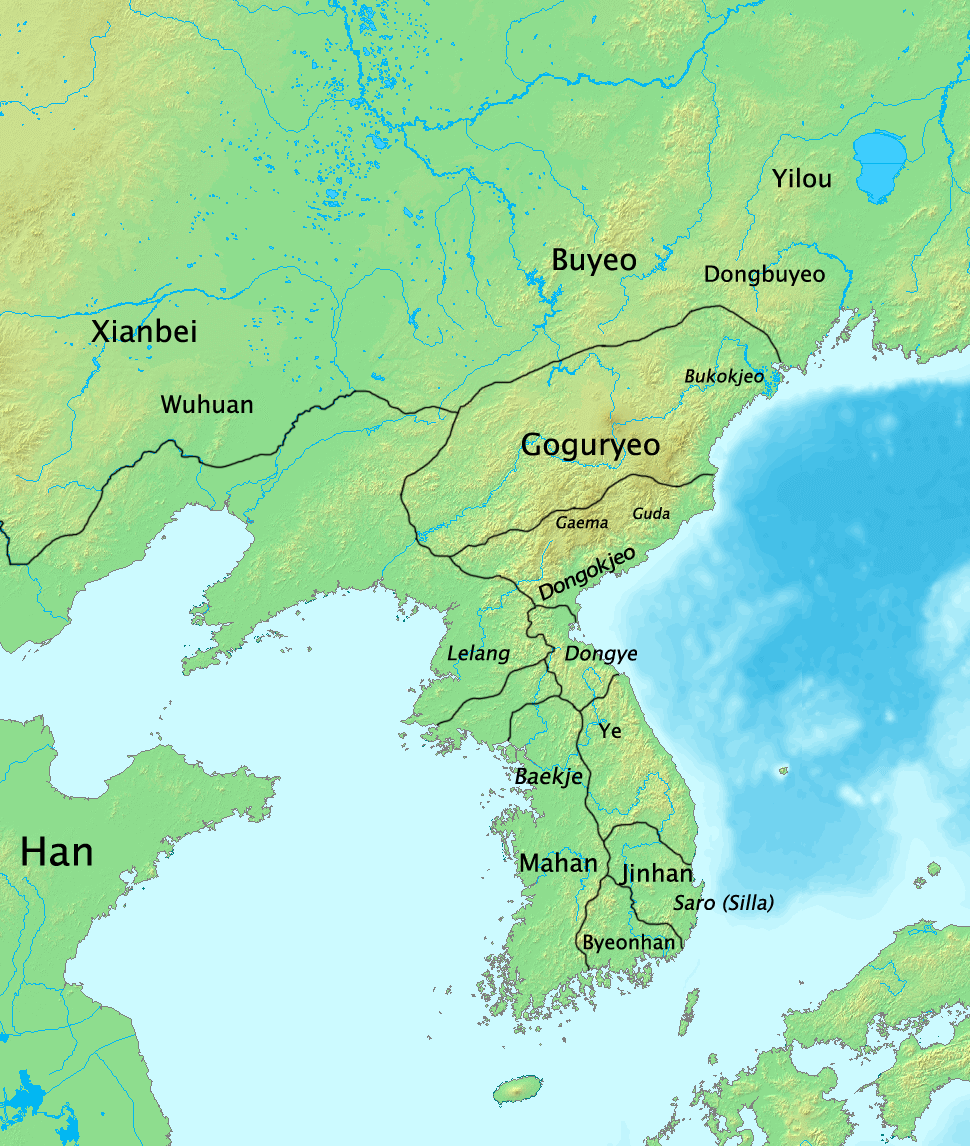
The Okjeo homeland lay along the eastern coast and river valleys of what is now North Korea, especially in the Hamgyŏng provinces and the Duman (Tumen) River region. Their territory was described as narrow in the northeast and long in the southwest, bordered by mountains to the west and the sea to the east. The land was considered fertile and well suited to growing grains, with settlements mostly near the shore.
What language did the Okjeo speak?
The Okjeo spoke the Okjeo language, which was part of the Puyŏ language family. Historical accounts suggest that their language was broadly similar to that of the Goguryeo people, with only small differences. Some scholars consider Okjeo to have been a dialect of Goguryeo rather than a completely distinct language.
How did the Okjeo live?
Farming was central to Okjeo life. The people were skilled at tilling and planting, cultivating the five main grains of their region. They had few oxen and horses, so they relied on foot travel and were adept at fighting on foot with spears. Their settlements were village-based, and the land’s fertility supported their agricultural way of life. Knowledge of their tools, food, and architecture is limited, but their customs resembled those of neighboring Goguryeo.
How was Okjeo society organised?
Okjeo society was organized around villages, each with its own hereditary chief rather than a central ruler. Families practiced arranged marriage, with child-brides living with the groom’s family until adulthood. When a family member died, the dead were interred together in a single coffin. The people were described as strong and direct, and their social structure emphasized kinship and local leadership.


What did the Okjeo believe?
Little is known about the specific religious beliefs or rituals of the Okjeo. Their customs, clothing, and architecture were said to be similar to those of Goguryeo, but details are scarce. Burial practices included placing the dead of a family together, which may reflect beliefs about family unity after death.
The history of the Okjeo
The Okjeo first appear in history as a group influenced by larger powers. They were under the control of Gojoseon until 108 BCE, then became part of Chinese commanderies. Over time, they came under the influence of Goguryeo, which reduced Okjeo to a tributary status. The Okjeo provided local products to Goguryeo and were sometimes a refuge for other states under attack. In the early 5th century CE, Okjeo was fully conquered and absorbed by Goguryeo, ending their independent existence.
What became of the Okjeo?
The Okjeo no longer exist as a distinct people. Their former homeland is now part of North Korea. Most of what is known about them comes from historical records and archaeological research. Their language and culture influenced, and were influenced by, neighboring peoples, especially Goguryeo.
Questions people ask about the Okjeo
Where did the Okjeo live?
The Okjeo lived in the northern Korean peninsula, mainly in what is now the Hamgyŏng provinces of North Korea and the Duman (Tumen) River region.
How many Okjeo were there?
Historical sources mention about five thousand households, but the exact population is not known.
What language did the Okjeo speak?
They spoke the Okjeo language, which was similar to the language of Goguryeo and part of the Puyŏ language family.
How did the Okjeo make a living?
The Okjeo were skilled farmers, growing grains on the fertile land between the mountains and the sea.
What happened to the Okjeo?
In the early 5th century CE, the Okjeo were conquered and absorbed by the kingdom of Goguryeo, and they ceased to exist as a separate people.
Sources and further reading
This page was written with AI assistance from the sources above and checked automatically before publishing. It may contain mistakes, and it is no substitute for hearing from the Okjeo themselves. If something is wrong, tell us. Last refreshed 2026-10-02.
