Charrúa
They call themselves Charrua
Semi-nomadic Indigenous people of Uruguay, Argentina, and Brazil
The Charrúa are an Indigenous people of the Southern Cone, mainly in Uruguay, with communities and descendants in Argentina and Brazil. Traditionally semi-nomadic hunters and gatherers, their numbers fell sharply after a massacre in 1831, but many descendants remain and work to revive Charrúa identity and rights.
Who are the Charrúa?
The Charrúa are an Indigenous people native to Uruguay and nearby regions of Argentina and Brazil. Traditionally, they lived as semi-nomadic hunter-gatherers, moving with the seasons to follow game and wild foods. Their identity is shaped by shared ancestry, history, and a strong sense of belonging to their land. Today, many people in these countries recognize Charrúa heritage and work to preserve their culture and memory.
Where do the Charrúa live?
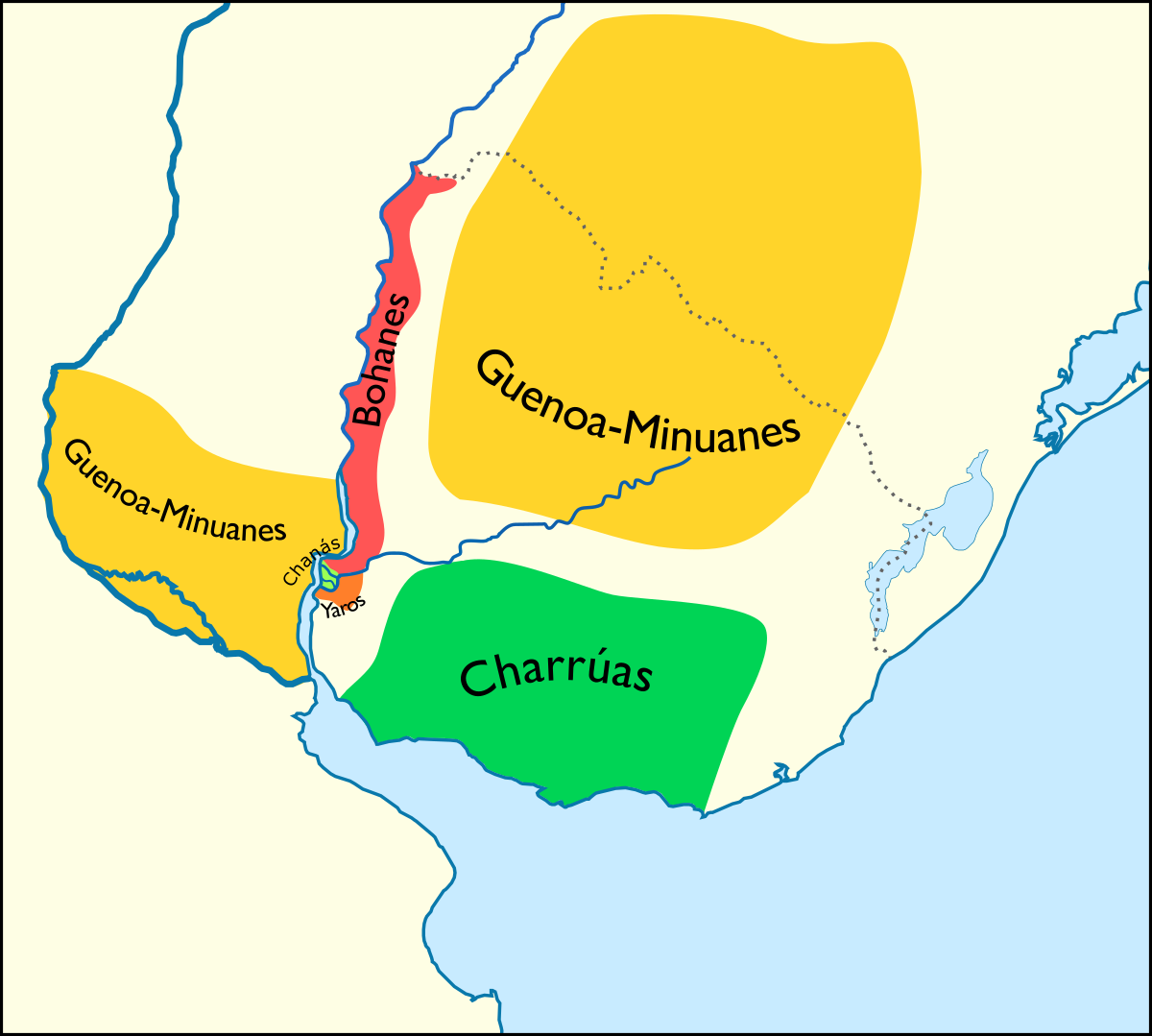
The Charrúa homeland covers present-day Uruguay, the Entre Ríos province in Argentina, and the Rio Grande do Sul region in Brazil. This area includes grasslands, riverbanks, and coastal zones. The Charrúa moved across these landscapes depending on the season, seeking food and shelter. Their way of life was closely tied to the rhythms of the land and its resources.
What language do the Charrúa speak?
The Charrúa once spoke their own language, also called Charrúa. Today, most descendants speak Spanish, and the Charrúa language is no longer in daily use. Efforts to revive and document the language are part of broader movements to reclaim Charrúa heritage.
How do the Charrúa live?
Traditionally, the Charrúa lived by hunting, gathering, and fishing. They hunted deer, rheas, and smaller animals using bolas and bows and arrows. In summer, they moved to the coast to fish and collect clams, fruits, and roots. Their shelters and tools were adapted to a mobile lifestyle. The arrival of European settlers and cattle ranching disrupted these patterns and forced many changes.
How is Charrúa society organised?
Charrúa society was organized around family groups and bands that moved together. Leadership was often based on respect and experience, with chiefs guiding decisions. Marriage and kinship ties helped hold the community together. After colonization, many social structures were disrupted, but descendants continue to value their ancestry and connections.
What do the Charrúa believe?
The Charrúa practiced animism, seeing the land and its creatures as alive and spiritually significant. Later, many adopted Catholicism, often blending it with older beliefs. Rituals, oral traditions, and art played important roles in expressing identity. Today, Charrúa descendants work to recover and share their cultural heritage.
The history of the Charrúa
Before European contact, the Charrúa lived as seasonal nomads. They resisted Spanish colonization fiercely, including an early attack on explorer Juan Díaz de Solís. The 18th and 19th centuries brought cattle ranching, land loss, and violence. In 1831, the Uruguayan Army carried out the Massacre of Salsipuedes, killing many Charrúa and marking a turning point. Survivors were scattered or assimilated, and some were even taken to Europe for display. Despite claims of extinction, Charrúa identity persisted among descendants.
Charrúa life today
Today, many people in Uruguay, Argentina, and Brazil identify as Charrúa descendants. Organizations work to revive Charrúa culture, language, and rights. In Brazil, official recognition has been granted in some areas. The Charrúa face challenges from historical erasure, but activism and renewed interest are helping to restore their presence and voice.
Questions people ask about the Charrúa
Where do the Charrúa live?
The Charrúa live in Uruguay, Argentina and Brazil, in the Uruguay and adjacent areas of Argentina (Entre Ríos) and Brazil (Rio Grande do Sul).
How many Charrúa people are there?
Our sources give the Charrúa population as about 159,319 in Uruguay (2011), 14,649 in Argentina (2010), 42 in Brazil (2014); between 160,000 and 300,000 descendants overall. Counts of peoples vary with who is counted and when.
What language do the Charrúa speak?
The Charrúa speak Spanish (formerly Charrúa).
How do the Charrúa make a living?
The Charrúa are known for hunting and gathering and fishing and the sea. Like most peoples, they combine several ways of making a living, and these have changed over time.
Sources and further reading
- Charrúa on WikipediaEncyclopedia
- Encyclopaedia BritannicaArticle
- More photos on Wikimedia CommonsPhotos
- Wikidata recordOpen data
This page was written with AI assistance from the sources above and checked automatically before publishing. It may contain mistakes, and it is no substitute for hearing from the Charrúa themselves. If something is wrong, tell us. Last refreshed 2026-10-02.
